
Tag Archives: Never to Say Goodbye

Never To Say Goodbye

Synopsis

Never To Say Goodbye is a moving African narrative about love, loss, faith, and destiny. Set in the peaceful community of Kafue Plains, the story follows Diallo, a devoted husband and father who mysteriously disappears on the very day his son is born. Left behind, Thandiwe who raised their child with courage, shielding him from a painful truth. Years later, through a child’s divine wisdom and unwavering faith, a miracle unfolds—revealing that goodbyes are not always final, and hope never truly dies.


Story Body

Diallo lived a life many admired in the quiet African community of Kafue Plains, a land of red earth, tall grasses, and warm human bonds. He was known as a hardworking man—honest, disciplined, and deeply rooted in family values. His laughter echoed easily, and his presence brought calm wherever he went.

When he married Thandiwe, the village celebrated as though a long-awaited promise had been fulfilled. Thandiwe was gentle yet strong, a woman whose eyes carried both kindness and depth. Together, they built a modest home filled with hope, dreams, and whispered prayers for the future.

Their joy multiplied when Thandiwe became pregnant.

The pregnancy passed peacefully, and on a quiet afternoon, with the help of the village midwife, Thandiwe delivered a healthy baby boy at home. The cries of new life filled the house, announcing the arrival of a son who would carry Diallo’s name and blood.

But Diallo was not there to hear that cry.

On that same evening, as the sun dipped low and painted the sky in gold, Diallo closed from work and began the familiar walk home. His heart was light. He was finally going to meet his son.

He never made it home.

Somewhere along the narrow footpath between the fields and the village, Diallo was seized. Hands grabbed him from behind. A cloth was forced over his eyes. Voices—strange, hurried, and cruel—whispered commands. He was dragged away into the unknown.

That was the last time Diallo was seen.


The news struck Thandiwe like lightning.

Days passed. Then weeks. The village searched. Elders questioned travelers. Prayers were said at dawn and dusk. But Diallo did not return.

Thandiwe’s tears soaked her pillow every night, yet when she held her newborn son, she swallowed her pain. She named the boy Amari, meaning strength, because strength was what she needed to survive.

As Amari grew, questions followed.

“Mother,” he would ask, his eyes innocent and searching, “where is my father?”

Each time, Thandiwe smiled through invisible cracks in her heart and replied softly,
“Your father traveled. He will surely return one day.”

It became her shield—and her wound.

Diallo’s mother, the boy’s grandmother, was kind beyond words. She treated Thandiwe not as a daughter-in-law but as a daughter of her own blood. Yet kindness, no matter how sincere, could not fill the space Diallo had left behind.


One evening, when the weight of silence became unbearable, Thandiwe stepped behind the house. The sun was setting slowly, its golden light stretching across the land like a farewell.

She looked up at the sky.

And she wept.

Her cries were deep, raw, and unrestrained. Tears wrapped around her like a river with no end. She spoke to the wind, to the earth, to God—asking questions with no answers.

Unbeknownst to her, Amari had followed.

Now eight years old, the boy stood quietly, watching his mother cry in a way he had never seen before. His young face showed no fear—only understanding far beyond his age.

“Mama,” he called gently.

Thandiwe turned quickly, wiping her tears.

“My son,” she said, forcing a smile, “what are you doing here?”

She knelt before him and took his hands.

“Amari,” she whispered, “I want to tell you something.”

The boy looked at her calmly.

“Mother,” he said, his voice slow but clear, “I already know why you were crying. And I know where my father is.”

Thandiwe froze.

She cleaned her tears again, disbelief flooding her face.

“I am all ears,” she said shakily. “What has divine wisdom pushed you to say?”

Amari took a deep breath.

Then, in a still, audible voice, he said:

“Never to say goodbye.
My father is still alive.
And I will surely see him again.”

The words hung in the air like prophecy.

And then—

Footsteps.

Thandiwe turned.

There, walking through the gate, thinner but alive, stood Diallo.

For a moment, time stopped.

Then screams of shock turned into cries of joy. Neighbors gathered. The grandmother collapsed in praise. Amari stood still, his eyes fixed on the man he had never seen—but always known.

Diallo fell to his knees.

He told them everything.

First, he explained how his captors blindfolded him and dragged him away without warning.
He explained that they kept him in a secluded area, fully isolating him from the outside world. Strangers provided his meals, watched over him day and night, and ensured he remained hidden from anyone searching for him.

The real story later came to light. His uncle had planned everything after secretly discovering gold beneath Diallo’s land and wanted him permanently removed.

But fate had other plans.

By grace and endurance, Diallo survived. And one day, he escaped.

Faith smiled on him.

That night, the village celebrated—not just a man’s return, but the triumph of hope over despair.

Some goodbyes, after all, are never meant to last.

Also read…His-Last-breath


Summary

Never To Say Goodbye is a heartfelt African short story about disappearance, motherhood, faith, and reunion. Through Thandiwe’s pain, Amari’s divine wisdom, and Diallo’s miraculous return, the story reminds readers that hope can survive even the longest silence—and that destiny often finds a way home.

Watch out for ”The Rise of Amari”.
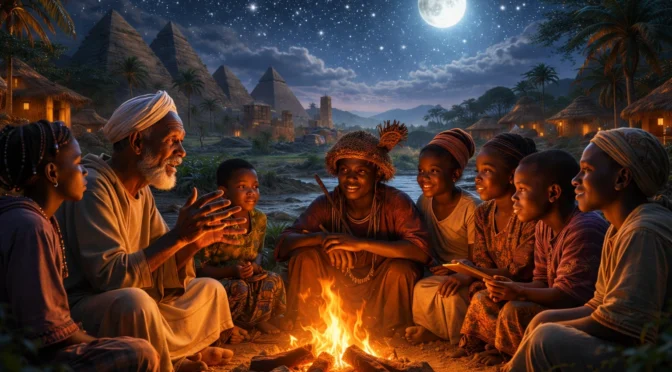
History on African Culture: Origins, Traditions, and Modern Identity

Introduction

African culture is one of the richest and most enduring cultural legacies in human history. Stretching across more than fifty nations and thousands of ethnic communities, the continent represents a vast network of languages, traditions, belief systems, and artistic expressions.

To speak about African culture is not to describe a single identity, but to explore a living mosaic of civilizations that have evolved over thousands of years.

Africa’s story is not confined to ancient monuments or museum artifacts. It lives in songs sung at harvest time, in proverbs spoken by elders, in colorful fabrics worn during celebrations, and in the rhythms that pulse through modern cities.

The history of African culture is both ancient and ongoing — rooted in tradition yet constantly adapting to new generations.


Ancient Civilizations and Early Development

Long before modern political borders were drawn, Africa was home to highly organized societies with structured governance, thriving economies, and advanced knowledge systems.

Along the Nile Valley, early civilizations developed writing systems, architectural achievements, and complex spiritual philosophies. Their contributions influenced neighboring regions and laid foundations for later developments in mathematics, medicine, and administration.

Further south, powerful kingdoms rose and maintained regional influence through trade and diplomacy. West African empires became known for their wealth, scholarship, and organized leadership structures. Trade routes connected North Africa with sub-Saharan regions, facilitating the exchange of gold, salt, textiles, and intellectual ideas.

In Southern Africa, sophisticated stone cities demonstrated urban planning and economic coordination. These societies were not isolated; they participated in transcontinental trade networks that linked Africa to Europe, the Middle East, and Asia.

The evidence is clear: African civilizations were innovative, connected, and culturally vibrant long before colonial contact.


Oral Tradition: Africa’s Living Archive

One of the most defining elements of African culture is its oral tradition. Before written documentation became widespread, history was preserved through storytelling, poetry, music, and performance. The spoken word carried authority, memory, and identity.

Storytelling sessions often occurred in the evenings, when families gathered after the day’s work. Elders would recount tales of origin, heroic journeys, moral dilemmas, and ancestral wisdom. These narratives blended imagination with real historical events, ensuring that lessons were remembered across generations.

Characters such as clever animals, brave hunters, patient mothers, wise elders, and symbolic spirits represented aspects of human nature. Through these stories, children learned responsibility, courage, humility, and respect. The stories also explained natural phenomena, social expectations, and spiritual beliefs.

Even today, this storytelling heritage continues in literature, theater, film, and digital media. The format may change, but the narrative heartbeat remains strong.


Language and Proverbs

Africa is home to more than 2,000 languages, each reflecting unique cultural perspectives. Language is not simply a communication tool; it carries worldview, humor, metaphor, and collective memory.

Proverbs play a significant role in many African societies. A short proverb can contain generations of wisdom. For example, many African sayings emphasize patience, unity, respect, and perseverance. These concise expressions guide decision-making and conflict resolution within communities.

Names also hold deep meaning. In many cultures, a child’s name reflects circumstances of birth, parental hope, gratitude, or spiritual significance. Through language, identity becomes both personal and communal.


Community and Family Structure

African culture traditionally places strong emphasis on community. Identity is often shaped not only by personal achievement but by family, lineage, and social responsibility. The extended family system remains influential in many regions, with grandparents, uncles, aunts, and neighbors participating in child development and moral guidance.

Respect for elders is a central value. Elders are considered keepers of wisdom and cultural continuity. Their guidance is sought in matters of conflict resolution, marriage arrangements, and community planning.

Ceremonies mark important life transitions. Birth celebrations, naming rituals, initiation rites, marriage ceremonies, and remembrance gatherings strengthen bonds between individuals and the larger community. These events are not merely symbolic; they reinforce belonging and cultural identity.


Spiritual Beliefs and Cultural Harmony

Spirituality in African culture has historically emphasized balance between the physical and spiritual worlds. Many traditional belief systems recognize a Supreme Creator while honoring ancestral spirits and natural forces. Rivers, mountains, forests, and animals are often treated with reverence and symbolic respect.

Rituals and ceremonies are used to express gratitude, seek guidance, and maintain harmony. Music and dance are deeply connected to spiritual expression, transforming worship into movement and rhythm.

Over centuries, Christianity and Islam spread across various regions of Africa. Rather than completely replacing indigenous traditions, these religions often blended with local customs. The result is a diverse spiritual landscape that reflects both historical depth and cultural adaptation.


Art, Symbolism, and Craftsmanship

African art is known worldwide for its symbolism and craftsmanship. Masks are carved not merely as decorative objects but as spiritual representations used during ceremonies. Sculptures, beadwork, textiles, pottery, and woven materials carry meanings tied to status, achievement, and community identity.

Patterns and colors often communicate social messages. Certain fabrics may indicate royalty or special occasions. Body adornment, including beads and traditional markings, historically signified rites of passage or belonging to a specific group.

Art in African societies is rarely separated from daily life. It exists in architecture, clothing, tools, and ceremonial objects. Creativity is integrated into functionality.


Music, Dance, and Rhythm

Music is central to African cultural expression. Drums serve as instruments of communication, celebration, and storytelling. Rhythmic patterns convey emotion and energy, while songs accompany farming, fishing, marriage ceremonies, and community gatherings.

Dance is inseparable from music. Movement becomes narrative, expressing joy, gratitude, or reflection. Each region has its distinct styles, costumes, and performance traditions.

African musical influence extends globally. Many contemporary genres trace rhythmic roots back to African traditions carried across continents. Today, modern African artists blend traditional sounds with global influences, creating innovative styles that continue to shape international music culture.


Cultural Adaptation and Growth

Throughout history, African societies have experienced significant transitions. Political restructuring, economic change, and globalization have influenced daily life. Yet cultural identity has shown remarkable resilience.

Communities preserved traditions through family structures, storytelling, music, and ceremony. Following independence movements in the twentieth century, many nations renewed efforts to celebrate indigenous languages and cultural scholarship.

Today, Africa is home to rapidly growing cities and technological innovation. Urban centers are hubs of entrepreneurship, film production, fashion, literature, and digital creativity. At the same time, rural communities continue to practice agricultural traditions and preserve ancestral customs.

This coexistence of tradition and modernity defines contemporary African identity.


The Global African Presence

African culture extends far beyond the continent itself. The African diaspora has contributed significantly to global art, literature, music, and business. Cultural exchange continues to strengthen connections between Africa and communities worldwide.

Festivals celebrating African heritage are held across continents. Fashion designers incorporate traditional textiles into global markets. Writers and filmmakers share narratives that reflect both heritage and modern experience.

African culture is not static; it is influential and expanding.


Conclusion

The history of African culture is a story of depth, diversity, and continuity. From ancient civilizations and oral traditions to modern innovation and global influence, Africa’s cultural heritage remains vibrant and powerful.

Its core values — community, respect, creativity, resilience, and spirituality — continue to shape generations. African culture teaches that identity is preserved through memory, strengthened through unity, and renewed through adaptation.

As the continent continues to grow and evolve, its cultural foundations remain strong. The past informs the present, and the present builds the future. African culture stands not only as a historical legacy but as a living force shaping the world today.

You may be interested in THE SLAVE GIRL By Samuel Chibuike Okonkwo