Synopsis
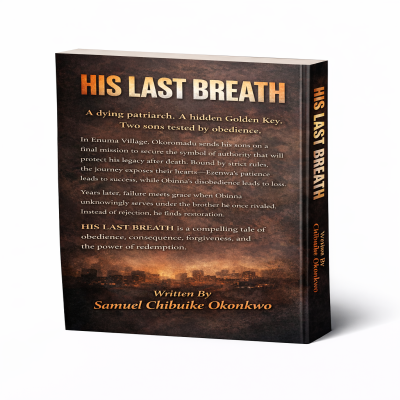
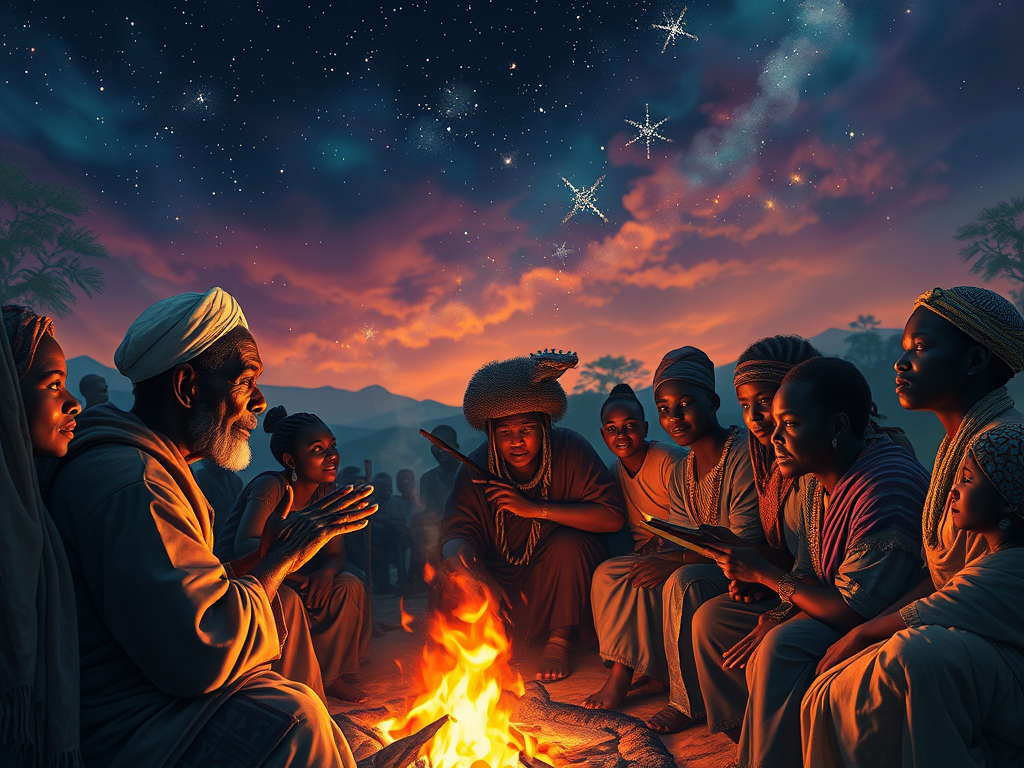
In Enuma Village, a dying patriarch, Okoromadu, sends his two sons on a final mission to secure a Golden Key hidden in a foreign land—a symbol of authority that would protect his wealth after his death. Before they depart, he gives them strict rules of obedience and unique items to guide them, warning that the journey would test their hearts more than their strength.
Along the way, the elder son Ezenwa obeys every instruction, enduring hardship with patience and discipline, while the younger son Obinna breaks the rules, succumbing to hunger and sleep at forbidden times. As a result, Ezenwa succeeds and returns with the key just in time to receive his father’s full blessing before Okoromadu breathes his last. Obinna, however, receives only a minimal blessing and is left to face the consequences of his disobedience.
Years later, broken but humbled, Obinna unknowingly seeks employment at his brother’s flourishing company. Instead of rejecting him, Ezenwa restores him, elevating him beyond merit and eventually handing over leadership. United at last, the brothers transform loss into wisdom, authority into service, and inheritance into reconciliation—ending the story in praise, unity, and restored purpose.
Chapter One: The Night Before the Journey
The elders of Enuma Village used to say that when the moon sat low and red on the edge of the sky, destiny was negotiating with time. On such a night, the wind did not rush; it listened. The trees did not sway; they leaned closer. And on one such listening night, Okoromadu son of Irua, the wealthiest and most feared man in Enuma, summoned his two sons to the inner courtyard of his ancestral compound.
Okoromadu was not an ordinary man. His beard was white, not because of age alone, but because years of secrets had drained the color from his soul. His eyes—sharp even in frailty—had seen borders crossed, empires negotiated with silence, and covenants sealed without ink. Though sickness now bent his spine and thinned his voice, his presence still commanded the air.
Torches were lit around the courtyard, their flames dancing nervously, as though they too sensed the weight of the night. The clay walls bore carvings of ancestral victories, wealth won through wisdom rather than war. At the center sat Okoromadu on a carved iroko chair, wrapped in a deep indigo cloth marked with the emblem of authority—a coiled serpent gripping a sun-disc. That emblem alone could silence greedy men and bend proud chiefs.
Before him stood his sons.
The first was Ezenwa Okoromadu, the elder by four years. Tall, broad-shouldered, with calm eyes that observed before they judged, Ezenwa carried himself like one who listened more than he spoke. The villagers often said Ezenwa walked as if the earth trusted him. He had patience woven into his breath.
Beside him stood Obinna Okoromadu, the younger. Quicker in speech, sharper in temper, and restless in spirit. Obinna’s eyes burned with ambition; he wanted the world to answer him quickly. Where Ezenwa paused, Obinna pressed forward. Where Ezenwa waited, Obinna demanded.
Okoromadu studied them both for a long moment. Then he raised his hand, and the wind seemed to pause.
“My sons,” he began, his voice cracked but heavy with command, “the night has come that I feared and prepared for.”
They knelt at once, touching their foreheads to the earth.
“You will rise,” he said softly. “This matter must be spoken eye to eye.”
They rose.
Okoromadu gestured, and an elderly servant brought forward a small chest carved from ebony wood, bound with brass and sealed with red wax marked by the serpent emblem. The chest was placed before the old man.
“Beyond the borders of this land,” Okoromadu said, “past rivers that forget their names and roads that reject strangers, lies a country where I once walked as a shadow. In that land, I hid something that does not belong to time.”
He coughed, deep and painful. Ezenwa stepped forward instinctively, but Okoromadu lifted a finger.
“What I hid is a Golden Key,” he continued, “forged by hands that no longer exist. Upon it is engraved the emblem of authority. Whoever bears it lawfully commands obedience from those who occupy my wealth—both seen and unseen.”
Obinna’s breath caught. Ezenwa remained still.
“After my breath leaves me,” Okoromadu said, “men will rise who think my wealth belongs to them. Stewards will grow teeth. Guards will forget loyalty. Even kin will pretend not to remember my name.”
The torches crackled.
“That key,” he said, tapping the chest though it did not contain it, “will make them kneel without bloodshed.”
Silence followed.
“You will both go,” he said at last. “At dawn.”
Obinna frowned. “Both of us?”
“Yes,” Okoromadu replied. “Because destiny tests differently.”
He motioned again, and two servants approached, each holding a wrapped bundle.
“These,” Okoromadu said, “are the materials I give you. They are not equal, because you are not equal in nature. But both are sufficient.”
He turned to Ezenwa first.
Ezenwa’s Materials
- The Calabash of Still Water – a small gourd sealed with beeswax.
“This water renews itself at dawn if untouched at night. Drink only when your spirit trembles.”
- The Ash-Wood Staff – light but unbreakable.
“It will not strike unless your heart is clean.”
- The Thread of Silence – a thin silver thread wrapped around a bone pin.
“When tied around your wrist, it will close your mouth to foolish speech.”
- A Strip of Goat Skin Marked with Symbols –
“These are paths written in riddles. Read them only when lost.”
Then he turned to Obinna.
Obinna’s Materials
- The Flask of Ember Oil – warm to the touch.
“It brings strength at night but burns when misused.”
- The Iron Dagger with No Edge – blunt but heavy.
“It responds to anger more than skill.”
- The Coin of Calling – engraved with the serpent emblem.
“It attracts helpers, but also attention.”
- A Bag of Red Seeds –
“Plant one where you rest; it reveals who watches you.”
Obinna smiled faintly, gripping his bundle tightly.
Okoromadu inhaled deeply.
“Now hear the rules,” he said, his voice lowering, as though the ancestors leaned closer.
THE RULES OF THE JOURNEY
First Rule:
“You must not sleep at night. Not under stars, not under roofs, not under trees. The night is a time of watching. Sleep at night invites spirits that borrow faces. If your eyes grow heavy, walk. If your legs fail, sing. If your mind wanders, pray. You may sleep only when the sun stands above you.”
Second Rule:
“You must not eat from spirits or strangers. Any food offered by unknown hands carries a question. Refuse politely. If hunger torments you, the gods will provide.”
Obinna shifted. “How will the gods provide, Father?”
Okoromadu smiled faintly.
“You will find meals without hands,” he said. “Fruits fallen but unbruised. Fires already burning with pots unattended. Fish trapped in shallow pools where no nets exist. Bread left warm on stones with no footprints nearby.”
He paused.
“Eat only what arrives without invitation.”
Third Rule:
“Do not reveal your mission. Not to kings. Not to lovers. Not to helpers. Words are doors.”
Fourth Rule:
“If separated, do not search for each other. Each path judges the heart alone.”
Fifth Rule:
“When the key is found, return immediately. Do not test its power.”
The wind blew hard then, rattling the torches.
Obinna laughed softly. “These rules are heavy, Father.”
Okoromadu’s eyes hardened. “They are heavier when broken.”
He leaned back, suddenly tired. Ezenwa stepped forward, kneeling.
“I will follow all you have said,” Ezenwa vowed. “Even when I do not understand.”
Obinna hesitated… then nodded. “I will not fail.”
Okoromadu reached out, placing a trembling hand on each of their heads.
“At dawn,” he whispered, “you begin.”
As they turned to leave, Okoromadu called out once more.
“My sons… remember this—obedience preserves what strength destroys.”
The moon slid behind clouds. Somewhere in the distance, a night bird cried—a sound too early, too sharp.
Okoromadu closed his eyes.
And the journey had already begun.
Chapter Two: The Road That Refused Sleep
Dawn did not announce itself gently over Enuma Village. It came like a verdict—sudden, unavoidable, final. The sky shifted from charcoal to bruised purple, then to pale gold, as if the sun itself understood the gravity of what was being set in motion.
Ezenwa and Obinna stood at the threshold of their father’s compound, travel cloaks fastened, bundles secured, destinies unspoken. The village was quiet, but not asleep. Old women watched from behind woven mats. Children pretended not to stare. Dogs sat with their heads tilted, sensing a separation the world could not undo.
Okoromadu did not come out to see them off.
That absence carried more weight than any farewell.
At the foot of the road that split Enuma from the rest of the world, the brothers stopped. Tradition demanded a final libation, but none was poured. This was not a journey to be blessed by custom alone—it was one judged by obedience.
Without words, they turned away from home.
THE FIRST NIGHT
By sunset, the land had changed. Familiar red earth gave way to gray stone. Palm trees thinned, replaced by towering baobabs whose roots clawed the ground like ancient fingers gripping memory. The road narrowed, twisting like a question that refused a straight answer.
As darkness fell, the air thickened.
Ezenwa felt it first—not fear, but pressure. The kind that made the skin alert, the breath deliberate. He wrapped the Thread of Silence around his wrist, feeling its cool reassurance.
Obinna, on the other hand, welcomed the night.
“This is when journeys feel alive,” he said, pouring a drop of Ember Oil onto his palm. The warmth spread through his arm, easing the ache in his shoulders. “I could walk forever like this.”
Ezenwa glanced at him. “The rule is not to sleep, not to boast.”
Obinna laughed. “I’m not boasting. I’m surviving.”
The road soon led them into a valley where mist gathered unnaturally fast. Shapes formed and dissolved in the fog—too slow to be animals, too deliberate to be shadows.
A voice drifted from nowhere.
“Travelers,” it called, soft and inviting. “Rest is mercy.”
Ezenwa stopped walking.
Obinna did not.
“Do not answer,” Ezenwa whispered.
But the voice came again, closer now.
“Your feet bleed. Your eyes burn. Lie down. Just for a moment.”
Ahead, Obinna saw something impossible—a clearing lit by moonlight, with smooth stones arranged in a perfect circle. At its center lay woven mats and burning incense. The scent was intoxicating.
“Ezenwa,” Obinna said, slowing. “Look. Someone prepared this.”
“No footprints,” Ezenwa said sharply. “No firewood.”
“But the rules say we must not sleep,” Obinna replied. “Not that we must not rest.”
“The night is watching,” Ezenwa said. “Move.”
Obinna hesitated. His legs ached. His thoughts blurred. He took another step toward the clearing.
The Coin of Calling in his pouch began to vibrate faintly.
From the mist emerged figures—human in form, but wrong in movement. Their heads tilted too far. Their smiles arrived too slowly.
“Eat,” one said, holding out a bowl of steaming food. “Then rest.”
Ezenwa slammed his Ash-Wood Staff into the ground. The sound cracked the air like thunder.
“No!” he shouted.
The staff glowed faintly, and the figures recoiled, hissing as the mist tore itself apart.
Obinna stumbled backward, shaken.
“You almost broke the rule,” Ezenwa said quietly.
Obinna said nothing.
They walked until dawn broke the spell of the valley.
When the sun finally rose, they collapsed beneath a fig tree and slept like men who had wrestled shadows.
THE GODS PROVIDE
When they woke, Ezenwa found a cluster of ripe figs resting neatly on a flat stone beside them—unmarked, untouched, perfect.
Obinna stared. “No one was here.”
Ezenwa nodded. “Eat.”
They continued for days.
Each night brought its own temptation. Rivers that sang lullabies. Roads that looped endlessly. Strangers who offered shelter with smiles too eager.
Ezenwa obeyed.
He walked when weary. He sang ancestral songs when his mind faltered. He refused food offered with words. When hunger clawed at him, provision came—fish trapped in sun-warmed shallows, yams unearthed by no hand, rain collected cleanly in hollow stones.
Obinna struggled.
The Ember Oil gave him strength, but also impatience. He grew frustrated with Ezenwa’s caution.
“You move like an old man,” Obinna snapped one night. “The key is not hiding from us. It wants to be found.”
“It tests us,” Ezenwa replied.
On the seventh night, they reached the outskirts of a foreign city—Kal-Haret, a place of high walls and many tongues. Lanterns burned all night there. Music spilled into the streets. The smell of roasted meat filled the air.
“This city does not sleep,” Obinna said eagerly. “Then the rule does not apply.”
“The rule applies everywhere,” Ezenwa said.
They separated at the city gate.
Obinna followed the sound of laughter.
Ezenwa followed the narrow road that led away from noise.
THE VIOLATION
Obinna entered a tavern lit with gold and red. People welcomed him like a long-lost friend. A woman placed food before him without asking his name.
He hesitated.
But the hunger was unbearable.
“It’s just one meal,” he whispered to himself. “I did not ask for it.”
He ate.
The food was delicious—and wrong.
The room spun. Faces melted into masks. Laughter became shrill.
By morning, Obinna woke alone in an alley, his Coin of Calling cracked, his bag of red seeds spilled and trampled. Something had been taken—something unseen.
From that moment, the road turned against him.
THE KEY
Ezenwa, meanwhile, followed the goat-skin riddles across deserts and ruins. The symbols shifted as he obeyed. On the thirteenth day, he reached a stone shrine half-buried in sand.
Inside, resting on a pedestal of bone and gold, lay the Golden Key.
It pulsed gently, as though breathing.
Ezenwa did not touch it until dawn.
When he lifted it, the air bowed.
He turned home immediately.
Far behind him, Obinna wandered, hungry, ashamed, and unaware that his failure had already written a harder future.
And far away in Enuma, Okoromadu’s breath grew thinner.
Chapter Three: When Breath Weighed More Than Gold
The wind that carried Ezenwa home was not the same wind that had pushed him away.
It moved slower, heavier, as though it bore news it did not want to deliver.
Ezenwa felt it in his chest long before the walls of Enuma Village came into view. The Golden Key hung against his skin, wrapped in goat hide, its presence calm but insistent—like a truth that could not be delayed. With every step, the emblem etched into it pulsed faintly, the serpent gripping the sun-disc as though reminding him that authority was not power seized, but power recognized.
He walked without haste, but without pause.
Because obedience had taught him something the journey could not: timing is also a rule.
THE RETURN OF THE OBEDIENT
The first child to see Ezenwa was a boy herding goats near the eastern ridge.
“Someone is coming!” the boy shouted, dropping his stick.
The cry rippled through the village.
By the time Ezenwa reached the outer compound, people were already gathering—elders with worried eyes, women whispering behind hands, guards standing uncertain, unsure whether to block or bow.
Ezenwa did neither demand nor announce himself.
He simply walked.
The gates opened.
Inside the compound, the air smelled of herbs and smoke. Mourning cloths hung unfinished. Not yet worn, but prepared—like grief that had been waiting for permission.
Ezenwa’s heart tightened.
He handed the Golden Key to the chief steward without ceremony.
“Take me to my father.”
The steward’s hands shook as he saw the emblem.
Without a word, he knelt.
That single act sent a shock through the compound. Guards dropped their spears. Servants bowed low. Even those who had begun to imagine themselves masters felt something in their bones shift back into place.
Authority had returned.
OKOROMADU’S LAST HOURS
Okoromadu lay on a low bed in the inner chamber, his breath shallow, his chest rising like a tide that no longer trusted the moon. His eyes were closed, but his spirit was awake.
Ezenwa knelt beside him.
“Father,” he whispered.
Okoromadu’s eyes opened immediately.
A smile—small, satisfied, complete—formed on his lips.
“You returned with the night still on your heels,” he said faintly. “You obeyed.”
Ezenwa unwrapped the key and placed it gently in his father’s palm.
The emblem glowed.
The room seemed to kneel.
Okoromadu exhaled deeply, as though something heavy had finally been set down.
“You have done what strength cannot,” he said. “You listened.”
Tears slid down Ezenwa’s face, silent and unashamed.
“Where is your brother?” Okoromadu asked.
Ezenwa bowed his head. “He did not return with me.”
Okoromadu nodded slowly.
“I know.”
He closed his eyes, then opened them again, summoning the last of his strength.
“Call the elders,” he said. “And prepare oil.”
THE ONE WHO FAILED
Obinna returned three days later.
Not walking.
Staggering.
His clothes were torn. His eyes carried the look of a man who had argued with fate and lost every word. The road had stripped him—first of pride, then of direction, then of hope.
He had violated two rules, not one.
First, he had eaten from strangers whose hands were not human in intention.
Second, he had slept at night—deep, careless sleep—after the meal weighed his spirit down.
And the night had taken its payment.
By the time Obinna reached Enuma, rumors had already outrun him.
“He failed.”
“He broke the rules.”
“He carries no authority.”
Children stared. Elders turned away. Guards watched him like a guest who had overstayed his welcome.
When Obinna entered the compound, he saw the elders gathered, oil burning, cloths laid out.
And at the center—his father, barely breathing.
Obinna fell to his knees.
“Father!” he cried, crawling forward. “Forgive me!”
Okoromadu opened his eyes one last time.
He looked at Obinna for a long, aching moment.
“You chose hunger over obedience,” he said softly. “And sleep over watchfulness.”
Obinna sobbed. “I was weak.”
“Yes,” Okoromadu replied. “And weakness ignored instruction.”
He turned to Ezenwa.
“You,” he said, “will carry my name cleanly.”
Then, with effort, Okoromadu raised his hand.
He placed both hands on Ezenwa’s head.
“I bless you with clarity that confuses your enemies, patience that outlives storms, and authority that does not beg,” he declared. “What I built, you will grow.”
The elders responded, “So shall it be.”
Okoromadu then gestured weakly to Obinna.
Obinna leaned forward, trembling.
Okoromadu touched his head briefly.
“I bless you,” he said, “with survival.”
The words cut deeper than silence.
With that, Okoromadu inhaled once—slow, deliberate—
—and released his last breath.
The oil lamps flickered.
The wind outside stilled.
Okoromadu son of Irua was gone.
AFTER THE BREATH
The days that followed reshaped Enuma.
Ezenwa took his father’s seat—not as a conqueror, but as a custodian. With the Golden Key, disputes dissolved. Those who had planned rebellion bowed without being asked. Wealth flowed back into rightful order.
Obinna, however, drifted.
He tried to remain in the compound, but every corner reminded him of what he had lost. Servants avoided his eyes. Elders spoke carefully around him. Even Ezenwa—kind but firm—could not erase the weight of failure.
Eventually, Obinna left.
He wandered to distant towns, offering labor, strength, anything. But word followed him: the son who failed the test. Doors closed quietly. Promises vanished overnight.
Pride hardened into bitterness.
Bitterness into recklessness.
For a time, Obinna lived waywardly—working briefly, fighting often, trusting poorly. Yet even in his fall, something refused to die in him.
He remembered his father’s voice.
And slowly, hunger returned—not for food, but for purpose.
One morning, with nothing left but resolve, Obinna washed his face in a river and set out again.
This time, to search for honest work.
He did not know that the road ahead led directly into his brother’s future.
Chapter Four: The Name on the Gate
Years do not always heal. Sometimes, they only widen the space where memory echoes.
By the time Obinna reached the city of Akurion, his feet were hardened, his pride thinned, and his name worn down to something he no longer introduced with confidence.
He had learned to wake before dawn and sleep whenever sleep permitted him—rules now broken beyond repair. He had learned how hunger could teach humility faster than any elder, and how silence could become a companion when people no longer asked questions.
Akurion was not a city of mercy. It was a city of order.
Its streets were straight, its walls tall, its markets loud with competition. Wealth lived there, but only for those who could submit to structure. Obinna did not know it yet, but the very thing he had once resisted—obedience—was what governed Akurion’s prosperity.
On the eastern edge of the city stood a complex so vast it seemed to swallow the horizon. Tall gates of iron bore a familiar emblem carved into bronze:
A coiled serpent gripping a sun-disc.
Obinna stopped walking.
His chest tightened.
“That symbol…” he whispered.
He had not seen it in years—not since the night his father’s breath left the world. He stared at it, unsure whether to laugh or turn away.
Above the gate, engraved in stone, were the words:
OKOROMADU HOLDINGS
Stewarded under lawful authority
Obinna staggered backward.
His brother’s company.
Ezenwa’s inheritance—expanded beyond Enuma, beyond anything their father had ever imagined.
For a moment, Obinna considered leaving. Pride urged him to turn away before recognition could wound him again. But hunger—real, practical hunger—tightened his resolve.
“I will work,” he said aloud. “Even if they spit my name out.”
He approached the gate.
THE INTERVIEW THAT NEVER WAS
Inside the compound, order moved like a living thing. Workers passed with purpose. Managers consulted tablets and scrolls. Guards stood alert, but not arrogant.
Obinna joined a line of applicants gathered beneath a shaded awning. Each held papers, references, hope.
When his turn came, the clerk looked up.
“Name?” she asked without interest.
“Obinna,” he said. He hesitated, then added, “Obinna Okoromadu.”
The clerk froze.
Slowly, she looked at him again—really looked.
Her expression changed.
“Please wait,” she said, standing too quickly.
She disappeared through a side door.
Obinna’s stomach sank.
So this is how it ends, he thought. Thrown out by my own blood.
Inside the main building, the clerk rushed into a polished office where Ezenwa Okoromadu, now Managing Director, stood reviewing ledgers. Age had sharpened him. Responsibility had broadened his shoulders. His eyes—still calm—had learned to weigh futures.
“There is a man at the gate,” the clerk said breathlessly. “He gave a name.”
Ezenwa looked up. “Which name?”
She swallowed. “Obinna Okoromadu.”
The room went still.
For a long moment, Ezenwa said nothing.
Then he closed the ledger.
“Where is he?” he asked quietly.
“At the applicants’ line.”
Ezenwa walked to the window. From the third floor, he could see the awning. He scanned the faces—and there he was.
Thinner. Harder. Bent, not in posture, but in spirit.
Ezenwa exhaled slowly.
“He came himself,” he murmured.
The memories came uninvited—the night road, the rules spoken under torchlight, the failure that had shaped two destinies in opposite directions.
The clerk waited nervously.
Ezenwa turned to her.
“Tell the recruitment manager,” he said evenly, “that this man is not to be interviewed.”
The clerk nodded quickly.
Obinna’s heart dropped even before the words reached him.
“But,” Ezenwa continued, “tell him also that Obinna Okoromadu is to be employed immediately.”
The clerk blinked. “Employed… as what, sir?”
Ezenwa did not hesitate.
“Deputy Managing Director.”
The words landed like thunder.
FROM DUST TO AUTHORITY
The recruitment manager nearly collapsed.
“Sir,” he stammered, “there must be some mistake—”
“There is no mistake,” Ezenwa replied. “There is restoration.”
When Obinna was summoned inside, he expected dismissal.
Instead, he was escorted past offices he could never have imagined entering. Doors opened without question. Workers bowed—not to him, but to the authority of the name that surrounded him.
He stood before Ezenwa’s desk, trembling.
Ezenwa rose.
For a heartbeat, they simply looked at each other.
Then Obinna fell to his knees.
“I am not worthy,” he said, voice breaking. “I failed him. I failed you.”
Ezenwa stepped forward and lifted him up.
“You failed obedience,” Ezenwa said gently. “Not sonship.”
Obinna wept openly.
“I came only to work,” he whispered. “Even as a cleaner.”
Ezenwa placed a hand on his shoulder.
“Our father,” he said, “gave you survival. Survival teaches lessons authority cannot.”
He gestured to the chair beside him.
“Sit. Learn.”
THE ARRANGED MEETING
Months passed.
Obinna worked harder than any man in the company. He arrived early. He left late. He listened more than he spoke. Slowly, the sharp edges of his past softened into humility. Workers who once whispered now sought his counsel. Managers found his instincts—once reckless—now tempered by experience.
One evening, Ezenwa summoned him privately.
“There is something I must do,” Ezenwa said.
They traveled together to Enuma.
At their father’s grave, beneath the iroko tree, Ezenwa spoke.
“Father,” he said, “you said obedience preserves what strength destroys.”
He turned to Obinna.
“And you learned what strength alone costs.”
Ezenwa removed the insignia ring from his finger—the symbol of Managing Authority.
“I have carried this,” he said, “to grow what was given. But unity was always the true inheritance.”
He placed the ring in Obinna’s palm.
“I hand the company to you.”
Obinna gasped. “I cannot—”
“You can,” Ezenwa said. “Because now you know how to obey.”
The wind stirred.
The leaves whispered.
Two brothers stood together—no longer divided by failure or success, but joined by understanding.
PRAISE
News spread quickly.
People marveled—not at wealth, but at reconciliation. Elders spoke of it as a lesson. Children sang of it as a story. Enuma rejoiced.
From loss came order.
From failure came wisdom.
From last breath came new life.
And the name Okoromadu was praised—not for gold, but for unity.
Chapter Five: What the Breath Left Behind
Long after Okoromadu’s bones had settled into the red earth of Enuma, his breath remained.
Not in the wind, nor in the carved symbols of authority, nor even in the wealth that stretched across cities and borders—but in the quiet order of things restored. Breath, after all, was never meant to be hoarded. It was meant to pass through, leaving life changed in its wake.
The elders of Enuma would later say that the greatest miracle was not that the brothers were reunited, but that neither of them returned unchanged.
THE WEIGHT OF THE HANDOVER
When Ezenwa placed the insignia ring into Obinna’s palm, the metal felt heavier than iron.
Obinna did not close his fingers immediately. He stared at it as though it might burn him.
“I broke the rules,” he said again, his voice low, stripped of pride. “I ate what I was told not to eat. I slept when I was warned to watch. I lost what was entrusted to me.”
Ezenwa nodded. “And because of that, you learned restraint.”
They stood before their father’s grave, the iroko tree towering above them like a witness that could not forget. The late afternoon sun filtered through the leaves, casting shifting patterns on the earth—light and shadow chasing each other, neither able to claim the ground alone.
“Our father did not bless you with authority that day,” Ezenwa continued. “He blessed you with survival. Survival forces a man to listen.”
Obinna swallowed hard.
“I hated that blessing,” he admitted. “I thought it was a curse.”
“It was a longer road,” Ezenwa said. “Not a lesser one.”
Obinna finally closed his fingers around the ring.
“I will not lead like a conqueror,” he said. “I have seen what hunger does to men. I will not forget.”
Ezenwa smiled then—not the careful smile of a leader, but the relieved smile of an elder brother who had waited years to hear the right words.
“Then you are ready.”
THE PRAISE ASSEMBLY
The transfer of leadership was not done in secret.
Ezenwa insisted on a full assembly—elders from Enuma, stewards from Akurion, traders from distant lands, workers from the lowest ranks of Okoromadu Holdings. He summoned them all.
On the appointed day, the central square of Enuma filled beyond memory. Drums were beaten not in mourning, but in rhythm. Women sang praise-songs older than the village itself. Children climbed walls and trees to see better.
At the center stood two stools carved from the same iroko trunk—placed side by side.
Ezenwa rose first.
“My father,” he said, his voice carrying without effort, “taught us that authority is recognized, not announced. The Golden Key he hid was never meant to divide brothers, but to reveal hearts.”
He gestured to Obinna.
“This man failed a test,” Ezenwa said plainly. Murmurs stirred. “And survived it.”
Silence followed.
“He walked roads that did not forgive. He ate regret before he ate bread. He learned obedience not from instruction, but from consequence.”
Ezenwa turned fully to his brother.
“And because of that, I place this house into his hands.”
Gasps rippled through the crowd.
Obinna stepped forward, his voice trembling but clear.
“I will not rule as one who has never fallen,” he said. “I will rule as one who remembers the ground.”
He lifted the insignia ring high.
“This company, this wealth, this authority—none of it belongs to pride. It belongs to order, service, and unity.”
The elders rose as one.
“So shall it be,” they declared.
THE KEY’S FINAL WORK
That night, Obinna returned alone to the inner chamber where the Golden Key was kept. The emblem still glowed faintly, its power undiminished.
He knelt.
“For years,” he said softly, “I thought this key would have saved me.”
He paused.
“But it was obedience I lacked—not power.”
He wrapped the key carefully and placed it back in its resting place.
It would not be needed again.
From that day forward, Okoromadu Holdings prospered differently. Workers were fed before profits were counted. Managers were chosen for wisdom, not closeness. Disputes were settled early, without humiliation. The name carried weight not because it inspired fear, but because it inspired trust.
People said the company breathed.
THE BROTHERS
Ezenwa did not disappear.
He remained as advisor, teacher, and brother. Where Obinna led with caution, Ezenwa counseled with patience. Where Obinna hesitated, Ezenwa reminded him of lessons learned the hard way.
At night, sometimes, they would sit together beneath the iroko tree.
“We walked the same road,” Obinna once said, “but the road judged us differently.”
Ezenwa nodded. “The road only revealed what we carried.”
They laughed softly then—not the laughter of boys, but of men who had survived becoming themselves.
WHAT THE BREATH LEFT BEHIND
Years later, when Obinna’s own hair began to gray, a child asked him about the story of the key.
“Was it really gold?” the child asked.
Obinna smiled.
“Yes,” he said. “But gold was the least valuable thing in it.”
“What was the most valuable?” the child asked.
Obinna looked toward the iroko tree, toward the grave, toward the place where breath had once ended and begun something else.
“Instruction,” he said. “And the humility to follow it.”
The child nodded, not fully understanding—but remembering.
And that was enough.
ENDING PRAISE
From Enuma to Akurion, from failure to restoration, the story was told again and again—not as a warning, but as praise.
Praise for a father who prepared wisely.
Praise for a son who obeyed fully.
Praise for a son who failed, learned, and returned.
Praise for unity that outlived wealth.
And so the story of His Last Breath ended—not in silence, but in order.
Because some breaths, once released, never truly leave.
THE END
Read Never-To-Say-Goodbye