Tag Archives: African Fiction

THE RISE OF AMARI Episode 6

Shadows Over Kafue

Previously on Episode 5 – The Empire Awakens Click here


Synopsis

As the rivers of Kafue run red, King Amari uncovers a devastating betrayal at the heart of his empire. Trusted foreign investors are exposed as conspirators, allied with rival empires and corrupted villages to exploit Kafue’s gold and weaken it from within.

Acting with calculated resolve, Amari seals the borders, dismantles their schemes through intelligence and midnight warfare, and transforms slaughtered villages into deadly traps. Yet beyond human treachery, ancient powers begin to stir, awakened by blood and unrest.

As Kafue becomes a fortress of strategy and foresight, Amari prepares for a far greater war looming beyond the horizon.

The Revelation of Betrayal

Nyah, the ever-watchful scout, had been following the movements of the foreign investors for weeks. Her eyes—sharp as a hawk’s—missed nothing. From bustling markets to quiet border villages, she traced their footsteps with patience and precision until a terrifying truth emerged.

The investors, outwardly allies of trade and prosperity, were conspirators.

They had secretly aligned with rival empires and complicit villages, working to weaken Kafue from within. Their ambitions were as dangerous as they were calculated: seize the empire’s mineral wealth, fertile lands, and gold reserves, then use that wealth to fund armies capable of overthrowing kings.

Amari’s heart tightened at the revelation. The men he had welcomed with honor and trust into his court were serpents within his garden.

Without hesitation, he summoned them before the royal council.


Judgment Before the Royal Council

The investors arrived with practiced confidence—men accustomed to influence and power. Their faces were calm, their words measured. Yet beneath King Amari’s piercing gaze, their composure began to fracture.

“Kafue thrives on honor and loyalty,” Amari declared, his voice echoing through the council chamber.
“You have brought deception, blood, and foreign ambition into my lands. Speak now—what is your true purpose?”

Uneasy glances passed between them.

Slowly, fragments of the conspiracy spilled forth.

They had coordinated with border villages to destabilize Kafue through sabotage.
They had sent agents to slaughter villages under cover of night, letting rivers and streams run crimson as warnings and instruments of terror.

A direct invasion, they admitted, would fail. Instead, they relied on deceit, bribery, and alliances with distant empires—weakening the kingdom from within and preparing the ground for a greater takeover.

Amari listened in silence. He was a king who had weathered storms and survived betrayal before. Each confession sharpened his resolve.

The blood in the streams and the cries of the fallen demanded not only justice—but strategy.


Sealing the Borders and Strategic Planning

Amari did not act rashly.

Brute force alone would not defeat enemies who thrived in secrecy and darkness. He ordered the immediate sealing of Kafue’s borders. Guards and scouts were deployed to every crossing, checkpoint, and known route used by the conspirators. Every stranger, trader, and messenger was scrutinized.

Kwanza, chief strategist of Kafue, poured over maps of the empire and surrounding territories. He marked corrupted villages, enemy routes, and regions rich in resources coveted by invaders.

Strategic intelligence became the empire’s foremost weapon.

Amari understood that victory would not depend on the size of his armies, but on precision—anticipating enemy movements and striking where they least expected.

To preserve unity, he also addressed the people. Scouts carried messages of reassurance across the land, reinforcing trust in the crown and affirming that every village, every citizen, remained under the king’s protection.


The Midnight Operation

When the new moon rose and darkness claimed the land, Amari assembled his elite strike force.

Zuberi, captain of the Midnight Warriors.
Nyah, whose footsteps vanished in silence.
Handpicked warriors from every corner of Kafue.

This was not merely defense—it was calculated retaliation.

Every village touched by bloodshed became a trap. Hidden pits lined with sharpened stakes lay beneath forest floors. Nets were strung across expected horse paths. Silent signals were devised for retreat, reinforcement, and synchronized strikes.

Amari considered every scenario, every contingency, every possible movement of the conspirators.

As the warriors moved through the night, the air felt alive. The wind whispered through leaves and flowing water, as though the empire itself watched. The blood in the stream—once a symbol of horror—now fueled their resolve.


The Enemy’s Miscalculation

Confident in secrecy, the conspirators continued their operations, unaware that Kafue’s king had already anticipated their return.

When raiders crossed into border villages under cover of darkness, the traps closed.

Some were ensnared in camouflaged nets.
Others vanished into pits hidden beneath foliage.

Confusion spread. Fear followed.

They were surrounded—not by overwhelming numbers, but by foresight and strategy. By a king who understood their minds better than they understood his land.

Amari confronted the captured conspirators himself.

“You believed Kafue could be stolen with whispers and deceit,” he said calmly.
“You were wrong. Empires are not built by outsiders. They are defended by the blood, courage, and intelligence of their people.”

Through interrogation, more secrets surfaced—mineral veins, strategic locations, foreign allies. Amari documented everything, transforming betrayal into advantage and greed into a weapon against itself.


The Stirring of Ancient Powers

Yet human treachery was not the only danger.

Something older stirred beneath the rivers and forests of Kafue. The blood spilled into the streams resonated with dormant energies. The ancient Empire of Aksum—silent for centuries—seemed to awaken.

Legends spoke of forces older than memory, capable of either salvation or destruction.

Sensing this shift, Amari strengthened not only physical defenses but spiritual ones. Rituals were restored in border villages. Sacred symbols were carved and painted. Wards were placed at river crossings.

Priests and elders invoked blessings, steadying the hearts of the people as unseen powers moved beyond mortal comprehension.


Building an Empire of Intelligence

Amari’s vision extended beyond revenge.

To endure, an empire must anticipate threats—not merely respond to them.

He restructured Kafue’s forces into three interwoven layers:

The Vanguard – Guardians of villages and borders, visible and unwavering.
The Midnight Warriors – Elite operatives striking with silence and precision.
The Intelligence Network – Scouts, spies, and strategists like Nyah and Kwanza, ensuring no conspiracy grew unnoticed.

Kafue became more than a kingdom of walls and warriors.

It became a fortress of knowledge, foresight, and discipline.


Cliffhanger: The War Ahead

As dawn painted the empire in gold, Amari surveyed the land. The conspirators had fallen. The borders held firm. The first traps had succeeded.

Yet whispers on the wind spoke of greater forces gathering beyond the horizon.

Alliances remained unseen.
Ancient powers watched and waited.

Amari clenched his fist, determination blazing.

“Kafue will not fall. Not today. Not ever. But the war has only begun.”

The empire stood tall.
The king stood ready.
And destiny sharpened its blade.


Closing Hook – Toward Episode 7

Enemies had fallen.
Borders held firm.

But beyond the horizon, forces still gathered.
And ancient powers had not yet revealed their will.

The Rise of Amari continues…
Because empires do not fall in a day.

🔗 Next: Episode 7 – The Gathering Storm (Coming Soon)


THE RISE OF AMARI: Episode 5

The Empire Awakens

A continuation from Episode 4 on scofiction.com

The gods had revealed the cost of power in Episode 4. Now, Amari would learn the price of ruling.

After vanishing from Kafue and allowing rumors to shape his legend, Amari did not return as an exile or a savior—but as a ruler forged by vision, sacrifice, and restraint. What began as prophecy had become an empire, and what followed would test whether destiny itself could be controlled.

Read Episode 4: The Crown of Destiny


By the end of Episode 4, Yet after Amari’s crowing, He vanished once more—his victory over the invading warriors unseen, his name whispered like a forbidden prayer across Kafue.

The elders debated his return. Fear wrestled with prophecy. Barika’s silenced by death had become a prison of guilt, and rumors had taken root like fire in dry grass.

But beyond Kafue, beyond the reach of frightened elders and broken traditions, Amari did not disappear into weakness.
His thrown was untouched

He was rising.

Not as a fugitive.
Not as an exile.
But as a force reshaping the world.

Episode 5 opens years later—when the echoes of Amari’s hidden deeds had grown into thunder.


The Dawn of a Great Empire

Amari had become stronger—not merely in body, but in spirit, wisdom, and command.

What began as a gathering of displaced warriors, rejected clans, and forgotten peoples had transformed into a great empire, forged not by cruelty but by justice. His banner was not fear; it was order born from fairness, and strength guided by restraint.

Cities rose where ruins once slept.
Roads cut through wilderness.
Trade routes awakened ancient paths long buried beneath dust and blood.

Under Amari’s rule:

  • The weak were protected
  • The skilled were honored
  • The corrupt were removed without mercy

His empire waxed strong, not because of conquest alone, but because people believed in him.

They called him:

  • The Justice of Peace
  • The King Who Walked Among His People
  • The One Who Listens to the Gods

Yet power, like fire, attracts both warmth and destruction.


When Fame Attracts the Unseen

As Amari’s name spread beyond valleys and plains, it crossed borders of flesh and spirit.

Humans came first—merchants, scholars, exiles, diplomats.

Then came others.

Spirits that had slept since the age of ancestors began to stir. Destiny killers—those who thrived on the fall of great men—took notice. Envy moved quietly, wearing the faces of admiration.

Even the unseen world leaned closer.

And then came the white investors.

They arrived not with swords, but with agreements.
Not with threats, but with promises.

They spoke of:

  • Infrastructure
  • Rehabilitation
  • Education
  • Trade expansion
  • Global recognition

Roads were built faster.
Granaries expanded.
Hospitals rose.
Work flourished.

To the people, it looked like blessing.

To Amari, it looked like a test.

For he understood something many rulers never learn:

Not every gift comes without a chain.

Still, he allowed progress—but under watchful eyes. He refused blind dependency. Every agreement was weighed against the voice of the gods and the welfare of his people.

And yet… even as the empire thrived, darkness was moving beneath the surface.


The Stream That Spoke in Blood

It began on an ordinary morning.

The maidens of Kafue—now part of Amari’s greater realm—went to fetch water from the stream as they always had. The stream of Kafue was ancient, sacred, and feared. It marked the boundary between Kafue lands and the forgotten reach of the ancient Empire of Aksum.

The water had always run clear.

But that morning, it did not.

As the maidens approached, they froze.

The surface of the stream shimmered—not with sunlight, but with red.

Blood.

Not one drop.
Not a stain.

The water was spilled with it.

Tangled near the banks were torn garments. Broken tools. Human remains—slaughtered without mercy, their blood feeding the stream like an offering to something hungry.

The maidens screamed.

Buckets fell.
Feet ran.
Fear flew faster than breath.

Within moments, the village square roared with panic.

Messengers were sent—not to generals, not to scouts—but directly to King Amari.


The King Who Walked to Danger

When Amari received the message, he did not sit upon his throne.

He did not summon councils.
He did not hide behind command.

He rose.

“I will go myself,” he said.

Those around him protested. Kings do not walk into unknown slaughter. But Amari had never ruled like other kings.

He took only a few trusted guides—men trained not just in battle, but in silence and observation.

As they approached the stream, the air grew heavy. The birds had vanished. Even insects dared not sing.

Then Amari saw it.

Bodies.

Men and women.
Young and old.

Their deaths were not random.

They were ritualistic.

The stream—once a boundary—had become a message.

One guide pulled Amari aside, pointing toward the edge of the water.

“What you see here,” the guide whispered, “is not a raid. It is a declaration.”


A King Without Rest

That night, Amari could not sleep.

The faces of the dead followed him.
The silence of the stream haunted him.
The gods did not speak immediately—and that troubled him most.

He ordered a search.
He reinforced the borders.
He planted unseen protections across the land.

But strength alone would not save the empire now.

Amari understood:

This was no ordinary enemy.

This was a war of:

  • Intelligence
  • Diplomacy
  • Divine insight
  • Patience

And wisdom.

In his private consultations, signs aligned.

The enemies had encroached.
They were testing his reach.
They were measuring his response.

They wanted his kingdom to fall—not through open war, but through slow destabilization.

Yet fear did not move Amari.

Preparation did.


When the King Stands Alone

As he always did in moments of great uncertainty, Amari withdrew from human voices.

He entered solitude.

High above the empire, in a place untouched by roads or walls, he fasted. He listened. He waited.

There, the gods spoke—not in thunder, but in understanding.

They revealed a truth:

The empire had awakened. And so had its enemies.

To protect what he had built, Amari would need more than warriors.

He would need:

  • Strategists
  • Seers
  • Diplomats
  • Guardians trained for both flesh and spirit

He returned transformed—not louder, but clearer.


The Preparation Before the Storm

Amari ordered the training of more warriors—not reckless fighters, but disciplined defenders.

Weapons were forged.
Armor blessed.
Signals established.

Every move was calculated.

For Amari knew:

The enemy would strike when the empire believed itself safest.

And when that day came, the world would learn that the rise of Amari was not finished.

It had only begun.


Closing Hook — Toward Episode 6

As the stream of Kafue slowly cleared, something unseen crossed its waters.

The ancient Empire of Aksum was no longer silent.
The investors were no longer merely partners.
And the blood in the stream had awakened something older than memory.

Far beyond the borders, forces gathered.

The empire stood tall.
The king stood ready.

But destiny was sharpening its blade.

Watch Out for the Next Episode

The Rise of Amari continues…

Because empires do not fall in a day—
they fall when their enemies stop hiding.

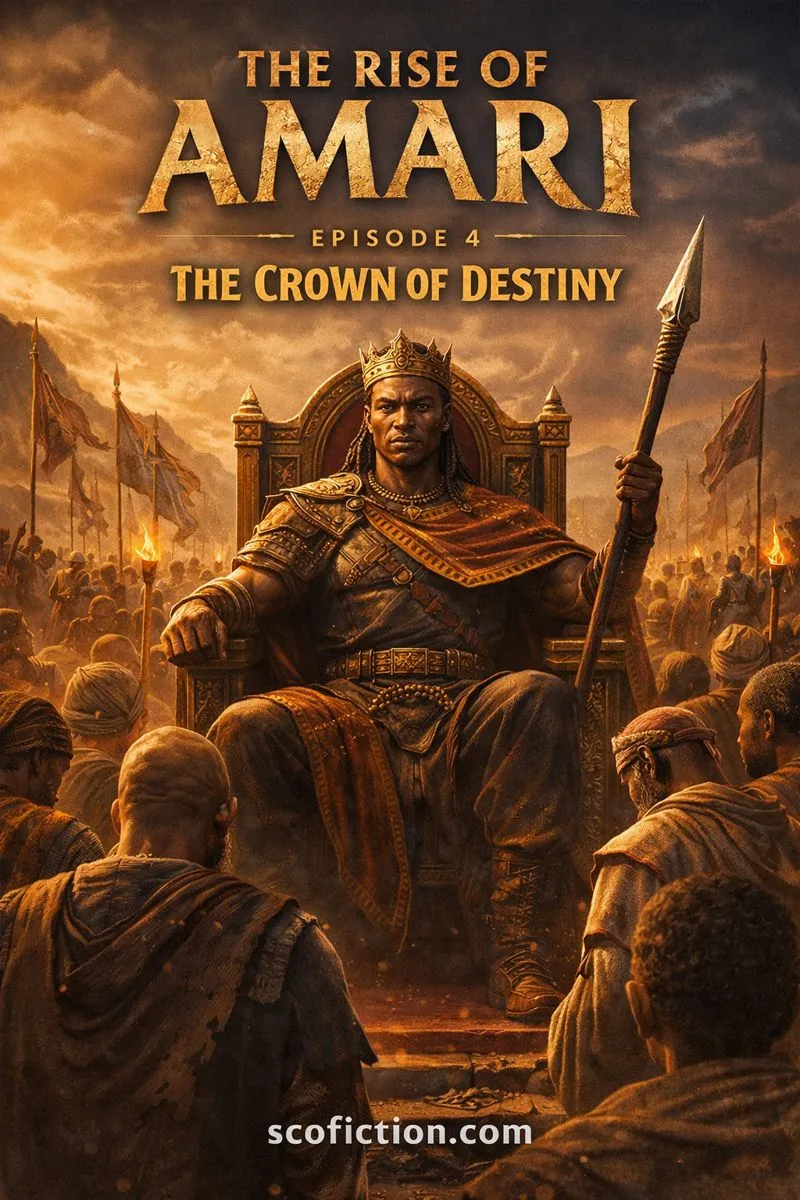
THE RISE OF AMARI – Episode 4

The Crown of Destiny

This episode continues directly from
👉 The Rise of Amari – Episode 3: The Weight of a Name


The Vanishing Warrior

Amari had disappeared as swiftly as the morning mist. Only his closest warriors knew his path. The plains were empty of his presence, yet every step he took seemed to echo across Kafue Village. The people were convinced—though they had never witnessed it—that he had saved them. Their hearts still carried the memory of the mysterious victory that no one could explain.

But not everyone shared that awe. A faction of elders, loyal to Barika, refused to let the legend of Amari overshadow their authority. They whispered doubts in shadowed corners, questioning whether this exile-turned-warrior could truly embody leadership. Their bias clung like stubborn weeds, despite the gods themselves having demonstrated Amari’s unmatched bravery, wisdom, and divine guidance.

Amari did not concern himself with their murmurs. He had been given a higher purpose. Every footprint he left, every camp he made, every moment of silence he kept, was ordered by the gods. With each step, he gained more insight, more clarity, and more wisdom. He was a man no longer bound by fear or vengeance, but a vessel of divine understanding.


The Dream of an Empire

One night, as Amari rested alone in the dense forests beyond Kafue, he was visited by a vision unlike any he had known. In his dream, he stood on a great golden dais. Below him, people from Kafue and countless villages bowed in respect, reverence glowing in their eyes.

He saw himself not as a solitary warrior, but as a ruler uniting these diverse lands. Tribes that had once been rivals held banners side by side. Markets, temples, and schools rose across the plains, all under his guidance. It was a vast empire—a kingdom he had never imagined. The dream whispered a name: Amari’s Empire.

When he awoke, the vision lingered like a flame in his mind. He could not shake it. The scale of such an empire was unimaginable. Could he truly become more than a warrior? Could he unite villages bound by tradition, rivalry, and fear?

Amari did not rush to decide. Instead, as always, he sought wisdom directly from the gods. Alone atop the Mountain of Vision, he meditated, asking the divine for guidance. Here, the immortal answered him, revealing the path he must follow, teaching him lessons of leadership, patience, and divine justice. Every answer he sought, every revelation he needed, came directly from the gods, reinforcing his unique role among mortals.


The Council of Kafue

Meanwhile, back in Kafue Village, the elders gathered urgently. The recent events had left no room for doubt—Amari’s power, courage, and wisdom were undeniable. The people demanded action. After long deliberation, they assembled the villagers in the central square, announcing a decision none could contest: Amari must be crowned King.

Yet the question remained: where could they find him? He had vanished without a trace. Still, even in absence, his presence was felt. Villagers spoke of shadows that moved with a protective aura, of hearts lightened by the echo of his kindness. Amari’s goodness had left a mark, a spiritual footprint that no mortal could erase.

The elders realized that only by following divine instructions could they summon him home. Chief Priest Arimba, the spiritual leader of Kafue, called forth a group of brave youth to seek him. Each young warrior was instructed meticulously:

  • Do not approach him with force. Amari was not to be commanded, only invited.
  • Respect the sacred boundaries of his meditation and solitude.
  • Speak only the words given by the gods. The phrasing must be exact, or he would not return.
  • Honor the path of the gods. Any misstep, misinterpretation, or impure intention would prevent his acceptance.

“These instructions are not mere ritual,” Chief Priest Arimba warned. “They are the voice of the immortal. Fail in even the smallest detail, and Amari will vanish forever, leaving Kafue in uncertainty.”


The Quest Begins

The youth embarked on the journey, carrying only essentials and their courage. For weeks, they traversed rivers, forests, and hills, guided by intuition and prayer. Hunger, storms, and exhaustion tested them at every step. Yet, the instructions of the gods illuminated their path. Every obstacle became a lesson, every danger a confirmation of the divine presence guiding their mission.

As they drew near Amari’s hidden refuge, they felt the weight of the legend pressing upon them. Finally, after weeks of hardship and reflection, they found him seated beneath a colossal baobab tree, lost in meditation. His presence was serene yet commanding. The youth approached cautiously, reciting the sacred words exactly as the gods had instructed.

Amari opened his eyes, and for the first time in weeks, a smile broke across his face. His heart softened. These mortals had listened, understood, and acted with purity of intent. Without a word, he rose, gathering his warriors. Together, they began the journey back to Kafue, their hearts aligned with destiny and divine purpose.


The Return to Kafue

As they approached Kafue, an extraordinary phenomenon unfolded. The land itself seemed to acknowledge Amari’s return. Villagers who had scouted for him reported signs: footprints appearing where none had been, a gentle wind that carried his presence, and a lingering sense of peace in every corner of the village.

Yet the most astonishing discovery awaited them at the village gates. Barika and four other elders, known for their bias and loyalty to old rivalries, had vanished. The only traces left were faint drops of blood on the ground. It was clear: the gods themselves had intervened. Evil and obstruction had been removed without Amari lifting a hand. The purification was divine, and the people understood it immediately.


The Coronation

Three days of celebration followed. Kafue Village erupted with joy, feasting, dancing, and singing in honor of the warrior who had returned as savior. Amari was crowned King in a grand ceremony, the first of its kind in living memory. As the crown settled upon his head, the villagers knew he was not just a ruler—he was a living embodiment of justice, wisdom, and divine favor.

Other nearby villages, inspired by the tales of his courage and righteousness, sent envoys to submit to his leadership. The empire hinted at in his dream was beginning to take shape, slowly but inevitably. Amari’s Empire was no longer a vision; it was reality in motion.


Unity and Justice

Under Amari’s reign, Kafue transformed. Villages once divided by rivalry now cooperated in trade, governance, and defense. Markets and temples flourished. Laws were fair, rooted in both tradition and the guidance of the gods. He was not a tyrant; he was a guide, a protector, and a unifier.

The remaining elders who had feared or doubted him adapted or faded into the background. Power shifted naturally, with divine sanction. Amari’s presence ensured that the land remained harmonious, balanced, and protected.


Legacy of the Warrior-King

Amari’s return had been more than a rescue—it was a cleansing, a fulfillment of prophecy, and the birth of a new era. His footsteps, once a mark of exile, were now the foundation of unity and strength. Every village that submitted to him contributed to the growth of Amari’s Empire, a realm of justice, courage, and divine favor.

The people sang songs of his deeds, not only for his victories in battle but for his wisdom, fairness, and unwavering integrity. Amari, once an exiled child, had become a legend whose story would be told for generations.


🔮 Episode 5 Teaser

Episode 5: The Empire Awakens

As Amari consolidates his rule over Kafue and surrounding villages, rival powers stir in distant lands. Ancient enemies, secret alliances, and the lingering threat of prophecy challenge his empire.

The young king must now prove that bravery alone cannot sustain a kingdom—wisdom, diplomacy, and divine insight will determine whether Amari’s Empire survives or falls.

— Watch out for Episode 5: The Empire Awakens

THE RISE OF AMARI – Episode 3

The Weight of a Name

This episode continues directly from
👉 The Rise of Amari – Episode 2: The Path of Exile


The Mountain of Vision

The mountain had no name, yet every hunter across the Kafue Plains respected it.

It rose like a broken tooth from the ancient earth, its peak often hidden behind drifting clouds and restless wind.

Elders spoke of it in hushed tones. They said it was older than memory itself—a silent witness to vows made long before humanity learned how easily truth could be bent.

Climbing it was not forbidden.
But it was never encouraged.

Only those burdened by questions heavier than their bodies dared attempt the ascent.

Amari stood at its summit as dawn slowly peeled away the darkness.

The wind tugged at his cloak, brushing against scars hidden beneath the fabric—marks earned not only through hardship, but through years of exile, wandering, and discipline.

From that height, the Kafue Plains stretched endlessly below him. Rivers curved through the land like silver veins, feeding villages that appeared no larger than scattered seeds awaiting rain.

This climb was his first strategic move.

Not toward conquest.
Not toward revenge.
But toward understanding.

From the mountaintop, the world felt smaller—yet the weight in his chest grew heavier.

Somewhere beyond the thinning mist lay Kafue Village.

His birthplace.

The name alone carried a burden heavier than any weapon ever could. Kafue—the land that sent him away, the land that turned his name into a warning whispered to children and a secret guarded by elders.

He had never spoken of it.

Not to the men he trained.
Not to the travelers who shared his fire.
Not even to those who trusted him.

A man may choose his path, Amari believed.
But he cannot choose the blood that flows within him.

He closed his eyes and drew in a steady breath.

Patience had become his greatest strength.


The Cry from Below

Then came a shout.

It cut through the stillness, echoing along the mountain’s spine.

Amari’s eyes opened instantly. His body responded with calm readiness, turning toward the narrow descent path.

More voices followed. Urgent. Frightened.

Something was wrong.

Amari descended swiftly, careful and controlled. Near the lower slopes, he saw villagers gathered near the tree line.

Fear clung to them like smoke.

A young maiden stepped forward, her braided hair trembling with movement, her eyes filled with both alarm and relief.

“You,” she called. “Are you one of them?”

“One of who?” Amari asked calmly.

“The armed group,” she replied. “They passed through at dawn. Many of them. We thought they were coming for us.”

Amari’s gaze followed hers toward the plains.

“What happened?”

“There was panic,” she said. “But one of them spoke. He said they were on a mission—to Kafue Village.”

The air seemed to grow thinner.

Kafue.

He did not flinch. But something shifted inside him.

“You know that village,” she whispered.

“Yes,” he answered quietly. “I do.”


The Truth of His Exile

The villagers gathered closer.

Amari spoke—not as a fighter, but as a man facing his past.

“I was born in Kafue Village,” he said. “Before my exile. Before the long wandering. Before my name became something others feared.”

He spoke of childhood beneath open skies.
Of laughter that once echoed freely.
Of tradition that overshadowed justice.

He described the night he was sent away—alone and unarmed, stripped not only of home, but of identity.

“They said my blood carried danger,” Amari said softly. “That my destiny would divide the village.”

“And now?” the maiden asked.

“Now,” he replied, steady and composed, “a force moves toward Kafue.”


The Decision to Protect

The villagers murmured. Some urged caution.

“Do not go,” an elder pleaded. “They are many.”

Amari stepped forward.

“I will protect my people,” he said calmly. “Not with hatred. Not with vengeance. But with wisdom.”

They reminded him of exile. Of rejection. Of wounds still unhealed.

But his resolve did not shift.

A few men he had trained—disciplined and steady—stood beside him.

“We walk with you,” they said.


Victory Through Wisdom

The journey across the plains was quiet.

Amari studied the land carefully—the tall grasses, the narrow river crossing, the natural curves of stone shaped by time.

“This land listens,” he told his companions. “Let it guide us.”

When the advancing group approached, their formation was confident and direct.

Amari did not rush.

He adjusted the terrain to his advantage, using hidden pathways and natural barriers. Wind and dust blurred visibility. Confusion spread among the advancing force.

At the right moment, his strategy unfolded.

Paths gave way. Movement slowed. Formation broke.

Amari and his companions moved with discipline, redirecting and disarming rather than destroying.

The leader of the advancing group confronted him.

Their exchange was brief.

With calm precision, Amari removed the man’s advantage and stepped forward with authority.

“Return,” Amari said. “Tell those who sent you that Kafue stands protected.”

Moments later, the group retreated—leaving behind scattered tools and shaken certainty.


Rumors and the Vanishing Legend

Unseen by the villagers, Amari had shielded them.

In Kafue Village, confusion replaced fear. The group had intended to seize authority and claim sacred land.

But they withdrew instead.

Only Barika noticed.

From a distance, he had seen a figure move with impossible composure.

He recognized the posture.

The discipline.

Amari.

Fear stirred within him—not fear of revenge, but fear of truth.

Rumors spread quickly:

“Amari has returned.”
“The exile walks with power.”
“The bloodline was never cursed.”

The elders struggled to silence the whispers.

Influence began to shift.
Old secrets resurfaced.

Some called for Amari to be brought back—not as an outcast, but as a leader.

But Amari had already vanished.

Only the wind marked his passing.

Only destiny knew where he would appear next.

And Kafue Village stood at the edge of a future it could no longer control.


🔮 Teaser – Episode 4

Amari vanished after the confrontation—but his name did not.

As rumors rise among the elders of Kafue, long-hidden family truths begin to surface. The village debates whether to restore the exile they once rejected.

Meanwhile, Amari walks a new path—guided by insight, purpose, and the growing weight of leadership.

The throne has awakened.

And destiny is calling.

Continue with Episode 4

THE RISE OF AMARI: Episode 2

Paths of Fire and Gold

(A Continuation of “Never To Say Goodbye”)
Read: The Rise of Amari – Episode 1

Series: Never To Say Goodbye


Prologue: When Exile Becomes a Doorway

Exile is meant to break a man.

It is designed to strip him of identity, weaken his spirit, and leave him forgotten by those who once praised him. For many, exile becomes a slow fading. For others, it becomes a doorway—one that opens only to those strong enough to walk through it without bitterness.

As Amari stepped deeper into the vast Kafue Plains, he did not yet know which man he would become.

He only knew that the boy he once was had already been left behind.


The First Night Beyond Home

The night after leaving Kafue Village was colder than Amari expected. The wind moved freely across the plains, whispering stories of travelers whose journeys changed unexpectedly.

Amari lit a small fire and sat beside it, the gifts from his people packed carefully beside him. He counted none of them. Wealth meant little when the heart was heavy.

For the first time since his father’s burial, tears came freely.

Not tears of weakness—but of release.

He mourned his father, his village, and the deep injustice that generations of tradition had accepted as truth—an anguish that would shape his journey across the Kafue Plains and ignite his pursuit of purpose.

Yet when the fire died down, something else remained.

Resolve.

Amari slept that night with his back straight and his eyes open to the stars, unaware that fate was already rearranging his steps.


The Traders of Mambasa Road

At dawn, Amari encountered a caravan moving slowly across the plains. Camels groaned under heavy loads, and men with weathered faces watched him cautiously.

Their leader, an elderly trader named Sengo, studied Amari closely.

“You walk like a man who has lost something,” Sengo said, “but your eyes still look forward.”

Amari explained little. He spoke only of separation and destination unknown.

Sengo smiled.

“Then walk with us. Roads teach faster than villages.”

For weeks, Amari traveled the Mambasa Road, learning the language of trade—how value is hidden, how trust is earned, and how influence moves quietly between hands. He learned how gold was weighed, how deception was disguised as opportunity, and how knowledge could protect better than conflict.

For the first time, Amari understood something his father had once said:

“Strength feeds the body. Wisdom feeds generations.”


Fire in the Night

One night, trouble approached the caravan.

Confusion rose. Tension spread. The camp was thrown into chaos.

Amari did not run.

He acted.

Using strategy rather than confrontation, he guided the traders through a narrow pass, using the glow of the campfire to create distraction and buy time. His calm thinking under pressure protected both lives and valuable goods.

By morning, Sengo knelt before him.

“You are not ordinary,” the trader said. “Stay with us. Learn more. Become more.”

Amari agreed.


Gold That Changes Men

Months passed. Amari’s knowledge grew. His wealth multiplied—not through greed, but through wisdom. He learned where gold truly came from, how land held secrets beneath its soil, and how influence followed those who understood both people and nature.

One night, while examining a trade map, Amari noticed a familiar marking.

The symbol used for hidden gold reserves.

It was marked near Kafue Plains.

His heart tightened.

The truth struck him with sudden clarity.

Barika had known.


The Truth Beneath the Soil

Everything became clear.

The jealousy.
The rumors.
The false accusation.
The urgency to send Amari away.

Gold had been discovered beneath land tied to Amari’s family lineage. His removal had not been about tradition—it had been about opportunity.

Amari did not rage.

He smiled.

Because now, he understood the game.


The Man Who Returned Different

Years later, whispers began to spread.

A young man of wisdom and wealth was rising beyond the plains. A man who spoke softly but commanded respect. A man whose name carried influence in markets and councils.

That man was Amari.

But he did not return to Kafue Village yet.

Not as a victim.

Not as a boy.

He would return prepared, composed, and fully aware.


Tempered by Gold

As Amari stood on a hill overlooking the plains, the sun setting behind him, he remembered the day he bowed before uncertain elders.

He would bow no more.

Separation had strengthened his character.
Gold had refined his vision.
Betrayal had sharpened his understanding.

The rise had begun.

And Kafue Village would soon witness a transformation.


Bonus Preview

Just a bonus for you — check out: THE SLAVE GIRL

RESERVED — COMING SOON

THE RISE OF AMARI

Episode 3: The Weight of a Name

🔒 Reserved for Release on scofiction.com

What to Expect in Episode 3:

  • Amari’s first strategic move toward Kafue Village
  • Barika’s confidence begins to fade
  • The elders confront growing rumors of Amari’s return
  • Influence shifts—and long-hidden family truths surface

📌 This episode is currently reserved and will be released next.

Never To Say Goodbye

Synopsis

Never To Say Goodbye is a moving African narrative about love, loss, faith, and destiny. Set in the peaceful community of Kafue Plains, the story follows Diallo, a devoted husband and father who mysteriously disappears on the very day his son is born. Left behind, Thandiwe who raised their child with courage, shielding him from a painful truth. Years later, through a child’s divine wisdom and unwavering faith, a miracle unfolds—revealing that goodbyes are not always final, and hope never truly dies.


Story Body

Diallo lived a life many admired in the quiet African community of Kafue Plains, a land of red earth, tall grasses, and warm human bonds. He was known as a hardworking man—honest, disciplined, and deeply rooted in family values. His laughter echoed easily, and his presence brought calm wherever he went.

When he married Thandiwe, the village celebrated as though a long-awaited promise had been fulfilled. Thandiwe was gentle yet strong, a woman whose eyes carried both kindness and depth. Together, they built a modest home filled with hope, dreams, and whispered prayers for the future.

Their joy multiplied when Thandiwe became pregnant.

The pregnancy passed peacefully, and on a quiet afternoon, with the help of the village midwife, Thandiwe delivered a healthy baby boy at home. The cries of new life filled the house, announcing the arrival of a son who would carry Diallo’s name and blood.

But Diallo was not there to hear that cry.

On that same evening, as the sun dipped low and painted the sky in gold, Diallo closed from work and began the familiar walk home. His heart was light. He was finally going to meet his son.

He never made it home.

Somewhere along the narrow footpath between the fields and the village, Diallo was seized. Hands grabbed him from behind. A cloth was forced over his eyes. Voices—strange, hurried, and cruel—whispered commands. He was dragged away into the unknown.

That was the last time Diallo was seen.


The news struck Thandiwe like lightning.

Days passed. Then weeks. The village searched. Elders questioned travelers. Prayers were said at dawn and dusk. But Diallo did not return.

Thandiwe’s tears soaked her pillow every night, yet when she held her newborn son, she swallowed her pain. She named the boy Amari, meaning strength, because strength was what she needed to survive.

As Amari grew, questions followed.

“Mother,” he would ask, his eyes innocent and searching, “where is my father?”

Each time, Thandiwe smiled through invisible cracks in her heart and replied softly,
“Your father traveled. He will surely return one day.”

It became her shield—and her wound.

Diallo’s mother, the boy’s grandmother, was kind beyond words. She treated Thandiwe not as a daughter-in-law but as a daughter of her own blood. Yet kindness, no matter how sincere, could not fill the space Diallo had left behind.


One evening, when the weight of silence became unbearable, Thandiwe stepped behind the house. The sun was setting slowly, its golden light stretching across the land like a farewell.

She looked up at the sky.

And she wept.

Her cries were deep, raw, and unrestrained. Tears wrapped around her like a river with no end. She spoke to the wind, to the earth, to God—asking questions with no answers.

Unbeknownst to her, Amari had followed.

Now eight years old, the boy stood quietly, watching his mother cry in a way he had never seen before. His young face showed no fear—only understanding far beyond his age.

“Mama,” he called gently.

Thandiwe turned quickly, wiping her tears.

“My son,” she said, forcing a smile, “what are you doing here?”

She knelt before him and took his hands.

“Amari,” she whispered, “I want to tell you something.”

The boy looked at her calmly.

“Mother,” he said, his voice slow but clear, “I already know why you were crying. And I know where my father is.”

Thandiwe froze.

She cleaned her tears again, disbelief flooding her face.

“I am all ears,” she said shakily. “What has divine wisdom pushed you to say?”

Amari took a deep breath.

Then, in a still, audible voice, he said:

“Never to say goodbye.
My father is still alive.
And I will surely see him again.”

The words hung in the air like prophecy.

And then—

Footsteps.

Thandiwe turned.

There, walking through the gate, thinner but alive, stood Diallo.

For a moment, time stopped.

Then screams of shock turned into cries of joy. Neighbors gathered. The grandmother collapsed in praise. Amari stood still, his eyes fixed on the man he had never seen—but always known.

Diallo fell to his knees.

He told them everything.

First, he explained how his captors blindfolded him and dragged him away without warning.
He explained that they kept him in a secluded area, fully isolating him from the outside world. Strangers provided his meals, watched over him day and night, and ensured he remained hidden from anyone searching for him.

The real story later came to light. His uncle had planned everything after secretly discovering gold beneath Diallo’s land and wanted him permanently removed.

But fate had other plans.

By grace and endurance, Diallo survived. And one day, he escaped.

Faith smiled on him.

That night, the village celebrated—not just a man’s return, but the triumph of hope over despair.

Some goodbyes, after all, are never meant to last.

Also read…His-Last-breath


Summary

Never To Say Goodbye is a heartfelt African short story about disappearance, motherhood, faith, and reunion. Through Thandiwe’s pain, Amari’s divine wisdom, and Diallo’s miraculous return, the story reminds readers that hope can survive even the longest silence—and that destiny often finds a way home.

Watch out for ”The Rise of Amari”.

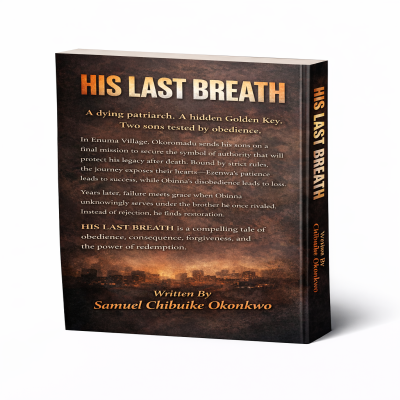
HIS LAST BREATH

Synopsis

In Enuma Village, a dying patriarch, Okoromadu, sends his two sons on a final mission to secure a Golden Key hidden in a foreign land—a symbol of authority that would protect his wealth after his death. Before they depart, he gives them strict rules of obedience and unique items to guide them, warning that the journey would test their hearts more than their strength.

Along the way, the elder son Ezenwa obeys every instruction, enduring hardship with patience and discipline, while the younger son Obinna breaks the rules, succumbing to hunger and sleep at forbidden times. As a result, Ezenwa succeeds and returns with the key just in time to receive his father’s full blessing before Okoromadu breathes his last. Obinna, however, receives only a minimal blessing and is left to face the consequences of his disobedience.

Years later, broken but humbled, Obinna unknowingly seeks employment at his brother’s flourishing company. Instead of rejecting him, Ezenwa restores him, elevating him beyond merit and eventually handing over leadership. United at last, the brothers transform loss into wisdom, authority into service, and inheritance into reconciliation—ending the story in praise, unity, and restored purpose.

Chapter One: The Night Before the Journey

The elders of Enuma Village used to say that when the moon sat low and red on the edge of the sky, destiny was negotiating with time. On such a night, the wind did not rush; it listened. The trees did not sway; they leaned closer. And on one such listening night, Okoromadu son of Irua, the wealthiest and most feared man in Enuma, summoned his two sons to the inner courtyard of his ancestral compound.

Okoromadu was not an ordinary man. His beard was white, not because of age alone, but because years of secrets had drained the color from his soul. His eyes—sharp even in frailty—had seen borders crossed, empires negotiated with silence, and covenants sealed without ink. Though sickness now bent his spine and thinned his voice, his presence still commanded the air.

Torches were lit around the courtyard, their flames dancing nervously, as though they too sensed the weight of the night. The clay walls bore carvings of ancestral victories, wealth won through wisdom rather than war. At the center sat Okoromadu on a carved iroko chair, wrapped in a deep indigo cloth marked with the emblem of authority—a coiled serpent gripping a sun-disc. That emblem alone could silence greedy men and bend proud chiefs.

Before him stood his sons.

The first was Ezenwa Okoromadu, the elder by four years. Tall, broad-shouldered, with calm eyes that observed before they judged, Ezenwa carried himself like one who listened more than he spoke. The villagers often said Ezenwa walked as if the earth trusted him. He had patience woven into his breath.

Beside him stood Obinna Okoromadu, the younger. Quicker in speech, sharper in temper, and restless in spirit. Obinna’s eyes burned with ambition; he wanted the world to answer him quickly. Where Ezenwa paused, Obinna pressed forward. Where Ezenwa waited, Obinna demanded.

Okoromadu studied them both for a long moment. Then he raised his hand, and the wind seemed to pause.

“My sons,” he began, his voice cracked but heavy with command, “the night has come that I feared and prepared for.”

They knelt at once, touching their foreheads to the earth.

“You will rise,” he said softly. “This matter must be spoken eye to eye.”

They rose.

Okoromadu gestured, and an elderly servant brought forward a small chest carved from ebony wood, bound with brass and sealed with red wax marked by the serpent emblem. The chest was placed before the old man.

“Beyond the borders of this land,” Okoromadu said, “past rivers that forget their names and roads that reject strangers, lies a country where I once walked as a shadow. In that land, I hid something that does not belong to time.”

He coughed, deep and painful. Ezenwa stepped forward instinctively, but Okoromadu lifted a finger.

“What I hid is a Golden Key,” he continued, “forged by hands that no longer exist. Upon it is engraved the emblem of authority. Whoever bears it lawfully commands obedience from those who occupy my wealth—both seen and unseen.”

Obinna’s breath caught. Ezenwa remained still.

“After my breath leaves me,” Okoromadu said, “men will rise who think my wealth belongs to them. Stewards will grow teeth. Guards will forget loyalty. Even kin will pretend not to remember my name.”

The torches crackled.

“That key,” he said, tapping the chest though it did not contain it, “will make them kneel without bloodshed.”

Silence followed.

“You will both go,” he said at last. “At dawn.”

Obinna frowned. “Both of us?”

“Yes,” Okoromadu replied. “Because destiny tests differently.”

He motioned again, and two servants approached, each holding a wrapped bundle.

“These,” Okoromadu said, “are the materials I give you. They are not equal, because you are not equal in nature. But both are sufficient.”

He turned to Ezenwa first.

Ezenwa’s Materials

  1. The Calabash of Still Water – a small gourd sealed with beeswax.
    “This water renews itself at dawn if untouched at night. Drink only when your spirit trembles.”
  2. The Ash-Wood Staff – light but unbreakable.
    “It will not strike unless your heart is clean.”
  3. The Thread of Silence – a thin silver thread wrapped around a bone pin.
    “When tied around your wrist, it will close your mouth to foolish speech.”
  4. A Strip of Goat Skin Marked with Symbols
    “These are paths written in riddles. Read them only when lost.”

Then he turned to Obinna.

Obinna’s Materials

  1. The Flask of Ember Oil – warm to the touch.
    “It brings strength at night but burns when misused.”
  2. The Iron Dagger with No Edge – blunt but heavy.
    “It responds to anger more than skill.”
  3. The Coin of Calling – engraved with the serpent emblem.
    “It attracts helpers, but also attention.”
  4. A Bag of Red Seeds
    “Plant one where you rest; it reveals who watches you.”

Obinna smiled faintly, gripping his bundle tightly.

Okoromadu inhaled deeply.

“Now hear the rules,” he said, his voice lowering, as though the ancestors leaned closer.


THE RULES OF THE JOURNEY

First Rule:
“You must not sleep at night. Not under stars, not under roofs, not under trees. The night is a time of watching. Sleep at night invites spirits that borrow faces. If your eyes grow heavy, walk. If your legs fail, sing. If your mind wanders, pray. You may sleep only when the sun stands above you.”

Second Rule:
“You must not eat from spirits or strangers. Any food offered by unknown hands carries a question. Refuse politely. If hunger torments you, the gods will provide.”

Obinna shifted. “How will the gods provide, Father?”

Okoromadu smiled faintly.

“You will find meals without hands,” he said. “Fruits fallen but unbruised. Fires already burning with pots unattended. Fish trapped in shallow pools where no nets exist. Bread left warm on stones with no footprints nearby.”

He paused.

“Eat only what arrives without invitation.”

Third Rule:
“Do not reveal your mission. Not to kings. Not to lovers. Not to helpers. Words are doors.”

Fourth Rule:
“If separated, do not search for each other. Each path judges the heart alone.”

Fifth Rule:
“When the key is found, return immediately. Do not test its power.”

The wind blew hard then, rattling the torches.

Obinna laughed softly. “These rules are heavy, Father.”

Okoromadu’s eyes hardened. “They are heavier when broken.”

He leaned back, suddenly tired. Ezenwa stepped forward, kneeling.

“I will follow all you have said,” Ezenwa vowed. “Even when I do not understand.”

Obinna hesitated… then nodded. “I will not fail.”

Okoromadu reached out, placing a trembling hand on each of their heads.

“At dawn,” he whispered, “you begin.”

As they turned to leave, Okoromadu called out once more.

“My sons… remember this—obedience preserves what strength destroys.

The moon slid behind clouds. Somewhere in the distance, a night bird cried—a sound too early, too sharp.

Okoromadu closed his eyes.

And the journey had already begun.

Chapter Two: The Road That Refused Sleep

Dawn did not announce itself gently over Enuma Village. It came like a verdict—sudden, unavoidable, final. The sky shifted from charcoal to bruised purple, then to pale gold, as if the sun itself understood the gravity of what was being set in motion.

Ezenwa and Obinna stood at the threshold of their father’s compound, travel cloaks fastened, bundles secured, destinies unspoken. The village was quiet, but not asleep. Old women watched from behind woven mats. Children pretended not to stare. Dogs sat with their heads tilted, sensing a separation the world could not undo.

Okoromadu did not come out to see them off.

That absence carried more weight than any farewell.

At the foot of the road that split Enuma from the rest of the world, the brothers stopped. Tradition demanded a final libation, but none was poured. This was not a journey to be blessed by custom alone—it was one judged by obedience.

Without words, they turned away from home.


THE FIRST NIGHT

By sunset, the land had changed. Familiar red earth gave way to gray stone. Palm trees thinned, replaced by towering baobabs whose roots clawed the ground like ancient fingers gripping memory. The road narrowed, twisting like a question that refused a straight answer.

As darkness fell, the air thickened.

Ezenwa felt it first—not fear, but pressure. The kind that made the skin alert, the breath deliberate. He wrapped the Thread of Silence around his wrist, feeling its cool reassurance.

Obinna, on the other hand, welcomed the night.

“This is when journeys feel alive,” he said, pouring a drop of Ember Oil onto his palm. The warmth spread through his arm, easing the ache in his shoulders. “I could walk forever like this.”

Ezenwa glanced at him. “The rule is not to sleep, not to boast.”

Obinna laughed. “I’m not boasting. I’m surviving.”

The road soon led them into a valley where mist gathered unnaturally fast. Shapes formed and dissolved in the fog—too slow to be animals, too deliberate to be shadows.

A voice drifted from nowhere.

“Travelers,” it called, soft and inviting. “Rest is mercy.”

Ezenwa stopped walking.

Obinna did not.

“Do not answer,” Ezenwa whispered.

But the voice came again, closer now.

“Your feet bleed. Your eyes burn. Lie down. Just for a moment.”

Ahead, Obinna saw something impossible—a clearing lit by moonlight, with smooth stones arranged in a perfect circle. At its center lay woven mats and burning incense. The scent was intoxicating.

“Ezenwa,” Obinna said, slowing. “Look. Someone prepared this.”

“No footprints,” Ezenwa said sharply. “No firewood.”

“But the rules say we must not sleep,” Obinna replied. “Not that we must not rest.”

“The night is watching,” Ezenwa said. “Move.”

Obinna hesitated. His legs ached. His thoughts blurred. He took another step toward the clearing.

The Coin of Calling in his pouch began to vibrate faintly.

From the mist emerged figures—human in form, but wrong in movement. Their heads tilted too far. Their smiles arrived too slowly.

“Eat,” one said, holding out a bowl of steaming food. “Then rest.”

Ezenwa slammed his Ash-Wood Staff into the ground. The sound cracked the air like thunder.

“No!” he shouted.

The staff glowed faintly, and the figures recoiled, hissing as the mist tore itself apart.

Obinna stumbled backward, shaken.

“You almost broke the rule,” Ezenwa said quietly.

Obinna said nothing.

They walked until dawn broke the spell of the valley.

When the sun finally rose, they collapsed beneath a fig tree and slept like men who had wrestled shadows.


THE GODS PROVIDE

When they woke, Ezenwa found a cluster of ripe figs resting neatly on a flat stone beside them—unmarked, untouched, perfect.

Obinna stared. “No one was here.”

Ezenwa nodded. “Eat.”

They continued for days.

Each night brought its own temptation. Rivers that sang lullabies. Roads that looped endlessly. Strangers who offered shelter with smiles too eager.

Ezenwa obeyed.

He walked when weary. He sang ancestral songs when his mind faltered. He refused food offered with words. When hunger clawed at him, provision came—fish trapped in sun-warmed shallows, yams unearthed by no hand, rain collected cleanly in hollow stones.

Obinna struggled.

The Ember Oil gave him strength, but also impatience. He grew frustrated with Ezenwa’s caution.

“You move like an old man,” Obinna snapped one night. “The key is not hiding from us. It wants to be found.”

“It tests us,” Ezenwa replied.

On the seventh night, they reached the outskirts of a foreign city—Kal-Haret, a place of high walls and many tongues. Lanterns burned all night there. Music spilled into the streets. The smell of roasted meat filled the air.

“This city does not sleep,” Obinna said eagerly. “Then the rule does not apply.”

“The rule applies everywhere,” Ezenwa said.

They separated at the city gate.

Obinna followed the sound of laughter.

Ezenwa followed the narrow road that led away from noise.


THE VIOLATION

Obinna entered a tavern lit with gold and red. People welcomed him like a long-lost friend. A woman placed food before him without asking his name.

He hesitated.

But the hunger was unbearable.

“It’s just one meal,” he whispered to himself. “I did not ask for it.”

He ate.

The food was delicious—and wrong.

The room spun. Faces melted into masks. Laughter became shrill.

By morning, Obinna woke alone in an alley, his Coin of Calling cracked, his bag of red seeds spilled and trampled. Something had been taken—something unseen.

From that moment, the road turned against him.


THE KEY

Ezenwa, meanwhile, followed the goat-skin riddles across deserts and ruins. The symbols shifted as he obeyed. On the thirteenth day, he reached a stone shrine half-buried in sand.

Inside, resting on a pedestal of bone and gold, lay the Golden Key.

It pulsed gently, as though breathing.

Ezenwa did not touch it until dawn.

When he lifted it, the air bowed.

He turned home immediately.


Far behind him, Obinna wandered, hungry, ashamed, and unaware that his failure had already written a harder future.

And far away in Enuma, Okoromadu’s breath grew thinner.

Chapter Three: When Breath Weighed More Than Gold

The wind that carried Ezenwa home was not the same wind that had pushed him away.

It moved slower, heavier, as though it bore news it did not want to deliver.

Ezenwa felt it in his chest long before the walls of Enuma Village came into view. The Golden Key hung against his skin, wrapped in goat hide, its presence calm but insistent—like a truth that could not be delayed. With every step, the emblem etched into it pulsed faintly, the serpent gripping the sun-disc as though reminding him that authority was not power seized, but power recognized.

He walked without haste, but without pause.

Because obedience had taught him something the journey could not: timing is also a rule.


THE RETURN OF THE OBEDIENT

The first child to see Ezenwa was a boy herding goats near the eastern ridge.

“Someone is coming!” the boy shouted, dropping his stick.

The cry rippled through the village.

By the time Ezenwa reached the outer compound, people were already gathering—elders with worried eyes, women whispering behind hands, guards standing uncertain, unsure whether to block or bow.

Ezenwa did neither demand nor announce himself.

He simply walked.

The gates opened.

Inside the compound, the air smelled of herbs and smoke. Mourning cloths hung unfinished. Not yet worn, but prepared—like grief that had been waiting for permission.

Ezenwa’s heart tightened.

He handed the Golden Key to the chief steward without ceremony.

“Take me to my father.”

The steward’s hands shook as he saw the emblem.

Without a word, he knelt.

That single act sent a shock through the compound. Guards dropped their spears. Servants bowed low. Even those who had begun to imagine themselves masters felt something in their bones shift back into place.

Authority had returned.


OKOROMADU’S LAST HOURS

Okoromadu lay on a low bed in the inner chamber, his breath shallow, his chest rising like a tide that no longer trusted the moon. His eyes were closed, but his spirit was awake.

Ezenwa knelt beside him.

“Father,” he whispered.

Okoromadu’s eyes opened immediately.

A smile—small, satisfied, complete—formed on his lips.

“You returned with the night still on your heels,” he said faintly. “You obeyed.”

Ezenwa unwrapped the key and placed it gently in his father’s palm.

The emblem glowed.

The room seemed to kneel.

Okoromadu exhaled deeply, as though something heavy had finally been set down.

“You have done what strength cannot,” he said. “You listened.”

Tears slid down Ezenwa’s face, silent and unashamed.

“Where is your brother?” Okoromadu asked.

Ezenwa bowed his head. “He did not return with me.”

Okoromadu nodded slowly.

“I know.”

He closed his eyes, then opened them again, summoning the last of his strength.

“Call the elders,” he said. “And prepare oil.”


THE ONE WHO FAILED

Obinna returned three days later.

Not walking.

Staggering.

His clothes were torn. His eyes carried the look of a man who had argued with fate and lost every word. The road had stripped him—first of pride, then of direction, then of hope.

He had violated two rules, not one.

First, he had eaten from strangers whose hands were not human in intention.

Second, he had slept at night—deep, careless sleep—after the meal weighed his spirit down.

And the night had taken its payment.

By the time Obinna reached Enuma, rumors had already outrun him.

“He failed.”

“He broke the rules.”

“He carries no authority.”

Children stared. Elders turned away. Guards watched him like a guest who had overstayed his welcome.

When Obinna entered the compound, he saw the elders gathered, oil burning, cloths laid out.

And at the center—his father, barely breathing.

Obinna fell to his knees.

“Father!” he cried, crawling forward. “Forgive me!”

Okoromadu opened his eyes one last time.

He looked at Obinna for a long, aching moment.

“You chose hunger over obedience,” he said softly. “And sleep over watchfulness.”

Obinna sobbed. “I was weak.”

“Yes,” Okoromadu replied. “And weakness ignored instruction.”

He turned to Ezenwa.

“You,” he said, “will carry my name cleanly.”

Then, with effort, Okoromadu raised his hand.

He placed both hands on Ezenwa’s head.

“I bless you with clarity that confuses your enemies, patience that outlives storms, and authority that does not beg,” he declared. “What I built, you will grow.”

The elders responded, “So shall it be.”

Okoromadu then gestured weakly to Obinna.

Obinna leaned forward, trembling.

Okoromadu touched his head briefly.

“I bless you,” he said, “with survival.”

The words cut deeper than silence.

With that, Okoromadu inhaled once—slow, deliberate—

—and released his last breath.

The oil lamps flickered.

The wind outside stilled.

Okoromadu son of Irua was gone.


AFTER THE BREATH

The days that followed reshaped Enuma.

Ezenwa took his father’s seat—not as a conqueror, but as a custodian. With the Golden Key, disputes dissolved. Those who had planned rebellion bowed without being asked. Wealth flowed back into rightful order.

Obinna, however, drifted.

He tried to remain in the compound, but every corner reminded him of what he had lost. Servants avoided his eyes. Elders spoke carefully around him. Even Ezenwa—kind but firm—could not erase the weight of failure.

Eventually, Obinna left.

He wandered to distant towns, offering labor, strength, anything. But word followed him: the son who failed the test. Doors closed quietly. Promises vanished overnight.

Pride hardened into bitterness.

Bitterness into recklessness.

For a time, Obinna lived waywardly—working briefly, fighting often, trusting poorly. Yet even in his fall, something refused to die in him.

He remembered his father’s voice.

And slowly, hunger returned—not for food, but for purpose.

One morning, with nothing left but resolve, Obinna washed his face in a river and set out again.

This time, to search for honest work.

He did not know that the road ahead led directly into his brother’s future.

Chapter Four: The Name on the Gate

Years do not always heal. Sometimes, they only widen the space where memory echoes.

By the time Obinna reached the city of Akurion, his feet were hardened, his pride thinned, and his name worn down to something he no longer introduced with confidence.

He had learned to wake before dawn and sleep whenever sleep permitted him—rules now broken beyond repair. He had learned how hunger could teach humility faster than any elder, and how silence could become a companion when people no longer asked questions.

Akurion was not a city of mercy. It was a city of order.

Its streets were straight, its walls tall, its markets loud with competition. Wealth lived there, but only for those who could submit to structure. Obinna did not know it yet, but the very thing he had once resisted—obedience—was what governed Akurion’s prosperity.

On the eastern edge of the city stood a complex so vast it seemed to swallow the horizon. Tall gates of iron bore a familiar emblem carved into bronze:

A coiled serpent gripping a sun-disc.

Obinna stopped walking.

His chest tightened.

“That symbol…” he whispered.

He had not seen it in years—not since the night his father’s breath left the world. He stared at it, unsure whether to laugh or turn away.

Above the gate, engraved in stone, were the words:

OKOROMADU HOLDINGS
Stewarded under lawful authority

Obinna staggered backward.

His brother’s company.

Ezenwa’s inheritance—expanded beyond Enuma, beyond anything their father had ever imagined.

For a moment, Obinna considered leaving. Pride urged him to turn away before recognition could wound him again. But hunger—real, practical hunger—tightened his resolve.

“I will work,” he said aloud. “Even if they spit my name out.”

He approached the gate.


THE INTERVIEW THAT NEVER WAS

Inside the compound, order moved like a living thing. Workers passed with purpose. Managers consulted tablets and scrolls. Guards stood alert, but not arrogant.

Obinna joined a line of applicants gathered beneath a shaded awning. Each held papers, references, hope.

When his turn came, the clerk looked up.

“Name?” she asked without interest.

“Obinna,” he said. He hesitated, then added, “Obinna Okoromadu.”

The clerk froze.

Slowly, she looked at him again—really looked.

Her expression changed.

“Please wait,” she said, standing too quickly.

She disappeared through a side door.

Obinna’s stomach sank.

So this is how it ends, he thought. Thrown out by my own blood.

Inside the main building, the clerk rushed into a polished office where Ezenwa Okoromadu, now Managing Director, stood reviewing ledgers. Age had sharpened him. Responsibility had broadened his shoulders. His eyes—still calm—had learned to weigh futures.

“There is a man at the gate,” the clerk said breathlessly. “He gave a name.”

Ezenwa looked up. “Which name?”

She swallowed. “Obinna Okoromadu.”

The room went still.

For a long moment, Ezenwa said nothing.

Then he closed the ledger.

“Where is he?” he asked quietly.

“At the applicants’ line.”

Ezenwa walked to the window. From the third floor, he could see the awning. He scanned the faces—and there he was.

Thinner. Harder. Bent, not in posture, but in spirit.

Ezenwa exhaled slowly.

“He came himself,” he murmured.

The memories came uninvited—the night road, the rules spoken under torchlight, the failure that had shaped two destinies in opposite directions.

The clerk waited nervously.

Ezenwa turned to her.

“Tell the recruitment manager,” he said evenly, “that this man is not to be interviewed.”

The clerk nodded quickly.

Obinna’s heart dropped even before the words reached him.

“But,” Ezenwa continued, “tell him also that Obinna Okoromadu is to be employed immediately.”

The clerk blinked. “Employed… as what, sir?”

Ezenwa did not hesitate.

“Deputy Managing Director.”

The words landed like thunder.


FROM DUST TO AUTHORITY

The recruitment manager nearly collapsed.

“Sir,” he stammered, “there must be some mistake—”

“There is no mistake,” Ezenwa replied. “There is restoration.”

When Obinna was summoned inside, he expected dismissal.

Instead, he was escorted past offices he could never have imagined entering. Doors opened without question. Workers bowed—not to him, but to the authority of the name that surrounded him.

He stood before Ezenwa’s desk, trembling.

Ezenwa rose.

For a heartbeat, they simply looked at each other.

Then Obinna fell to his knees.

“I am not worthy,” he said, voice breaking. “I failed him. I failed you.”

Ezenwa stepped forward and lifted him up.

“You failed obedience,” Ezenwa said gently. “Not sonship.”

Obinna wept openly.

“I came only to work,” he whispered. “Even as a cleaner.”

Ezenwa placed a hand on his shoulder.

“Our father,” he said, “gave you survival. Survival teaches lessons authority cannot.”

He gestured to the chair beside him.

“Sit. Learn.”


THE ARRANGED MEETING

Months passed.

Obinna worked harder than any man in the company. He arrived early. He left late. He listened more than he spoke. Slowly, the sharp edges of his past softened into humility. Workers who once whispered now sought his counsel. Managers found his instincts—once reckless—now tempered by experience.

One evening, Ezenwa summoned him privately.

“There is something I must do,” Ezenwa said.

They traveled together to Enuma.

At their father’s grave, beneath the iroko tree, Ezenwa spoke.

“Father,” he said, “you said obedience preserves what strength destroys.”

He turned to Obinna.

“And you learned what strength alone costs.”

Ezenwa removed the insignia ring from his finger—the symbol of Managing Authority.

“I have carried this,” he said, “to grow what was given. But unity was always the true inheritance.”

He placed the ring in Obinna’s palm.

“I hand the company to you.”

Obinna gasped. “I cannot—”

“You can,” Ezenwa said. “Because now you know how to obey.”

The wind stirred.

The leaves whispered.

Two brothers stood together—no longer divided by failure or success, but joined by understanding.


PRAISE

News spread quickly.

People marveled—not at wealth, but at reconciliation. Elders spoke of it as a lesson. Children sang of it as a story. Enuma rejoiced.

From loss came order.
From failure came wisdom.
From last breath came new life.

And the name Okoromadu was praised—not for gold, but for unity.

Chapter Five: What the Breath Left Behind

Long after Okoromadu’s bones had settled into the red earth of Enuma, his breath remained.

Not in the wind, nor in the carved symbols of authority, nor even in the wealth that stretched across cities and borders—but in the quiet order of things restored. Breath, after all, was never meant to be hoarded. It was meant to pass through, leaving life changed in its wake.

The elders of Enuma would later say that the greatest miracle was not that the brothers were reunited, but that neither of them returned unchanged.


THE WEIGHT OF THE HANDOVER

When Ezenwa placed the insignia ring into Obinna’s palm, the metal felt heavier than iron.

Obinna did not close his fingers immediately. He stared at it as though it might burn him.

“I broke the rules,” he said again, his voice low, stripped of pride. “I ate what I was told not to eat. I slept when I was warned to watch. I lost what was entrusted to me.”

Ezenwa nodded. “And because of that, you learned restraint.”

They stood before their father’s grave, the iroko tree towering above them like a witness that could not forget. The late afternoon sun filtered through the leaves, casting shifting patterns on the earth—light and shadow chasing each other, neither able to claim the ground alone.

“Our father did not bless you with authority that day,” Ezenwa continued. “He blessed you with survival. Survival forces a man to listen.”

Obinna swallowed hard.

“I hated that blessing,” he admitted. “I thought it was a curse.”

“It was a longer road,” Ezenwa said. “Not a lesser one.”

Obinna finally closed his fingers around the ring.

“I will not lead like a conqueror,” he said. “I have seen what hunger does to men. I will not forget.”

Ezenwa smiled then—not the careful smile of a leader, but the relieved smile of an elder brother who had waited years to hear the right words.

“Then you are ready.”


THE PRAISE ASSEMBLY

The transfer of leadership was not done in secret.

Ezenwa insisted on a full assembly—elders from Enuma, stewards from Akurion, traders from distant lands, workers from the lowest ranks of Okoromadu Holdings. He summoned them all.

On the appointed day, the central square of Enuma filled beyond memory. Drums were beaten not in mourning, but in rhythm. Women sang praise-songs older than the village itself. Children climbed walls and trees to see better.

At the center stood two stools carved from the same iroko trunk—placed side by side.

Ezenwa rose first.

“My father,” he said, his voice carrying without effort, “taught us that authority is recognized, not announced. The Golden Key he hid was never meant to divide brothers, but to reveal hearts.”

He gestured to Obinna.

“This man failed a test,” Ezenwa said plainly. Murmurs stirred. “And survived it.”

Silence followed.

“He walked roads that did not forgive. He ate regret before he ate bread. He learned obedience not from instruction, but from consequence.”

Ezenwa turned fully to his brother.

“And because of that, I place this house into his hands.”

Gasps rippled through the crowd.

Obinna stepped forward, his voice trembling but clear.

“I will not rule as one who has never fallen,” he said. “I will rule as one who remembers the ground.”

He lifted the insignia ring high.

“This company, this wealth, this authority—none of it belongs to pride. It belongs to order, service, and unity.”

The elders rose as one.

“So shall it be,” they declared.


THE KEY’S FINAL WORK

That night, Obinna returned alone to the inner chamber where the Golden Key was kept. The emblem still glowed faintly, its power undiminished.

He knelt.

“For years,” he said softly, “I thought this key would have saved me.”

He paused.

“But it was obedience I lacked—not power.”

He wrapped the key carefully and placed it back in its resting place.

It would not be needed again.

From that day forward, Okoromadu Holdings prospered differently. Workers were fed before profits were counted. Managers were chosen for wisdom, not closeness. Disputes were settled early, without humiliation. The name carried weight not because it inspired fear, but because it inspired trust.

People said the company breathed.


THE BROTHERS

Ezenwa did not disappear.

He remained as advisor, teacher, and brother. Where Obinna led with caution, Ezenwa counseled with patience. Where Obinna hesitated, Ezenwa reminded him of lessons learned the hard way.

At night, sometimes, they would sit together beneath the iroko tree.

“We walked the same road,” Obinna once said, “but the road judged us differently.”

Ezenwa nodded. “The road only revealed what we carried.”

They laughed softly then—not the laughter of boys, but of men who had survived becoming themselves.


WHAT THE BREATH LEFT BEHIND

Years later, when Obinna’s own hair began to gray, a child asked him about the story of the key.

“Was it really gold?” the child asked.

Obinna smiled.

“Yes,” he said. “But gold was the least valuable thing in it.”

“What was the most valuable?” the child asked.

Obinna looked toward the iroko tree, toward the grave, toward the place where breath had once ended and begun something else.

“Instruction,” he said. “And the humility to follow it.”

The child nodded, not fully understanding—but remembering.

And that was enough.


ENDING PRAISE

From Enuma to Akurion, from failure to restoration, the story was told again and again—not as a warning, but as praise.

Praise for a father who prepared wisely.
Praise for a son who obeyed fully.
Praise for a son who failed, learned, and returned.
Praise for unity that outlived wealth.

And so the story of His Last Breath ended—not in silence, but in order.

Because some breaths, once released, never truly leave.


THE END

Read Never-To-Say-Goodbye