Category Archives: African Fiction Stories – Authentic Village & Cultural Tales | ScoFiction

Explore African Fiction Stories rooted in tradition, family, and human resilience. Dive into village dramas, personal journeys, and tales of courage in authentic African settings.

The Queen Who Hid Her Crown in the Savannah

A Powerful African Historical Fiction Story

PART ONE: The Fall of the Throne

The Kingdom of Zandora

Long before foreign ships touched the western shores and long before maps gave new names to ancient lands, there stood a powerful kingdom in the heart of the savannah.

It was called Zandora.

Zandora was a land of wide golden grasslands, tall baobab trees, and rivers that moved like silver snakes under the sun. The people were proud farmers, skilled blacksmiths, brave warriors, and wise storytellers. At night, drums carried messages across villages, and elders spoke of ancestors who walked with lions and feared no enemy.

At the center of Zandora stood a city made of red clay and carved stone. High walls surrounded it. Markets overflowed with salt, leather, millet, and woven cloth dyed in deep indigo. Children ran freely in the streets. The air smelled of roasted maize and burning firewood.

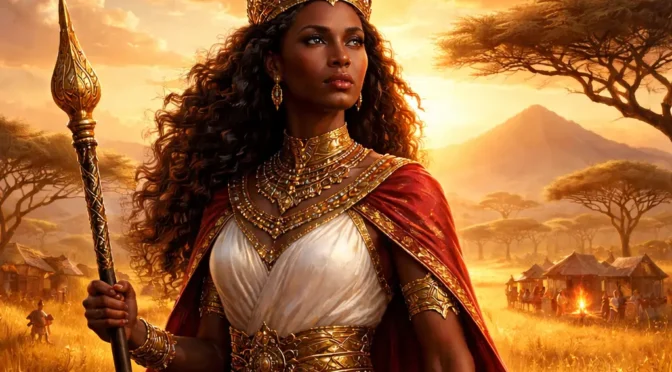
And above them all ruled Queen Amara N’koya.

She was not born to rule. She was born the second child of King Jabari, a man known for strength but not wisdom. No one expected Amara to become queen. That fate belonged to her elder brother, Prince Kofi.

But destiny, like the harmattan wind, does not always blow where we expect.

A Crown Not Meant for Her

Prince Kofi died in battle at the age of twenty-two. He was brave, but he trusted too easily. The neighboring warlord, Chief Baruta of the Dry Plains, tricked him into peace talks and ambushed him.

The kingdom mourned.

King Jabari never recovered from the grief. Within two rainy seasons, he too was gone. Some said sorrow killed him. Others whispered poison.

And so, at only twenty-four years old, Amara stood before the Council of Elders. The royal drums beat slowly. The entire kingdom waited.

Women were not forbidden to rule in Zandora, but it was rare. Very rare.

The High Elder raised the ancient golden crown — heavy, carved with lion heads and sun symbols.

“Daughter of Jabari,” he said, “Do you accept the burden of Zandora?”

Amara did not tremble.

“I accept,” she said.

And the crown touched her head.

The Peace Before the Storm

Queen Amara ruled differently than her father.

She listened before she spoke.
She walked among farmers instead of sitting only in the palace.
She reduced taxes during drought.
She strengthened trade routes.

Under her leadership, Zandora flourished.

The people began calling her “The Lioness of the Savannah.”

But peace can make enemies restless.

Far to the north, beyond the dust plains, Chief Baruta watched.

He had never forgiven Zandora for surviving his attack years ago. He believed the throne should have weakened after Kofi’s death. Instead, it grew stronger under a woman.

His pride could not accept that.

So he did not attack immediately.

He waited.

And he planted seeds of betrayal.

The Man With Two Faces

Every kingdom falls not only from outside swords, but from inside whispers.

In Queen Amara’s council sat a man named General Kando.

He was tall, respected, and known for victories during King Jabari’s reign. He had trained Prince Kofi. He had sworn loyalty to the royal family.

But loyalty can rot when ambition grows.

Baruta sent secret messengers. Gold. Horses. Promises.

“You should be king,” the message said.
“Why kneel before a woman?”

General Kando listened.

And something dark began to grow inside him.

The Night of Red Smoke

It happened during the Festival of First Harvest.

The city danced. Fires burned high. Drums echoed through the streets. The queen sat among her people, laughing as children performed traditional dances.

Then — smoke.

At first, no one noticed.

Then shouting.

Then fire.

The northern gate exploded into chaos as armed men stormed through. Baruta’s warriors had attacked under the cover of celebration.

But that was not the worst part.

The palace guards had been reassigned earlier that evening.

By order of General Kando.

Inside the palace walls, betrayal unfolded like a silent snake.

Queen Amara was rushed toward the royal chambers. Her closest guard, Captain Sefu, blocked a spear meant for her chest.

He fell.

“Run, my Queen!” he shouted with his final breath.

Outside, the city burned.

Inside, General Kando walked calmly through the chaos.

He had opened the gates.

A Choice Between Pride and Survival

Amara reached the inner sanctuary where the royal treasures were kept.

Gold. Ivory. Sacred scrolls. The ancestral crown.

The golden crown that symbolized Zandora.

Her hands shook — not from fear, but from rage.

If she stayed, she would die.
If she fought, she would be captured.
If she fled, she might live — but without a throne.

Her elderly nurse, Mama Tali, grabbed her arm.

“You cannot save the palace,” she said. “But you can save the future.”

Outside, warriors shouted her name — not in loyalty, but in search.

Amara stared at the crown.

The symbol of power.
The weight of her ancestors.

Then she made a decision that no ruler in Zandora’s history had ever made.

She wrapped the crown in plain cloth.

And she ran.

Into the Endless Grass

The secret tunnel beneath the palace had not been used for generations. It led beyond the city walls into the tall, whispering savannah grass.

By the time Queen Amara emerged, the sky was black with smoke.

Behind her, Zandora was falling.

She did not look back.

Mama Tali ran beside her until her old legs could go no further.

“Go,” the old woman said. “Hide. Live. Return when the land calls you.”

Amara hesitated.

“I will come back for you.”

Mama Tali smiled sadly.

“You will come back for the kingdom.”

And the queen ran alone into the endless grass.

The Queen Without a Throne

By morning, Zandora had fallen.

Baruta declared victory.
General Kando declared himself Protector of the Throne.

They searched for her body for three days.

They found none.

Rumors began to spread.

“Perhaps the Lioness escaped.”
“Perhaps the ancestors hid her.”
“Perhaps she is dead.”

But in the heart of the savannah, beneath a lone baobab tree, Queen Amara knelt in silence.

The sun rose over golden grass. Birds called. Life continued as if no kingdom had burned.

She unwrapped the crown.

It gleamed in the morning light.

Tears finally fell from her eyes.

“I failed them,” she whispered.

The wind moved through the grass.

And in that quiet moment, she understood something greater than power.

A crown is not a kingdom.

A palace is not a people.

If Zandora lived in the hearts of its people, then it was not dead.

And neither was she.

With steady hands, Queen Amara dug into the earth beneath the baobab tree.

She placed the crown inside.

Covered it with soil.

Pressed her palm against the ground.

“I will return for you,” she said softly.

Then she stood.

Not as a queen.

But as a woman with nothing left to lose.

And the savannah swallowed her footsteps.

PART TWO: The Queen in Hiding

The Woman Without a Name

For three days and three nights, Amara walked through the endless savannah.

The sun burned her skin.
The wind dried her lips.
The tall grass cut her arms.

She no longer wore royal silk. She had removed her beaded necklace and golden bracelets. She had tied her hair in the simple style of village women. Dust covered her feet.

She was no longer Queen Amara N’koya of Zandora.

She was only a woman trying to survive.

Each step felt heavy, not because of the journey, but because of memory. She could still hear the screams from the city. She could still see the red smoke rising into the sky.

But she did not cry again.

Queens may weep.
But lionesses endure.

A Village That Did Not Recognize Her

On the fourth morning, she saw smoke rising in the distance. Not war smoke. Cooking smoke.

A small farming village stood near a shallow river. Mud houses circled a large tree. Goats bleated. Women pounded millet in wooden mortars.

Amara hesitated.

If word had spread, they might hand her over for reward.

If they recognized her, they might fear helping her.

But hunger does not wait for fear to finish thinking.

She walked forward.

An elderly man looked up from repairing a fishing net. His eyes were sharp despite his bent back.

“You walk like someone who once carried weight,” he said.

Amara lowered her gaze. “I am only a traveler.”

“Travelers usually carry bags.”

“I lost mine.”

The old man studied her quietly.

Finally, he nodded toward a hut. “You may rest. My daughter will give you water.”

His name was Bako.

He did not ask more questions.

That night, she slept on a woven mat in a stranger’s home. For the first time since the fall of Zandora, she felt safe enough to close her eyes fully.

News of a Broken Kingdom

In the days that followed, Amara worked in the fields to repay their kindness. She fetched water, carried firewood, and helped grind grain.

Her hands, once soft from royal life, blistered and hardened.

But something else happened too.

She listened.

Travelers passing through the village brought news.

“General Kando now sits beside Chief Baruta,” one man said.
“They say the queen died in the fire,” said another.
“No,” whispered a woman. “Some believe she escaped.”

Amara kept her face still.

“They have increased taxes,” Bako muttered one evening. “Even small villages must now give half their harvest.”

“Half?” Amara asked before she could stop herself.

“Yes. Or face punishment.”

A deep silence filled her chest.

Zandora had once been strong because it protected its people. Now the people were being crushed.

And they did not even know their queen was alive.

The Weight of Guilt

One night, unable to sleep, Amara walked to the river.

The moon reflected on the water like broken silver.

She knelt and washed her hands slowly.

“I should have stayed,” she whispered to the water. “I should have fought.”

But another voice rose inside her.

If you had stayed, you would be dead.

Dead queens cannot save kingdoms.

She pressed her fingers into the soil.

She had buried her crown.

But she had not buried her responsibility.

The people were suffering.

Because she was gone.

The Child Who Saw Through Her

Children are often more observant than elders.

Bako’s granddaughter, little Nima, was only eight years old. But her eyes missed nothing.

One afternoon, as Amara braided Nima’s hair, the child asked quietly:

“Why do you stand like a warrior?”

Amara froze.

“I do not.”

“You do. And when men speak badly of the queen, your hands shake.”

Amara’s heart pounded.

Nima turned and looked directly at her.

“Are you her?”

Silence.

Wind moved through the grass.

Amara could lie.

She could deny.

But something about the child’s steady gaze felt sacred.

“Yes,” she whispered.

Nima’s eyes widened — not with fear, but with wonder.

“Then why are you here?”

“Because I failed.”

The girl shook her head. “My grandfather says a leader who survives is not a failure. A leader who gives up is.”

The words struck her like a drumbeat.

A Village Under Threat

It did not take long before the soldiers arrived.

They wore the colors of Baruta. Their faces were hard. Their spears were sharp.

“Taxes,” their captain demanded.

Bako stepped forward respectfully. “The harvest is still growing. We ask for time.”

The captain struck him across the face.

Amara’s blood burned.

“Time is not given anymore,” the captain said. “Half of what you have. Now.”

Women cried as sacks of grain were taken. A young man protested. He was beaten to the ground.

Amara stood frozen.

If she stepped forward, she risked exposure.

If she stayed silent, she betrayed her people again.

The captain’s eyes scanned the crowd.

And stopped on her.

“You,” he said. “You are not from here.”

Her pulse roared in her ears.

“I am only a widow,” she said calmly.

The captain stepped closer.

Something in her posture unsettled him.

But before he could press further, another soldier called out.

“We have enough grain. Let us go.”

The captain spat on the ground.

“This village belongs to Baruta now. Remember that.”

They left in a cloud of dust.

Silence followed.

Then quiet sobbing.

Amara knelt beside Bako, helping him sit upright.

His eyes searched hers.

“You carry more than grief,” he said softly.

She said nothing.

But something inside her had changed.

The Beginning of a Quiet Rebellion

That night, Amara gathered the village elders.

She did not reveal her name. Not yet.

But she spoke with clarity.

“Baruta rules with fear. Fear spreads quickly. But so does courage.”

The elders listened.

“If villages unite, if we protect each other, if we share resources secretly, we can weaken him.”

“And how do you know this?” one elder asked.

She met his gaze steadily.

“Because I have seen how kingdoms fall.”

Over the next weeks, small changes began.

Young men trained quietly at night.

Women hid portions of grain before tax collectors arrived.

Messengers traveled between nearby villages under the excuse of trade.

Whispers spread.

“The Lioness may still live.”

Hope is a dangerous thing to tyrants.

A Name Rises Again

One evening, a wounded traveler stumbled into the village.

He had escaped from the capital.

“They are searching,” he gasped. “Baruta believes the queen is alive.”

Amara’s heart slowed, not from fear — but from focus.

General Kando had advised him.

Of course he had.

The betrayal still breathed.

The traveler continued.

“Some soldiers have begun to question the new rule. They say the old days were better.”

The old days.

Her rule.

The savannah wind moved gently through the night.

Amara looked at the gathered villagers.

They were no longer strangers.

They were her people.

She could remain hidden forever.

Or she could rise slowly, wisely, patiently.

A lioness does not attack immediately.

She waits.

She watches.

She chooses her moment.

Amara stood.

“My name,” she said quietly, “is Amara N’koya.”

Gasps filled the hut.

“I am your queen.”

No one moved.

Then Bako, old and bent, dropped to one knee.

Not out of fear.

But loyalty.

One by one, others followed.

Tears filled her eyes — not of sorrow this time, but of purpose.

“I hid my crown,” she said, “but I did not abandon you. Zandora lives wherever its people stand together.”

Outside, thunder rolled across the sky.

The rainy season was coming.

And with it, change.

The Lioness Awakens

That night, Queen Amara did not sleep.

She sat beneath the stars and looked toward the direction of her fallen city.

“I will not rush,” she whispered.

“Power taken by betrayal must be removed by wisdom.”

She no longer felt like a fugitive.

She felt like fire covered in ash.

And ash does not stay cold forever.

Far away, in the occupied palace of Zandora, General Kando stared into the night as well.

He felt something shift.

Baruta laughed loudly beside him, confident in his stolen victory.

But deep in the savannah, beneath the growing storm clouds, a queen was rising again.

Not with gold.

Not with armies.

But with the hearts of her people.

And that is where true power begins.

PART THREE: Betrayal and Rising Fire

Whispers Across the Grasslands

The rainy season came heavily.

Dark clouds rolled over the savannah. Lightning split the sky at night. The dry grass that once scratched the earth began to grow thick and green again.

With the rain came movement.

Farmers traveled more freely between villages. Traders carried salt and cloth along muddy paths. Drummers sent coded rhythms from hill to hill.

But this time, the messages were different.

They did not speak of harvest or marriage.

They spoke of a queen who still lived.

Queen Amara did not rush into war. She understood something many rulers did not: rebellion built on anger alone collapses quickly. Rebellion built on unity survives.

So she moved carefully.

She visited villages quietly, sometimes disguised as a trader, sometimes openly as queen among trusted allies. She listened more than she spoke.

And everywhere she went, she saw the same thing:

Fear.

Baruta’s soldiers collected heavy taxes. Some villages had lost their strongest young men to forced labor. Markets had grown smaller. Laughter had grown rare.

Zandora was breathing, but weakly.

Amara knew she could not simply storm the capital. She needed something stronger than weapons.

She needed belief.

The Return of a Loyal Blade

One afternoon, as rain tapped softly against the thatched roofs, a familiar voice called her name.

“My Queen.”

She turned sharply.

Standing before her, thinner and scarred, was Captain Sefu.

The man she had believed dead.

Her breath left her chest.

“You live?”

He bowed slightly. “The spear missed my heart. The ancestors were not finished with me.”

Tears filled her eyes, but she did not allow them to fall.

“How did you escape?”

“They left me for dead. I crawled through smoke and mud. A trader found me and carried me away. When I healed, I searched for you.”

He knelt.

“Zandora still has soldiers loyal to you. They wait only for a sign.”

Hope spread through her like sunlight after rain.

“How many?” she asked.

“Enough to start a fire,” he replied.

A Kingdom Divided

Inside the occupied capital, tension had begun to grow.

Chief Baruta ruled through intimidation. He did not understand Zandora’s customs. He mocked the elders. He replaced experienced officials with his own men.

General Kando sat beside him in council chambers that once belonged to Amara.

But power does not always bring peace.

Some nights, Kando walked alone along the palace walls. He heard the silence of the city.

Under Queen Amara, the streets had stayed alive even after sunset.

Now, doors closed early.

Drums no longer played freely.

He told himself it was necessary. Order required strength.

Yet doubt whispered in his ear.

Had he betrayed a weak queen?

Or a strong one?

The Spy in the Village

Rebellion, like fire, attracts wind.

One evening, a stranger entered Bako’s village. He claimed to be a salt trader from the eastern plains. He smiled easily. He asked many questions.

Too many.

Amara watched him closely.

“What brings you this far west?” she asked casually.

“Opportunity,” he replied.

His eyes lingered on her a moment too long.

That night, Captain Sefu followed him quietly. The stranger did not sleep. Instead, he moved toward the edge of the village and pulled a small carved whistle from his pouch.

Before he could blow it, Sefu stepped from the shadows.

“Who do you signal?”

The man ran.

But he did not run far.

By dawn, he was tied to a tree at the center of the village.

Under questioning, he broke quickly.

“Baruta sent me,” he admitted. “He believes the queen lives.”

Amara stepped forward into the circle of villagers.

The spy’s eyes widened in recognition.

“So it is true,” he whispered.

Fear rippled through the crowd.

If Baruta knew she lived, he would not hesitate to crush entire villages to find her.

She faced her people.

“I will leave,” she said firmly. “I will not bring death upon you.”

But Bako shook his head.

“No. You are not the danger. Tyranny is.”

Others nodded.

“We stand with you.”

The spy was released with a message.

“Tell Baruta,” Amara said calmly, “that Zandora is not his.”

Fire in the North

Soon after, the first open act of rebellion erupted.

A northern tax post was attacked at night. Grain meant for Baruta’s storehouses was taken back and returned to villages.

The attack was swift and disciplined.

Not random.

Baruta was furious.

“Find her!” he roared in the palace hall. “Burn any village that hides her!”

General Kando remained silent.

But something inside him tightened.

Burn villages?

That was not how Zandora ruled.

That was how enemies ruled.

The Gathering at Moonlight

Under a full moon, leaders from seven villages gathered secretly beneath a massive baobab tree — the same tree where Amara had buried her crown months earlier.

She had returned.

The soil above the hidden crown remained undisturbed.

It felt symbolic.

She stood before them, no longer hiding her identity.

“I will not promise easy victory,” she began. “Some of us may fall. Some homes may burn. But if we accept chains now, our children will inherit them.”

Silence followed.

Then one elder spoke.

“What is your plan, Queen Amara?”

She inhaled deeply.

“We do not fight his full army. We weaken his control. Cut supply lines. Free forced workers. Win back soldiers who once served Zandora.”

Captain Sefu stepped forward.

“Many within the capital are unhappy. They wait for proof she lives.”

Amara looked toward the direction of the city lights far away.

“Then we give them proof.”

The Message of the Lioness

Three days later, at dawn, something unexpected happened in the capital.

On the main gate of the city, carved deeply into the wooden doors, appeared a symbol.

A lioness.

The royal mark of Amara’s reign.

No one saw who carved it.

But everyone understood the message.

“She lives,” people whispered in markets.

Baruta raged. Guards were punished. Patrols doubled.

But fear had shifted sides.

Hope had entered the city.

Kando’s Breaking Point

That evening, General Kando stood before the carved lioness.

He traced the lines with his fingers.

He remembered the day Amara was crowned. Her calm voice. Her steady eyes.

He remembered the pride of the people under her rule.

Baruta approached behind him.

“She mocks us,” Baruta growled. “I will crush her.”

Kando said nothing.

“Tomorrow,” Baruta continued, “we burn the western villages as a warning.”

Something inside Kando snapped.

Burn them?

For what?

For loyalty?

For memory?

That night, he did not sleep.

And for the first time since the betrayal, he asked himself a dangerous question:

Had ambition blinded him?

Blood on the Grass

Before dawn, Baruta’s soldiers marched toward the western villages.

But they did not find helpless farmers.

They found resistance.

Arrows flew from tall grass. Traps collapsed beneath horses. Warriors who once served Zandora fought with renewed strength.

Queen Amara stood at a distant hill, watching the battle unfold.

She did not lead from the front recklessly.

She led with strategy.

The soldiers retreated, confused and wounded.

It was not a full victory.

But it was a statement.

Zandora was no longer silent.

The Lioness Revealed

After the battle, Amara walked openly through the victorious village.

People gathered around her.

Children stared with wide eyes.

An elderly woman touched her arm gently.

“We thought you were gone.”

“I was hidden,” Amara replied.

“And now?”

She lifted her chin.

“Now I am rising.”

Thunder rolled again across the savannah, though no rain followed.

Far away in the palace, Baruta paced like a trapped beast.

General Kando stood at the window, watching the horizon.

He could feel it.

The fire he helped start was no longer under his control.

And deep beneath the baobab tree, buried in silent patience, a golden crown waited.

Not forgotten.

Not abandoned.

Waiting for the right moment to rise again.

PART FOUR: The Crown Beneath the Grass

The Calm Before the Storm

Weeks passed. The savannah had begun to heal under the rain, but the fires of rebellion had also awakened.

Queen Amara moved cautiously, visiting villages, training her people in the art of survival and strategy. The small victories had given hope, but she knew the true challenge was still ahead: the capital itself.

The golden crown she had buried beneath the lone baobab tree had become more than a symbol. It was a reminder that patience could be as powerful as swords. Every time she passed near the tree, she felt the weight of her ancestors in the soil, waiting for the right moment to reclaim the kingdom.

Captain Sefu had returned from scouting missions with news from the city: morale among Baruta’s soldiers was faltering. Villagers were whispering. Merchants were smuggling messages into the capital. And most importantly, some of Kando’s trusted lieutenants had begun to question their loyalty.

It was time.

Kando’s Reckoning

Inside the palace, General Kando wrestled with his conscience.

He had once been a loyal servant of the throne. He had trained Amara, watched her grow into a capable ruler, and betrayed her for ambition. The weight of his choices pressed upon him.

Baruta, drunk with arrogance, had begun to overstep even Kando’s tolerance. Entire villages were burned for the smallest rumors of support for Amara. Soldiers had been executed without trial. The capital itself had grown restless.

One night, Kando walked along the palace walls and stared into the dark savannah. He remembered the first day Amara had crowned herself queen, the calm in her voice, the strength in her eyes.

“She would never have allowed this,” he whispered.

A decision formed. Betrayal had brought him wealth and rank, but now it had brought him shame.

“I must make this right,” he muttered.

And he sent a secret message to the Queen:
“I can guide you into the city. I am no longer his servant. Meet me by the river at moonrise.”

A Dangerous Alliance

The night was thick with fog as Amara approached the river. Captain Sefu moved silently beside her. Every step was measured, every sound remembered.

From the shadows, a figure emerged.

“Kando?” Amara’s voice was wary but calm.

“I can help you take back Zandora,” he said, bowing low. “But you must trust me, even if it is only this once.”

Amara studied him. His eyes were filled with regret, not deceit. She nodded once. “We have one chance. If we fail, we lose everything.”

Together, they planned their approach. They would not storm the gates blindly. They would divide the city’s defenders, use misinformation, and reclaim the crown from beneath the baobab tree before confronting Baruta.

The Lioness was ready to rise.

The Return to the Baobab

Under the cover of darkness, Amara returned to the lone baobab tree where she had buried her crown.

The earth had shifted slightly, but her hands remembered the place perfectly. She dug swiftly, the soil soft from the rains.

At last, her fingers brushed the golden edges. She pulled the crown free and held it against the moonlight. Its weight was familiar, yet heavier than ever. Not gold, not jewels, but responsibility.

Captain Sefu knelt beside her. “It’s time,” he said.

Amara placed the crown on her head. The villagers she had secretly gathered from nearby areas watched from the shadows.

“Zandora will rise again,” she whispered.

And it would.

The First Strike

At dawn, Baruta’s forces were startled by a series of coordinated attacks: supply lines cut, couriers intercepted, soldiers in the city ambushed. Confusion spread quickly.

Amara moved like a shadow through the city outskirts, guided by Kando, while loyal soldiers from the villages infiltrated gates and towers. Each step brought them closer to the palace.

The people of Zandora, who had been silent for months under fear, began to recognize the Lioness. They joined her quietly — traders, messengers, even a few hesitant guards from the city gates.

By midday, a small but determined army surrounded the palace. Word of her return spread like wildfire.

Sacrifice Under the Sun

Victory, however, demanded cost.

During a skirmish near the eastern gate, Captain Sefu faced Baruta’s elite warriors. He fought fiercely, but was gravely wounded. Amara found him, his blood soaking the tall grass.

“Stand,” he said, coughing. “The people… need you more than me.”

Tears stung her eyes, but she held his gaze. “You saved more than one life, Sefu. You saved hope.”

He nodded, smiling faintly, and whispered, “Remember the Lioness does not flee.”

Sefu would survive, but he bore deep scars — both physical and emotional.

The sacrifices reminded Amara that reclaiming a kingdom was never clean or easy. But it was worth the cost.

The Fall of Baruta

By the third day of rebellion, the palace was surrounded. Soldiers loyal to Amara blocked every exit.

Baruta, furious and desperate, attempted to rally his troops, but many refused to fight. Some had grown weary of his cruelty.

Kando entered the palace halls, confronting Baruta. “Your rule ends today,” he said.

Baruta laughed, a harsh, bitter sound. “The queen is dead. She cannot return!”

“She is alive,” Kando said. “And she will reclaim what is hers.”

At that moment, Amara and her loyal soldiers entered the palace. Baruta’s guards faltered. Panic spread.

Amara confronted Baruta in the throne room, her crown gleaming under the sunlight streaming through the windows.

“This is not for vengeance,” she said softly. “This is for Zandora.”

The fight was brief. The people of the city, seeing their queen alive, rallied behind her. Baruta and his followers were captured or fled into the savannah.

The Crown Reclaimed

Amara sat upon her throne once more. The golden crown rested on her head, heavier than before, but filled with purpose. She had returned not only as a ruler but as a symbol — a Lioness who endured betrayal, fire, and loss.

Kando knelt beside her, repentant. “I will serve you, as I should have from the beginning.”

She nodded. “Zandora is ours again. But remember — power is not in the throne. Power is in the people.”

From the palace windows, villagers gathered. Children waved. Drums began to beat. The spirit of Zandora had returned.

The savannah stretched endlessly around them, golden and wild, as if celebrating the return of its rightful queen.

Amara smiled. The Lioness had risen. And Zandora would never again be silent.

PART FIVE: The Return of the Lioness

Rebuilding Zandora

The sun rose over Zandora once more, brighter than it had in months. Smoke no longer signaled destruction but the cooking of food in newly repaired homes. Markets buzzed with voices and laughter, and children ran freely in the streets that had been empty under Baruta’s rule.

Queen Amara stood on the balcony of the palace, the golden crown glinting in the morning light. She no longer felt the weight of fear, only of responsibility.

The first days were not easy. Villages needed rebuilding. Families had been torn apart. Fields had to be replanted. But Amara understood that true leadership was more than power—it was patience, care, and vision.

Captain Sefu, still healing from his wounds, helped organize the defense of the city and the training of young warriors. Kando, now fully loyal and repentant, assisted in restoring law and order, ensuring that justice was fair, not cruel.

Amara walked among her people every day, listening, speaking, and offering guidance. She spoke of unity, courage, and faith in their ancestors. She reminded them that Zandora had survived not because of walls or gold, but because its people had hearts brave enough to endure.

Honoring Sacrifice

A memorial was held at the baobab tree where she had buried her crown. Villagers, soldiers, elders, and children gathered.

Captain Sefu, now walking with a staff, spoke first. “Many gave their lives so that the Lioness could return. Many endured fear so that hope could live. We honor them today.”

Amara knelt, touching the soil lightly. “I buried my crown here once, thinking that hiding it was survival. But the crown is not what gives a kingdom life. It is you. You, who endured, who protected, who believed.”

Tears flowed freely among the people. They had witnessed not just a queen returning, but the spirit of Zandora itself.

Faith and Guidance

Throughout her journey, Amara had relied not only on strategy but on her faith. She believed the ancestors and the gods guided her through darkness and betrayal.

Each night, she prayed beneath the stars. She thanked the spirits for those who had protected her, for the people who remained loyal, and for the courage to endure. She asked for wisdom to rebuild, and for strength to protect Zandora from future threats.

Her faith was not a passive hope—it became a force. It inspired her people, giving them courage in the darkest moments. They believed in her because she believed in something greater than herself.

Lessons of the Lioness

Amara did not return simply to sit on the throne. She reshaped her kingdom.

  • Taxes were fair and proportional, ensuring no village was left starving.
  • Villages were connected by protected trade routes and messengers, creating a network of unity.
  • Soldiers were trained not just in warfare, but in ethics and loyalty to the people.
  • Education, storytelling, and preservation of culture became as important as defense.

She had learned that a kingdom survives not on fear, but on the hearts and minds of its people. That trust and courage could withstand betrayal, even when power was stolen.

And she learned that leadership requires sacrifice, patience, and the ability to forgive—both others and oneself.

The Legacy Secured

Months later, Queen Amara stood beneath the baobab tree once more. This time, she did not bury the crown. She had placed it firmly on her head, knowing that Zandora was stronger than any hidden treasure.

Children played in the grass, elders told stories, and the villagers looked to her not with fear, but with respect and love.

“I will never forget what was lost,” she whispered, “nor will I forget what we endured. Zandora lives because we survived together. And together, we will thrive.”

The Lioness had returned. She had reclaimed her crown, her city, and her people. But more importantly, she had restored hope, faith, and the spirit of Zandora.

And from the edge of the savannah, the wind carried her promise far and wide:

Zandora was alive.
Zandora would endure.
And the Lioness would always rise.

The End

You may be interested in The Price Of Diligence

BLOOD FOUND IT’S WAY HOME

A STORY OF HOPE


PART 1 – THE HOUSE THAT HAD EVERYTHING BUT LOVE

Chief Dike Okorie was a rich man. Everyone knew his name. His house stood tall behind iron gates, guarded day and night. Cars came in and out. People bowed when he passed. From the outside, the house looked perfect—painted walls, polished floors, expensive chandeliers, and security cameras watching every corner.

Inside, it was cold.

People spoke in low voices. Servants worked with fear in their eyes. Nobody laughed freely. The air itself felt heavy, like joy had been forbidden. Chief Dike provided food, clothes, and money, but not warmth. He believed discipline made a man strong. He believed silence made a home peaceful. Emotions, to him, were weaknesses.

His daughter, Zainab Okorie, lived in that house like a queen without a crown. She had money, beauty, and education from abroad. She wore designer clothes and carried confidence like armor. Yet she was angry inside. Her father was never there for her. He bought gifts instead of giving time. He paid school fees but missed birthdays. Over the years, that pain hardened her heart and slowly turned into pride and cruelty.

One morning, a thin young boy arrived at the gate. His name was Ikem. He was quiet, polite, and carried nothing but a small nylon bag containing two shirts and a worn-out sandal. His eyes looked older than his face. He came to work as a cleaner. No questions were asked. In that house, nobody cared where poor people came from—as long as they worked.

Ikem swept floors, cleaned yards, washed cars, and fetched water. He worked hard and never complained. He slept near the generator house and ate leftovers after everyone had finished. He did not steal. He did not gossip. He kept to himself.

Zainab noticed him quickly.

He never begged her.
He never flattered her.
He never feared her eyes.

That disturbed her.

Without knowing why, she decided she did not like him.


PART 2 – SILENCE THAT HURT MORE THAN BEATING

Zainab began to treat Ikem badly. At first, it was small things. She sent him on useless errands across town. She insulted him in front of others. She accused him of being slow even when he worked faster than anyone else.

Ikem endured it quietly. He believed work was better than hunger. He believed patience would protect him from greater trouble.

Other servants saw everything. They said nothing. They were afraid of losing their jobs. Silence became their shield.

Chief Dike was always away—meetings, travels, business deals, political gatherings. He did not notice the fear growing under his roof. He did not notice that his daughter was slowly becoming the kind of person he secretly disliked in others.

One afternoon, Zainab accused Ikem of stealing her bracelet. The boy swore he did not touch it. His voice shook, but his eyes were steady. Nobody defended him. In anger and embarrassment, Zainab slapped him hard.

The sound echoed against the marble walls.

Ikem tasted blood in his mouth. He did not cry. He did not beg. He only bowed his head.

Later that evening, the bracelet was found in Zainab’s own drawer.

She said nothing.

That night, when the house slept, Ikem packed his small bag. He looked at the mansion one last time.

Then he walked away into the dark.

No anger.
No revenge.

Just dignity.


PART 3 – THE STREETS THAT TEACH WITHOUT MERCY

The streets welcomed Ikem with hunger.

He slept under shops, near markets, beside gutters. Rain beat him. Mosquitoes fed on him. Hunger became his daily companion. Sometimes he stared at restaurant windows, imagining what it felt like to eat until satisfied.

He begged sometimes, but only after offering to work. He washed plates, carried heavy loads, cleaned compounds, and pushed broken wheelbarrows. Some people helped him kindly. Many cheated him. Some chased him away like an animal.

He learned fast.

He learned who to trust and who to avoid.
He learned how to hide fear.
He learned how to sleep with one eye open.
He learned that survival required both strength and silence.

Once, a farmer promised him food and shelter. The promise turned into abuse. Ikem was beaten and starved for days. One night, while the man slept, Ikem escaped barefoot into the bush.

He moved to a motor park. That place became his school. Drivers shouted. Engines roared. Money changed hands quickly. Arguments started and ended within minutes.

Ikem ran errands. He pushed broken cars. He shouted destinations. He returned lost money when he found it. Slowly, drivers began to trust him. They called him “small boss.”

Still, his heart wanted one thing—education.

Twice, he tried to go to school. Twice, he was sent away for unpaid fees.

Each rejection hurt deeply, but it did not break him.


PART 4 – A MOTHER’S WORDS THAT NEVER DIED

At night, when the noise of the motor park reduced and stars filled the sky, Ikem talked to his mother in his heart.

Ama Serwaa Mensah was not a rich woman, but she was rich in love. She spoke with a gentle Ghanaian accent and laughed from her chest. When Ikem was small, she carried him on her back, sang old songs, and taught him to greet elders properly. She sold food by the roadside and never complained, even when customers refused to pay.

When she became sick, life changed fast. Her body grew weak, but her mind stayed strong. Even when pain held her down, she smiled at Ikem.

Many nights, she pulled him close and whispered the same words:

“DIKE, I will love you till the end.”

She said it like a promise.
Sometimes she said it with tears.
Sometimes with a smile.

Ikem never understood why she used that name. But the words wrapped around him like protection.

When Ama Serwaa died, Ikem buried her with help from kind neighbors. There was no big funeral. No long prayers. Just love and silence.

From that day, Ikem carried two things everywhere he went:

Hunger.
And hope.


PART 5 – THE DAY DESTINY SPOKE LOUD

One hot evening, Ikem was returning from the motor park. His shirt was dirty. His legs were tired. His stomach was empty. He was thinking of how to get food.

Suddenly, a loud crashing sound shook the road.

Two cars collided violently.

Smoke filled the air. People ran closer but stopped far away. Some shouted. Some recorded videos. Nobody wanted trouble.

Ikem did not think twice.

He ran toward danger.

Glass cut his hands. Blood flowed, but he did not stop. Inside one car was a man struggling to breathe.

Ikem dragged him out with all his strength. He shouted for help. He waved at cars until one finally stopped.

An ambulance arrived minutes later.

Ikem sat on the ground, shaking and bleeding.

He did not know the man.

But destiny did.


PART 6 – TWO LIVES MEET AGAIN

The hospital smelled of medicine and fear.

Chief Dike Okorie lay on the bed, weak and confused. Machines beeped beside him. For the first time in years, he looked small.

Ikem stayed around the hospital. He helped nurses. He fetched water. He waited quietly.

When Chief Dike opened his eyes, Ikem was there.

They talked slowly.

Ikem spoke about the streets.
Chief Dike spoke about business.

When Ikem mentioned his mother’s name, Chief Dike felt something shift inside him.

When Ikem repeated the words his mother always said, Chief Dike’s heart trembled.

Tears filled his eyes.

Blood had found its way home.


PART 7 – TRUTH THAT WAS AFRAID TO COME OUT

Chief Dike did not sleep that night.

He remembered a young Ghanaian woman he once loved. He remembered fear. He remembered pride. He remembered leaving before responsibility could catch up with him.

He looked at Ikem sleeping on a chair.

Fear held him.

What if he was wrong?

In the morning, Ikem told his full story. He did not shout. He did not accuse. He spoke like a man who had survived storms.

Chief Dike broke down.

He knelt beside Ikem.

“I failed you,” he whispered.

Ikem cried for the first time in many years.


PART 8 – RETURN TO THE HOUSE OF PAIN

Ikem returned to the mansion.

This time, guards opened the gate quickly.

Servants whispered in shock.

Zainab saw him and froze. Shame flooded her face.

Chief Dike stood firm.

“No more cruelty in this house,” he said.

Zainab walked slowly toward Ikem.

“I am sorry,” she whispered.

For the first time, pride stepped aside.


PART 9 – THE DAY TRUTH STOOD BEFORE ALL

A gathering was called.

Business partners. Family members. Staff.

Chief Dike stood tall.

“This is my son,” he said.

The room went silent.

Zainab cried and hugged Ikem.

Forgiveness filled the room like fresh air.


PART 10 – HEALING AND A NEW BEGINNING

Ikem went back to school.

He smiled again.

Chief Dike learned love.

Ama Serwaa’s name was honored publicly.

The boy who suffered now dreamed freely.

The house that once had everything but love finally learned warmth.

Blood had truly found its way home.

Read our Serialize story of Destiny, Faith and Strength
The Rise Of Amari

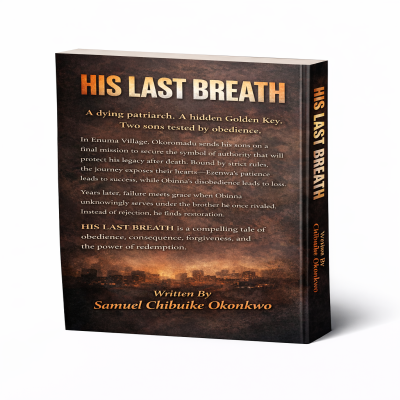
HIS LAST BREATH

Synopsis

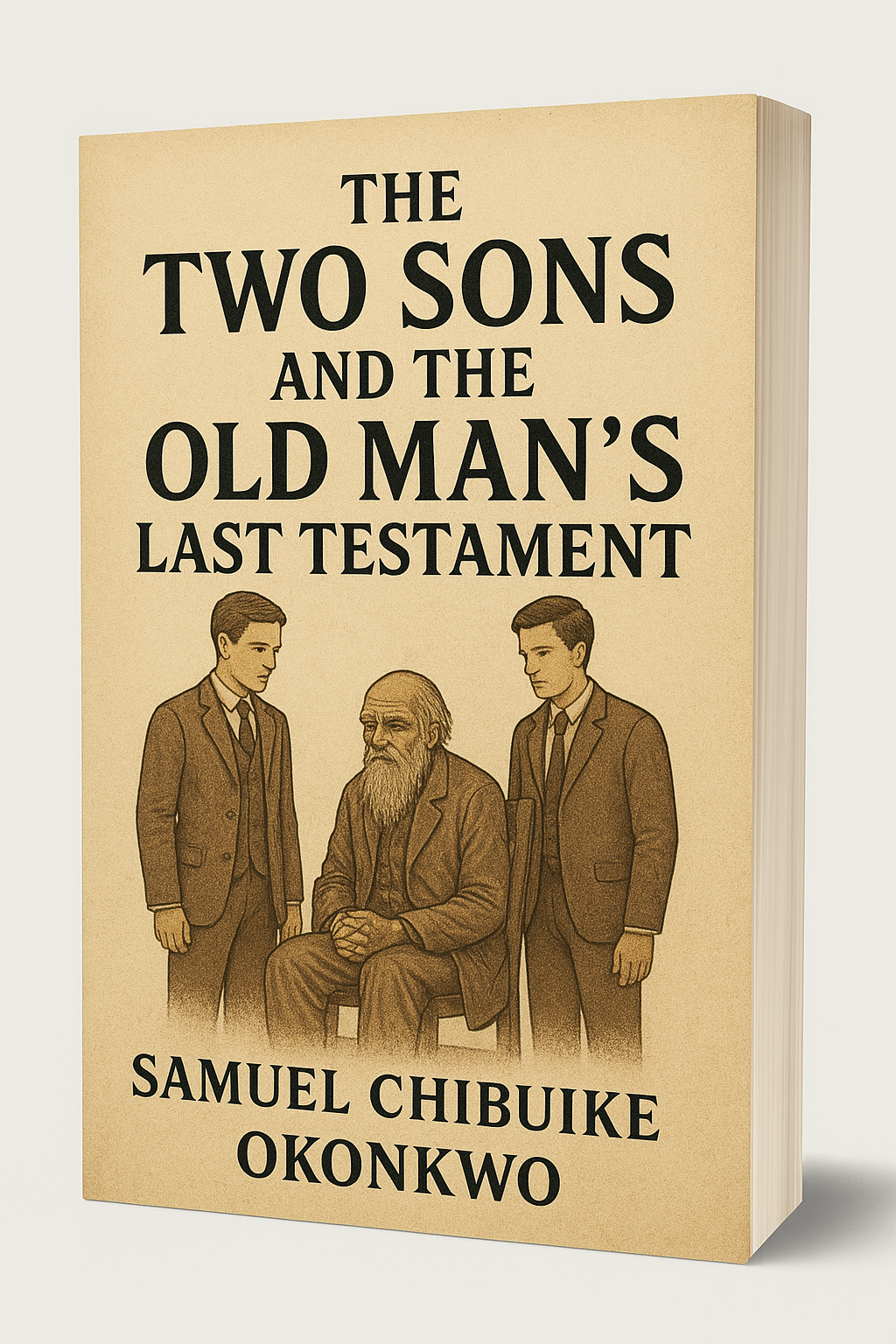
In Enuma Village, a dying patriarch, Okoromadu, sends his two sons on a final mission to secure a Golden Key hidden in a foreign land—a symbol of authority that would protect his wealth after his death. Before they depart, he gives them strict rules of obedience and unique items to guide them, warning that the journey would test their hearts more than their strength.

Along the way, the elder son Ezenwa obeys every instruction, enduring hardship with patience and discipline, while the younger son Obinna breaks the rules, succumbing to hunger and sleep at forbidden times. As a result, Ezenwa succeeds and returns with the key just in time to receive his father’s full blessing before Okoromadu breathes his last. Obinna, however, receives only a minimal blessing and is left to face the consequences of his disobedience.

Years later, broken but humbled, Obinna unknowingly seeks employment at his brother’s flourishing company. Instead of rejecting him, Ezenwa restores him, elevating him beyond merit and eventually handing over leadership. United at last, the brothers transform loss into wisdom, authority into service, and inheritance into reconciliation—ending the story in praise, unity, and restored purpose.

Chapter One: The Night Before the Journey

The elders of Enuma Village used to say that when the moon sat low and red on the edge of the sky, destiny was negotiating with time. On such a night, the wind did not rush; it listened. The trees did not sway; they leaned closer. And on one such listening night, Okoromadu son of Irua, the wealthiest and most feared man in Enuma, summoned his two sons to the inner courtyard of his ancestral compound.

Okoromadu was not an ordinary man. His beard was white, not because of age alone, but because years of secrets had drained the color from his soul. His eyes—sharp even in frailty—had seen borders crossed, empires negotiated with silence, and covenants sealed without ink. Though sickness now bent his spine and thinned his voice, his presence still commanded the air.

Torches were lit around the courtyard, their flames dancing nervously, as though they too sensed the weight of the night. The clay walls bore carvings of ancestral victories, wealth won through wisdom rather than war. At the center sat Okoromadu on a carved iroko chair, wrapped in a deep indigo cloth marked with the emblem of authority—a coiled serpent gripping a sun-disc. That emblem alone could silence greedy men and bend proud chiefs.

Before him stood his sons.

The first was Ezenwa Okoromadu, the elder by four years. Tall, broad-shouldered, with calm eyes that observed before they judged, Ezenwa carried himself like one who listened more than he spoke. The villagers often said Ezenwa walked as if the earth trusted him. He had patience woven into his breath.

Beside him stood Obinna Okoromadu, the younger. Quicker in speech, sharper in temper, and restless in spirit. Obinna’s eyes burned with ambition; he wanted the world to answer him quickly. Where Ezenwa paused, Obinna pressed forward. Where Ezenwa waited, Obinna demanded.

Okoromadu studied them both for a long moment. Then he raised his hand, and the wind seemed to pause.

“My sons,” he began, his voice cracked but heavy with command, “the night has come that I feared and prepared for.”

They knelt at once, touching their foreheads to the earth.

“You will rise,” he said softly. “This matter must be spoken eye to eye.”

They rose.

Okoromadu gestured, and an elderly servant brought forward a small chest carved from ebony wood, bound with brass and sealed with red wax marked by the serpent emblem. The chest was placed before the old man.

“Beyond the borders of this land,” Okoromadu said, “past rivers that forget their names and roads that reject strangers, lies a country where I once walked as a shadow. In that land, I hid something that does not belong to time.”

He coughed, deep and painful. Ezenwa stepped forward instinctively, but Okoromadu lifted a finger.

“What I hid is a Golden Key,” he continued, “forged by hands that no longer exist. Upon it is engraved the emblem of authority. Whoever bears it lawfully commands obedience from those who occupy my wealth—both seen and unseen.”

Obinna’s breath caught. Ezenwa remained still.

“After my breath leaves me,” Okoromadu said, “men will rise who think my wealth belongs to them. Stewards will grow teeth. Guards will forget loyalty. Even kin will pretend not to remember my name.”

The torches crackled.

“That key,” he said, tapping the chest though it did not contain it, “will make them kneel without bloodshed.”

Silence followed.

“You will both go,” he said at last. “At dawn.”

Obinna frowned. “Both of us?”

“Yes,” Okoromadu replied. “Because destiny tests differently.”

He motioned again, and two servants approached, each holding a wrapped bundle.

“These,” Okoromadu said, “are the materials I give you. They are not equal, because you are not equal in nature. But both are sufficient.”

He turned to Ezenwa first.

Ezenwa’s Materials

  1. The Calabash of Still Water – a small gourd sealed with beeswax.
    “This water renews itself at dawn if untouched at night. Drink only when your spirit trembles.”
  2. The Ash-Wood Staff – light but unbreakable.
    “It will not strike unless your heart is clean.”
  3. The Thread of Silence – a thin silver thread wrapped around a bone pin.
    “When tied around your wrist, it will close your mouth to foolish speech.”
  4. A Strip of Goat Skin Marked with Symbols
    “These are paths written in riddles. Read them only when lost.”

Then he turned to Obinna.

Obinna’s Materials

  1. The Flask of Ember Oil – warm to the touch.
    “It brings strength at night but burns when misused.”
  2. The Iron Dagger with No Edge – blunt but heavy.
    “It responds to anger more than skill.”
  3. The Coin of Calling – engraved with the serpent emblem.
    “It attracts helpers, but also attention.”
  4. A Bag of Red Seeds
    “Plant one where you rest; it reveals who watches you.”

Obinna smiled faintly, gripping his bundle tightly.

Okoromadu inhaled deeply.

“Now hear the rules,” he said, his voice lowering, as though the ancestors leaned closer.


THE RULES OF THE JOURNEY

First Rule:
“You must not sleep at night. Not under stars, not under roofs, not under trees. The night is a time of watching. Sleep at night invites spirits that borrow faces. If your eyes grow heavy, walk. If your legs fail, sing. If your mind wanders, pray. You may sleep only when the sun stands above you.”

Second Rule:
“You must not eat from spirits or strangers. Any food offered by unknown hands carries a question. Refuse politely. If hunger torments you, the gods will provide.”

Obinna shifted. “How will the gods provide, Father?”

Okoromadu smiled faintly.

“You will find meals without hands,” he said. “Fruits fallen but unbruised. Fires already burning with pots unattended. Fish trapped in shallow pools where no nets exist. Bread left warm on stones with no footprints nearby.”

He paused.

“Eat only what arrives without invitation.”

Third Rule:
“Do not reveal your mission. Not to kings. Not to lovers. Not to helpers. Words are doors.”

Fourth Rule:
“If separated, do not search for each other. Each path judges the heart alone.”

Fifth Rule:
“When the key is found, return immediately. Do not test its power.”

The wind blew hard then, rattling the torches.

Obinna laughed softly. “These rules are heavy, Father.”

Okoromadu’s eyes hardened. “They are heavier when broken.”

He leaned back, suddenly tired. Ezenwa stepped forward, kneeling.

“I will follow all you have said,” Ezenwa vowed. “Even when I do not understand.”

Obinna hesitated… then nodded. “I will not fail.”

Okoromadu reached out, placing a trembling hand on each of their heads.

“At dawn,” he whispered, “you begin.”

As they turned to leave, Okoromadu called out once more.

“My sons… remember this—obedience preserves what strength destroys.

The moon slid behind clouds. Somewhere in the distance, a night bird cried—a sound too early, too sharp.

Okoromadu closed his eyes.

And the journey had already begun.

Chapter Two: The Road That Refused Sleep

Dawn did not announce itself gently over Enuma Village. It came like a verdict—sudden, unavoidable, final. The sky shifted from charcoal to bruised purple, then to pale gold, as if the sun itself understood the gravity of what was being set in motion.

Ezenwa and Obinna stood at the threshold of their father’s compound, travel cloaks fastened, bundles secured, destinies unspoken. The village was quiet, but not asleep. Old women watched from behind woven mats. Children pretended not to stare. Dogs sat with their heads tilted, sensing a separation the world could not undo.

Okoromadu did not come out to see them off.

That absence carried more weight than any farewell.

At the foot of the road that split Enuma from the rest of the world, the brothers stopped. Tradition demanded a final libation, but none was poured. This was not a journey to be blessed by custom alone—it was one judged by obedience.

Without words, they turned away from home.


THE FIRST NIGHT

By sunset, the land had changed. Familiar red earth gave way to gray stone. Palm trees thinned, replaced by towering baobabs whose roots clawed the ground like ancient fingers gripping memory. The road narrowed, twisting like a question that refused a straight answer.

As darkness fell, the air thickened.

Ezenwa felt it first—not fear, but pressure. The kind that made the skin alert, the breath deliberate. He wrapped the Thread of Silence around his wrist, feeling its cool reassurance.

Obinna, on the other hand, welcomed the night.

“This is when journeys feel alive,” he said, pouring a drop of Ember Oil onto his palm. The warmth spread through his arm, easing the ache in his shoulders. “I could walk forever like this.”

Ezenwa glanced at him. “The rule is not to sleep, not to boast.”

Obinna laughed. “I’m not boasting. I’m surviving.”

The road soon led them into a valley where mist gathered unnaturally fast. Shapes formed and dissolved in the fog—too slow to be animals, too deliberate to be shadows.

A voice drifted from nowhere.

“Travelers,” it called, soft and inviting. “Rest is mercy.”

Ezenwa stopped walking.

Obinna did not.

“Do not answer,” Ezenwa whispered.

But the voice came again, closer now.

“Your feet bleed. Your eyes burn. Lie down. Just for a moment.”

Ahead, Obinna saw something impossible—a clearing lit by moonlight, with smooth stones arranged in a perfect circle. At its center lay woven mats and burning incense. The scent was intoxicating.

“Ezenwa,” Obinna said, slowing. “Look. Someone prepared this.”

“No footprints,” Ezenwa said sharply. “No firewood.”

“But the rules say we must not sleep,” Obinna replied. “Not that we must not rest.”

“The night is watching,” Ezenwa said. “Move.”

Obinna hesitated. His legs ached. His thoughts blurred. He took another step toward the clearing.

The Coin of Calling in his pouch began to vibrate faintly.

From the mist emerged figures—human in form, but wrong in movement. Their heads tilted too far. Their smiles arrived too slowly.

“Eat,” one said, holding out a bowl of steaming food. “Then rest.”

Ezenwa slammed his Ash-Wood Staff into the ground. The sound cracked the air like thunder.

“No!” he shouted.

The staff glowed faintly, and the figures recoiled, hissing as the mist tore itself apart.

Obinna stumbled backward, shaken.

“You almost broke the rule,” Ezenwa said quietly.

Obinna said nothing.

They walked until dawn broke the spell of the valley.

When the sun finally rose, they collapsed beneath a fig tree and slept like men who had wrestled shadows.


THE GODS PROVIDE

When they woke, Ezenwa found a cluster of ripe figs resting neatly on a flat stone beside them—unmarked, untouched, perfect.

Obinna stared. “No one was here.”

Ezenwa nodded. “Eat.”

They continued for days.

Each night brought its own temptation. Rivers that sang lullabies. Roads that looped endlessly. Strangers who offered shelter with smiles too eager.

Ezenwa obeyed.

He walked when weary. He sang ancestral songs when his mind faltered. He refused food offered with words. When hunger clawed at him, provision came—fish trapped in sun-warmed shallows, yams unearthed by no hand, rain collected cleanly in hollow stones.

Obinna struggled.

The Ember Oil gave him strength, but also impatience. He grew frustrated with Ezenwa’s caution.

“You move like an old man,” Obinna snapped one night. “The key is not hiding from us. It wants to be found.”

“It tests us,” Ezenwa replied.

On the seventh night, they reached the outskirts of a foreign city—Kal-Haret, a place of high walls and many tongues. Lanterns burned all night there. Music spilled into the streets. The smell of roasted meat filled the air.

“This city does not sleep,” Obinna said eagerly. “Then the rule does not apply.”

“The rule applies everywhere,” Ezenwa said.

They separated at the city gate.

Obinna followed the sound of laughter.

Ezenwa followed the narrow road that led away from noise.


THE VIOLATION

Obinna entered a tavern lit with gold and red. People welcomed him like a long-lost friend. A woman placed food before him without asking his name.

He hesitated.

But the hunger was unbearable.

“It’s just one meal,” he whispered to himself. “I did not ask for it.”

He ate.

The food was delicious—and wrong.

The room spun. Faces melted into masks. Laughter became shrill.

By morning, Obinna woke alone in an alley, his Coin of Calling cracked, his bag of red seeds spilled and trampled. Something had been taken—something unseen.

From that moment, the road turned against him.


THE KEY

Ezenwa, meanwhile, followed the goat-skin riddles across deserts and ruins. The symbols shifted as he obeyed. On the thirteenth day, he reached a stone shrine half-buried in sand.

Inside, resting on a pedestal of bone and gold, lay the Golden Key.

It pulsed gently, as though breathing.

Ezenwa did not touch it until dawn.

When he lifted it, the air bowed.

He turned home immediately.


Far behind him, Obinna wandered, hungry, ashamed, and unaware that his failure had already written a harder future.

And far away in Enuma, Okoromadu’s breath grew thinner.

Chapter Three: When Breath Weighed More Than Gold

The wind that carried Ezenwa home was not the same wind that had pushed him away.

It moved slower, heavier, as though it bore news it did not want to deliver.

Ezenwa felt it in his chest long before the walls of Enuma Village came into view. The Golden Key hung against his skin, wrapped in goat hide, its presence calm but insistent—like a truth that could not be delayed. With every step, the emblem etched into it pulsed faintly, the serpent gripping the sun-disc as though reminding him that authority was not power seized, but power recognized.

He walked without haste, but without pause.

Because obedience had taught him something the journey could not: timing is also a rule.


THE RETURN OF THE OBEDIENT

The first child to see Ezenwa was a boy herding goats near the eastern ridge.

“Someone is coming!” the boy shouted, dropping his stick.

The cry rippled through the village.

By the time Ezenwa reached the outer compound, people were already gathering—elders with worried eyes, women whispering behind hands, guards standing uncertain, unsure whether to block or bow.

Ezenwa did neither demand nor announce himself.

He simply walked.

The gates opened.

Inside the compound, the air smelled of herbs and smoke. Mourning cloths hung unfinished. Not yet worn, but prepared—like grief that had been waiting for permission.

Ezenwa’s heart tightened.

He handed the Golden Key to the chief steward without ceremony.

“Take me to my father.”

The steward’s hands shook as he saw the emblem.

Without a word, he knelt.

That single act sent a shock through the compound. Guards dropped their spears. Servants bowed low. Even those who had begun to imagine themselves masters felt something in their bones shift back into place.

Authority had returned.


OKOROMADU’S LAST HOURS

Okoromadu lay on a low bed in the inner chamber, his breath shallow, his chest rising like a tide that no longer trusted the moon. His eyes were closed, but his spirit was awake.

Ezenwa knelt beside him.

“Father,” he whispered.

Okoromadu’s eyes opened immediately.

A smile—small, satisfied, complete—formed on his lips.

“You returned with the night still on your heels,” he said faintly. “You obeyed.”

Ezenwa unwrapped the key and placed it gently in his father’s palm.

The emblem glowed.

The room seemed to kneel.

Okoromadu exhaled deeply, as though something heavy had finally been set down.

“You have done what strength cannot,” he said. “You listened.”

Tears slid down Ezenwa’s face, silent and unashamed.

“Where is your brother?” Okoromadu asked.

Ezenwa bowed his head. “He did not return with me.”

Okoromadu nodded slowly.

“I know.”

He closed his eyes, then opened them again, summoning the last of his strength.

“Call the elders,” he said. “And prepare oil.”


THE ONE WHO FAILED

Obinna returned three days later.

Not walking.

Staggering.

His clothes were torn. His eyes carried the look of a man who had argued with fate and lost every word. The road had stripped him—first of pride, then of direction, then of hope.

He had violated two rules, not one.

First, he had eaten from strangers whose hands were not human in intention.

Second, he had slept at night—deep, careless sleep—after the meal weighed his spirit down.

And the night had taken its payment.

By the time Obinna reached Enuma, rumors had already outrun him.

“He failed.”

“He broke the rules.”

“He carries no authority.”

Children stared. Elders turned away. Guards watched him like a guest who had overstayed his welcome.

When Obinna entered the compound, he saw the elders gathered, oil burning, cloths laid out.

And at the center—his father, barely breathing.

Obinna fell to his knees.

“Father!” he cried, crawling forward. “Forgive me!”

Okoromadu opened his eyes one last time.

He looked at Obinna for a long, aching moment.

“You chose hunger over obedience,” he said softly. “And sleep over watchfulness.”

Obinna sobbed. “I was weak.”

“Yes,” Okoromadu replied. “And weakness ignored instruction.”

He turned to Ezenwa.

“You,” he said, “will carry my name cleanly.”

Then, with effort, Okoromadu raised his hand.

He placed both hands on Ezenwa’s head.

“I bless you with clarity that confuses your enemies, patience that outlives storms, and authority that does not beg,” he declared. “What I built, you will grow.”

The elders responded, “So shall it be.”

Okoromadu then gestured weakly to Obinna.

Obinna leaned forward, trembling.

Okoromadu touched his head briefly.

“I bless you,” he said, “with survival.”

The words cut deeper than silence.

With that, Okoromadu inhaled once—slow, deliberate—

—and released his last breath.

The oil lamps flickered.

The wind outside stilled.

Okoromadu son of Irua was gone.


AFTER THE BREATH

The days that followed reshaped Enuma.

Ezenwa took his father’s seat—not as a conqueror, but as a custodian. With the Golden Key, disputes dissolved. Those who had planned rebellion bowed without being asked. Wealth flowed back into rightful order.

Obinna, however, drifted.

He tried to remain in the compound, but every corner reminded him of what he had lost. Servants avoided his eyes. Elders spoke carefully around him. Even Ezenwa—kind but firm—could not erase the weight of failure.

Eventually, Obinna left.

He wandered to distant towns, offering labor, strength, anything. But word followed him: the son who failed the test. Doors closed quietly. Promises vanished overnight.

Pride hardened into bitterness.

Bitterness into recklessness.

For a time, Obinna lived waywardly—working briefly, fighting often, trusting poorly. Yet even in his fall, something refused to die in him.

He remembered his father’s voice.

And slowly, hunger returned—not for food, but for purpose.

One morning, with nothing left but resolve, Obinna washed his face in a river and set out again.

This time, to search for honest work.

He did not know that the road ahead led directly into his brother’s future.

Chapter Four: The Name on the Gate

Years do not always heal. Sometimes, they only widen the space where memory echoes.

By the time Obinna reached the city of Akurion, his feet were hardened, his pride thinned, and his name worn down to something he no longer introduced with confidence.

He had learned to wake before dawn and sleep whenever sleep permitted him—rules now broken beyond repair. He had learned how hunger could teach humility faster than any elder, and how silence could become a companion when people no longer asked questions.

Akurion was not a city of mercy. It was a city of order.

Its streets were straight, its walls tall, its markets loud with competition. Wealth lived there, but only for those who could submit to structure. Obinna did not know it yet, but the very thing he had once resisted—obedience—was what governed Akurion’s prosperity.

On the eastern edge of the city stood a complex so vast it seemed to swallow the horizon. Tall gates of iron bore a familiar emblem carved into bronze:

A coiled serpent gripping a sun-disc.

Obinna stopped walking.

His chest tightened.

“That symbol…” he whispered.

He had not seen it in years—not since the night his father’s breath left the world. He stared at it, unsure whether to laugh or turn away.

Above the gate, engraved in stone, were the words:

OKOROMADU HOLDINGS
Stewarded under lawful authority

Obinna staggered backward.

His brother’s company.

Ezenwa’s inheritance—expanded beyond Enuma, beyond anything their father had ever imagined.

For a moment, Obinna considered leaving. Pride urged him to turn away before recognition could wound him again. But hunger—real, practical hunger—tightened his resolve.

“I will work,” he said aloud. “Even if they spit my name out.”

He approached the gate.


THE INTERVIEW THAT NEVER WAS

Inside the compound, order moved like a living thing. Workers passed with purpose. Managers consulted tablets and scrolls. Guards stood alert, but not arrogant.

Obinna joined a line of applicants gathered beneath a shaded awning. Each held papers, references, hope.

When his turn came, the clerk looked up.

“Name?” she asked without interest.

“Obinna,” he said. He hesitated, then added, “Obinna Okoromadu.”

The clerk froze.

Slowly, she looked at him again—really looked.

Her expression changed.

“Please wait,” she said, standing too quickly.

She disappeared through a side door.

Obinna’s stomach sank.

So this is how it ends, he thought. Thrown out by my own blood.

Inside the main building, the clerk rushed into a polished office where Ezenwa Okoromadu, now Managing Director, stood reviewing ledgers. Age had sharpened him. Responsibility had broadened his shoulders. His eyes—still calm—had learned to weigh futures.

“There is a man at the gate,” the clerk said breathlessly. “He gave a name.”

Ezenwa looked up. “Which name?”

She swallowed. “Obinna Okoromadu.”

The room went still.

For a long moment, Ezenwa said nothing.

Then he closed the ledger.

“Where is he?” he asked quietly.

“At the applicants’ line.”

Ezenwa walked to the window. From the third floor, he could see the awning. He scanned the faces—and there he was.

Thinner. Harder. Bent, not in posture, but in spirit.

Ezenwa exhaled slowly.

“He came himself,” he murmured.

The memories came uninvited—the night road, the rules spoken under torchlight, the failure that had shaped two destinies in opposite directions.

The clerk waited nervously.

Ezenwa turned to her.

“Tell the recruitment manager,” he said evenly, “that this man is not to be interviewed.”

The clerk nodded quickly.

Obinna’s heart dropped even before the words reached him.

“But,” Ezenwa continued, “tell him also that Obinna Okoromadu is to be employed immediately.”

The clerk blinked. “Employed… as what, sir?”

Ezenwa did not hesitate.

“Deputy Managing Director.”

The words landed like thunder.


FROM DUST TO AUTHORITY

The recruitment manager nearly collapsed.

“Sir,” he stammered, “there must be some mistake—”

“There is no mistake,” Ezenwa replied. “There is restoration.”

When Obinna was summoned inside, he expected dismissal.

Instead, he was escorted past offices he could never have imagined entering. Doors opened without question. Workers bowed—not to him, but to the authority of the name that surrounded him.

He stood before Ezenwa’s desk, trembling.

Ezenwa rose.

For a heartbeat, they simply looked at each other.

Then Obinna fell to his knees.

“I am not worthy,” he said, voice breaking. “I failed him. I failed you.”

Ezenwa stepped forward and lifted him up.

“You failed obedience,” Ezenwa said gently. “Not sonship.”

Obinna wept openly.

“I came only to work,” he whispered. “Even as a cleaner.”

Ezenwa placed a hand on his shoulder.

“Our father,” he said, “gave you survival. Survival teaches lessons authority cannot.”

He gestured to the chair beside him.

“Sit. Learn.”


THE ARRANGED MEETING

Months passed.

Obinna worked harder than any man in the company. He arrived early. He left late. He listened more than he spoke. Slowly, the sharp edges of his past softened into humility. Workers who once whispered now sought his counsel. Managers found his instincts—once reckless—now tempered by experience.

One evening, Ezenwa summoned him privately.

“There is something I must do,” Ezenwa said.

They traveled together to Enuma.

At their father’s grave, beneath the iroko tree, Ezenwa spoke.

“Father,” he said, “you said obedience preserves what strength destroys.”

He turned to Obinna.

“And you learned what strength alone costs.”

Ezenwa removed the insignia ring from his finger—the symbol of Managing Authority.

“I have carried this,” he said, “to grow what was given. But unity was always the true inheritance.”

He placed the ring in Obinna’s palm.

“I hand the company to you.”

Obinna gasped. “I cannot—”

“You can,” Ezenwa said. “Because now you know how to obey.”

The wind stirred.

The leaves whispered.

Two brothers stood together—no longer divided by failure or success, but joined by understanding.


PRAISE

News spread quickly.

People marveled—not at wealth, but at reconciliation. Elders spoke of it as a lesson. Children sang of it as a story. Enuma rejoiced.

From loss came order.
From failure came wisdom.
From last breath came new life.

And the name Okoromadu was praised—not for gold, but for unity.

Chapter Five: What the Breath Left Behind

Long after Okoromadu’s bones had settled into the red earth of Enuma, his breath remained.

Not in the wind, nor in the carved symbols of authority, nor even in the wealth that stretched across cities and borders—but in the quiet order of things restored. Breath, after all, was never meant to be hoarded. It was meant to pass through, leaving life changed in its wake.

The elders of Enuma would later say that the greatest miracle was not that the brothers were reunited, but that neither of them returned unchanged.


THE WEIGHT OF THE HANDOVER

When Ezenwa placed the insignia ring into Obinna’s palm, the metal felt heavier than iron.

Obinna did not close his fingers immediately. He stared at it as though it might burn him.

“I broke the rules,” he said again, his voice low, stripped of pride. “I ate what I was told not to eat. I slept when I was warned to watch. I lost what was entrusted to me.”

Ezenwa nodded. “And because of that, you learned restraint.”

They stood before their father’s grave, the iroko tree towering above them like a witness that could not forget. The late afternoon sun filtered through the leaves, casting shifting patterns on the earth—light and shadow chasing each other, neither able to claim the ground alone.

“Our father did not bless you with authority that day,” Ezenwa continued. “He blessed you with survival. Survival forces a man to listen.”

Obinna swallowed hard.

“I hated that blessing,” he admitted. “I thought it was a curse.”

“It was a longer road,” Ezenwa said. “Not a lesser one.”

Obinna finally closed his fingers around the ring.

“I will not lead like a conqueror,” he said. “I have seen what hunger does to men. I will not forget.”

Ezenwa smiled then—not the careful smile of a leader, but the relieved smile of an elder brother who had waited years to hear the right words.

“Then you are ready.”


THE PRAISE ASSEMBLY

The transfer of leadership was not done in secret.

Ezenwa insisted on a full assembly—elders from Enuma, stewards from Akurion, traders from distant lands, workers from the lowest ranks of Okoromadu Holdings. He summoned them all.

On the appointed day, the central square of Enuma filled beyond memory. Drums were beaten not in mourning, but in rhythm. Women sang praise-songs older than the village itself. Children climbed walls and trees to see better.

At the center stood two stools carved from the same iroko trunk—placed side by side.

Ezenwa rose first.

“My father,” he said, his voice carrying without effort, “taught us that authority is recognized, not announced. The Golden Key he hid was never meant to divide brothers, but to reveal hearts.”

He gestured to Obinna.

“This man failed a test,” Ezenwa said plainly. Murmurs stirred. “And survived it.”

Silence followed.

“He walked roads that did not forgive. He ate regret before he ate bread. He learned obedience not from instruction, but from consequence.”

Ezenwa turned fully to his brother.

“And because of that, I place this house into his hands.”

Gasps rippled through the crowd.

Obinna stepped forward, his voice trembling but clear.

“I will not rule as one who has never fallen,” he said. “I will rule as one who remembers the ground.”

He lifted the insignia ring high.

“This company, this wealth, this authority—none of it belongs to pride. It belongs to order, service, and unity.”

The elders rose as one.

“So shall it be,” they declared.


THE KEY’S FINAL WORK

That night, Obinna returned alone to the inner chamber where the Golden Key was kept. The emblem still glowed faintly, its power undiminished.

He knelt.

“For years,” he said softly, “I thought this key would have saved me.”

He paused.

“But it was obedience I lacked—not power.”

He wrapped the key carefully and placed it back in its resting place.

It would not be needed again.

From that day forward, Okoromadu Holdings prospered differently. Workers were fed before profits were counted. Managers were chosen for wisdom, not closeness. Disputes were settled early, without humiliation. The name carried weight not because it inspired fear, but because it inspired trust.

People said the company breathed.


THE BROTHERS

Ezenwa did not disappear.

He remained as advisor, teacher, and brother. Where Obinna led with caution, Ezenwa counseled with patience. Where Obinna hesitated, Ezenwa reminded him of lessons learned the hard way.

At night, sometimes, they would sit together beneath the iroko tree.

“We walked the same road,” Obinna once said, “but the road judged us differently.”

Ezenwa nodded. “The road only revealed what we carried.”

They laughed softly then—not the laughter of boys, but of men who had survived becoming themselves.


WHAT THE BREATH LEFT BEHIND

Years later, when Obinna’s own hair began to gray, a child asked him about the story of the key.

“Was it really gold?” the child asked.

Obinna smiled.

“Yes,” he said. “But gold was the least valuable thing in it.”

“What was the most valuable?” the child asked.

Obinna looked toward the iroko tree, toward the grave, toward the place where breath had once ended and begun something else.

“Instruction,” he said. “And the humility to follow it.”

The child nodded, not fully understanding—but remembering.

And that was enough.


ENDING PRAISE

From Enuma to Akurion, from failure to restoration, the story was told again and again—not as a warning, but as praise.

Praise for a father who prepared wisely.
Praise for a son who obeyed fully.
Praise for a son who failed, learned, and returned.
Praise for unity that outlived wealth.

And so the story of His Last Breath ended—not in silence, but in order.

Because some breaths, once released, never truly leave.


THE END

Read Never-To-Say-Goodbye

THE SHADOW OVER THE COAST

A Narrative on How the Colonial Masters Captured West Africa


1. The Coast of Many Dreams

Before any foreign flag was planted, before any map was divided by hands that had never touched African soil, the western edge of the continent lived in its own rhythm. It was a collage of kingdoms, empires, forest towns, savanna settlements, river cities, and desert trade routes—each beating with life, ambition, and rivalry.

The land now called West Africa was not a single entity. It was a mosaic.

There was the Ashanti Empire, proud and rich with gold, its kings adorned in cloths that shimmered like sunlight on water.
There was the Oyo Empire, fierce and organized, its cavalry feared across distant plains.
There was the Bornu Empire, whose scholars lit the desert with knowledge and whose rulers commanded respect from caravans crossing the Sahara.
There were forest kingdoms like Benin, where bronzework was so intricate that even strangers whispered that the hands which crafted them were guided by spirits.
There were the coastal states of Fante, Ga, and Ijaw, where traders knew every tide and every wave by name.

These kingdoms had conflicts, yes—wars, alliances, betrayals, victories—but their stories were theirs. Their battles were family disputes within a house whose walls they themselves had built.

Then came the ships.

They appeared first as distant silhouettes—floating specks on the waves, looking almost harmless. Some came with gifts, some with guns, some with messages of friendship, and others with sinister intent hidden behind polite smiles.

And so the story begins—slowly, subtly—like a storm that first announces itself with a gentle wind.


2. The Traders Who Opened the Gates

The earliest Europeans who touched the West African coast were not conquerors in the military sense—they were traders.
Their motives were simple: profit, spices, gold, ivory, land, souls, and later—bodies.

They came from Portugal, Britain, France, Denmark, and the Netherlands.

At first, the Africans met them with curiosity.

The Fante chiefs sent men in canoes to greet the first Portuguese sailors. The sailors offered trinkets—mirrors, beads, metal objects. The Africans offered food and water. Both sides tried to read each other’s intentions.

But behind the Portuguese smiles lay hunger—hunger for gold.

When they discovered that the region was so rich in gold that the dust clung to skin and clothes, they renamed the coast:

“The Gold Coast.”

Soon, other Europeans arrived, each eager to secure their share.

Trading posts became forts. Forts became miniature kingdoms with European flags fluttering arrogantly above African soil. Some Africans thought them strange but harmless.

They were wrong.

For every fort that rose, a small piece of sovereignty fell.


3. The Web of Rivalries

The European nations did not merely trade—they manipulated.
They studied every political tension, every rivalry, every ambition in the region. They learned which chiefs distrusted each other, which kingdoms coveted more land, and which leaders had enemies they wanted eliminated.

The Europeans understood something important:

To conquer a land far from home, you do not always need armies—you only need divisions.

So they created alliances that favored them.
They supplied certain rulers with firearms in exchange for captives.
They offered “protection” to some states against their enemies.
They used Christian missionaries to influence political decisions.
They placed trade restrictions that weakened leaders who resisted their presence.

Many African leaders did not see the danger at first. They thought the Europeans were tools—useful allies in local wars. They believed that once their conflicts were settled, the foreigners would leave.

But the traders had not come merely to trade.
The missionaries had not come merely to preach.
The soldiers had not come merely to protect.

Europe had its own problems—industrial expansion, competition, national pride—and it looked outward to solve them.

Toward Africa.

Toward West Africa.


4. The Scramble Begins

By the late 1800s, the relationship between Africa and Europe changed drastically.

In European capitals—London, Paris, Brussels, Berlin—leaders met, not to discuss peace, but to divide Africa like a cake on a table.

This was the Berlin Conference of 1884–85.

No African was invited.

Not the Ashanti king.
Not the Oyo Alaafin.
Not the Sokoto Caliph.
Not the kings of Benin, Dahomey, or the Fante Confederation.

Europe drew borders with rulers and pens.
Lines were sliced across ethnic groups, kingdoms, and centuries of history.
The West African coast was parceled into “possessions.”

Britain, France, and Germany declared their claims.
Portugal fought for old trading posts, scrambling not to be left behind.
Belgium lurked with greed in central Africa, terrifying even other Europeans.

When the conference ended, West Africa’s fate had been sealed—on paper.

But paper was not enough.

European governments now needed to enforce their claims.

Violence followed.


5. The Fall of Kingdoms

The Ashanti Wars

When the British demanded that the Ashanti accept a British “protectorate,” the Ashanti refused.

Queen Mother Yaa Asantewaa declared:

“If the men will not fight, then the women will.”

And so began the War of the Golden Stool.

The British had better guns.
They had more troops.
They had alliances with rival Fante states.

The Ashanti fought bravely but were overwhelmed.
Kumasi was burned.
The Golden Stool was never captured, but the kingdom fell under British control.


The Benin Expedition

Benin was feared and respected across the region. Europeans admired its bronzework but resented its independence.

When the Oba of Benin resisted unfair treaties, the British launched a punitive expedition in 1897.

Benin City was burned.
The Oba was exiled.
Thousands of bronzes were stolen and shipped to museums.

Another kingdom subdued.


The Sokoto Caliphate

The British advanced from the south while the French advanced from the north.
The once-powerful Sokoto Caliphate found itself squeezed from two directions.

After fierce battles, the British captured Sokoto in 1903.
The Caliphate was dissolved, though its religious influence survived.


The Dahomey Resistance

The French encountered fierce opposition in Dahomey.
The Amazons—the all-female warriors of Dahomey—fought with unmatched courage.

But rifles and machine guns overwhelmed spears and bravery.
By 1894, Dahomey had fallen.


Smaller States and Endless Battles

Some states surrendered without war.
Others were bribed.
Some were deceived.
Many were conquered by force.

One by one, West African kingdoms fell.


6. Conquest Without Chains

Conquest was not only achieved through battles.

Europeans introduced:

  • tax systems Africans never agreed to
  • forced labor disguised as “public service”
  • indirect rule, where traditional leaders were used as tools
  • Christian missionary schools that produced interpreters for colonial administration

At first, many Africans saw schooling as harmless.
But over time, the schools reshaped languages, beliefs, and identity.

Western education created a new elite—Africans who spoke European languages, worked in colonial offices, and often became intermediaries in their own subjugation.

The colonial masters had understood something clever:

If you control the mind, the land follows.


7. The Resistance Fires That Never Died

Yet the colonization of West Africa was never smooth or complete.
Resistance simmered everywhere.

In forests.
In villages.
In palaces.
In markets.
In the hearts of people.

There were rebellions—some small, some large:

  • The Egba Uprising in southwestern Nigeria
  • The Fante Resistance in Ghana
  • The Sierra Leone Hut Tax War
  • The Bassa and Gola revolts in Liberia
  • Countless smaller revolts that went unrecorded

Some fought with spears and arrows.
Some fought with diplomacy.
Some fought with words and petitions.
Some fought with silence—refusing European goods, rejecting forced labor, sabotaging colonial projects.

Colonial rule was never absolute.

The people endured.
The cultures adapted.
The traditions survived.
The memories remained.


8. The Price of Capture

By the early 1900s, West Africa had been divided into territories:

  • British West Africa (Gold Coast, Nigeria, Sierra Leone, Gambia)
  • French West Africa (Senegal, Mali, Guinea, Ivory Coast, Burkina Faso, Niger, Benin)
  • German Togoland and Kamerun
  • Portuguese Guinea (Guiné-Bissau) and Cape Verde
  • Liberia, the only region not colonized in the traditional sense

But the cost of colonization was immense.

Cultural dislocation.
Economic exploitation.
Loss of sovereignty.
Artificial borders.
A new hierarchy that placed Europeans above Africans.

The stories of pride, war, diplomacy, and betrayal were replaced with a new narrative—one written in European languages and enforced by European laws.

Yet deep beneath the surface, the old stories remained.

They waited.


9. The Rise of the New Voices

By the mid–20th century, something began to shift.

The same missionary schools that trained Africans to serve the colonial system began producing men and women who questioned that system.

Newspapers emerged.
Debates erupted.
Associations formed.
Unions organized strikes.
Nationalist leaders rose.

People like:

  • Kwame Nkrumah
  • Nnamdi Azikiwe
  • Léopold Sédar Senghor
  • Sékou Touré
  • Obafemi Awolowo
  • Jomo Kenyatta

These leaders spoke with fire. They used English, French, and Portuguese—the colonizer’s tongues—to demand freedom.

Colonial masters realized something:

The minds they had hoped to shape had grown too powerful to control.

The colonial grip began to weaken.


10. The Fall of the Colonial Shadow

After World War II, European powers were exhausted.
Their economies were weak.
Their global influence was shrinking.

Africa sensed its moment.

Protests grew.
Strikes intensified.
Political parties multiplied.
The people demanded independence—not as a gift, but as a right.

And so, one by one, West African nations reclaimed their sovereignty:

  • Ghana (1957)
  • Guinea (1958)
  • Nigeria (1960)
  • Senegal and Mali (1960)
  • Sierra Leone (1961)
  • Gambia (1965)
  • And others in the following years

The colonial shadow lifted.

But it did not disappear entirely.

The borders remained—unnatural and fragile.
The languages remained—English, French, Portuguese.
The economic structures remained—designed for export, not self-sufficiency.
The divisions remained—ethnic, political, and regional.
The cultural scars remained—deep and complicated.

Independence had been achieved, but the consequences of colonization continued.


11. The Lessons of the Past

The story of how the colonial masters captured West Africa is not just a tale of guns and treaties.

It is a lesson about:

  • the danger of division
  • the cost of internal rivalries
  • the power of unity
  • the importance of sovereignty
  • the subtlety of manipulation
  • the resilience of African people

West Africa fell not because it was weak, but because the invaders were organized, united, and driven by global ambitions that the African kingdoms did not yet understand.

Yet West Africa rose again because its people refused to remain silent.

THE TWO SONS AND THE OLD MAN’S LAST TESTAMENT

The Aging past

The harmattan wind blew quietly over the village of Umuodara, lifting thin sheets of dust that danced lazily across the courtyard of the great Ohaedo mansion. The compound, once vibrant with the laughter of visitors and the bustle of servants, now sat in a kind of majestic silence. Its owner, Chief Ohaedo Mmaduka, had grown old—very old—and his wealth, which was known across seven regions, had become a constant subject of whispers and predictions.

Chief Ohaedo had two sons.

The first, Obinna, was the eldest—calm, thoughtful, respectful, and calculating in the way a man who understood responsibility was. Many said he inherited the Chief’s mind, but with a gentleness the old man never possessed in his youth.

The second, Dike, was strong, charming, handsome—yet reckless. His charm could lure even a wise man into foolishness, and his strength made him believe he could bend the world to his will. But he loved shortcuts, manipulation, and the thrill of outsmarting everyone. The Chief often described him with one phrase: “His heart is fast, and a fast heart is not always a wise one.”

It was this second son—Dike—who had been the subject of the greatest conflict in the Chief’s heart.

1 — The Shadow of an Aging Giant

On the morning the story truly began, the old man sat beneath the tall iroko tree in the center of the compound. His once-broad shoulders had narrowed, and his once-firm voice now trembled with age. The servants moved about quietly, as though afraid to disturb the Chief in his contemplation.

Obinna approached slowly, bowing slightly.

“Father, the medicine man is here,” he announced.

The Chief nodded. “Let him wait. My spirit does not need herbs this morning. It needs clarity.”

Obinna studied his father’s face. “You fear something.”

“I do not fear,” the old man corrected. “I anticipate. There is a difference.”

Obinna said nothing. Over the years, he had learned that the Chief spoke in puzzles when he was troubled.

The silence between them stretched before the Chief finally broke it.

“Obinna, my son… I am nearly at my sunset.”

Obinna swallowed. “Father, do not speak as if—”

“I have lived more summers than many men,” the Chief said calmly. “Pretending I have many left would be foolishness. What matters now are the things I leave behind.”

Obinna looked away, sensing the weight of the conversation.

“You have been a good son,” the Chief continued. “You have been my right hand. But what of your brother?”

Obinna hesitated before answering. “He has lost his way, Father.”

“Hmm.” The Chief stared into the distance. “A son that loses his way can still find it again—but not if the world has given up on him.”

Obinna looked at him. “You are worried about your legacy.”

“No.” The Chief’s voice hardened. “I am worried about justice.”

2 — The Two Paths of the Brothers

Dike returned home that afternoon riding a motorcycle he had not owned the previous week. The villagers whispered as he sped past the square, dust rising behind him like a trail of reckless ambition.

He parked abruptly and walked into the compound, wearing a grin that suggested he was proud of his latest acquisition.

“Father!” he called, loud enough for the whole neighborhood to hear. “Your lion has returned!”

The Chief flinched but did not rise. “A lion does not announce itself,” he muttered.

Dike walked over to him and bowed, though carelessly. “I trust your morning was peaceful?”

“It was, until now,” the Chief replied.

Dike laughed. “Father, you wound me. I bring joy wherever I go.”

“Is that so?” the Chief asked. “Where did you bring joy this time?”

Dike waved a hand dismissively. “Father, you worry too much. Opportunities are everywhere, and a man must be sharp to seize them.”

Obinna approached from behind. “Sharp, yes. But not crooked.”

Dike’s smile faded. “Brother, why must you always spoil the air with your sanctimonious tongue?”

“I speak only truth,” Obinna replied calmly.

“And I act with courage,” Dike snapped.

“You call recklessness courage?”

“You call cowardice wisdom?”

The Chief raised a hand. “Enough!”

Both sons fell silent.

The old man studied them for a long moment. “You are two sides of the same coin—yet you refuse to see you come from the same metal.”

But they did not understand. Nor did they try. The divide between them had grown over the years, shaped by their choices and amplified by the Chief’s struggle to balance fairness with disappointment.

3 — The Chief’s Secret Decision

That night, after the compound had fallen into quietness, the Chief summoned the village lawyer, Barrister Okeke, a thin man whose spectacles seemed larger than his face.

They spoke privately in the Chief’s chamber.

“Barrister,” the Chief began, “I must finalize my testament.”

Barrister Okeke cleared his throat nervously. “Chief… are you certain? Matters of inheritance often bring—”

“Chaos,” the Chief finished. “Yes, I know. That is why I must be precise.”

“Very well,” the barrister said. He pulled out a leather-bound folder.

The Chief began slowly. “All lands, farms, and commercial properties… I leave to Obinna.”

The barrister nodded.

“And the cash, investments, and the transport company,” the Chief continued, “also to Obinna.”

Barrister Okeke adjusted his spectacles. “Chief… that is almost everything.”

“Yes.”

“What of your second son? Should I allocate something small? A portion of land? A business to manage? Or perhaps your cattle?”

The Chief closed his eyes for a long time, as if weighing every letter of his next decision.

Finally, he said, “Leave him nothing.

The pen in Barrister Okeke’s hand froze.

“Chief… forgive me, but the villagers may speak. They may say you were unfair.”

“They will say what they wish,” the Chief replied. “But I know my sons. If I leave Dike land, he will sell it. If I leave him a business, he will gamble it away. If I leave him cattle, he will turn them into debts.”

Barrister Okeke swallowed.

“But,” the Chief added, “I am not heartless. Leave him one thing.”

“What is that, Chief?”

“My old staff—the royal one with the brass head.”

The barrister blinked in confusion. “But that staff is… worthless.”

The Chief smiled a strange smile.

“Only a man who looks deeper will know its value.”

The barrister said nothing more. He wrote exactly as he was instructed.

4 — The Death That Stirred the Wind

Two months later, before dawn had fully entered the sky, Chief Ohaedo breathed his last.

The announcement of his death shook Umuodara like a distant earthquake. People traveled from surrounding towns to mourn him. Whispers spread about who would inherit his vast wealth.

Many expected the Chief to divide everything between his sons.

But those who knew him well silently suspected the story might not end so evenly.

During the burial ceremonies, Obinna moved like a man carrying the weight of both grief and responsibility. Dike, on the other hand, looked unsettled—not by sorrow, but by uncertainty.

On the eighth day, after the funeral rites were concluded, the family gathered with Barrister Okeke to hear the reading of the will.

The air was tense.

The barrister cleared his throat.

“Chief Ohaedo Mmaduka, in his final testament, issued the following instructions…”

Silence.

Gasps.

Whispers.

The document made it clear: Obinna inherited everything.

Everything except one item.

“One brass-headed staff,” the barrister finished, “to be given to Dike Mmaduka.”

The room erupted into confused murmuring. Dike sat frozen, his face burning with humiliation.

“That’s it?” he barked. “A staff? A walking stick?”

The barrister repeated softly, “Those were his precise instructions.”

Dike jumped to his feet. “Father hated me, didn’t he? He despised me!”

Obinna rose to calm him. “Brother, do not—”

“Do not what?” Dike shouted. “You wanted this! You always wanted to be the golden child!”

He kicked over a stool and stormed out of the hall.

That night, he packed his things, grabbed the brass-headed staff angrily, and left the village entirely.

5 — Wandering with Bitterness

Dike’s bitterness grew like an infection. For weeks, he wandered from town to town, angry at the world, angry at fate, and furious with his dead father.

He took odd jobs, gambled the money away, and drank more than he should.

Everywhere he went, the staff accompanied him—partly because he hated it, and partly because he did not know what else to do with it. Sometimes he considered throwing it into a river, but something—pride or stubbornness—always stopped him.

One evening, he found himself stranded on a lonely road after losing his last money in a card game. He sat beneath a mango tree, exhausted, hungry, and furious at life.

He slammed the staff into the ground.

A strange metallic sound answered him.

Dike frowned. He hit the staff again.

Clink.

The sound was not wood hitting soil—it was metal hitting something buried beneath.

Curiosity replaced his anger.

He dug with his bare hands, scraping soil aside until he uncovered a small, rusted iron box.

His heart pounded.

He dragged the box out fully. It was heavy—far heavier than its size suggested.

The box had a lock, but when he struck it with the brass head of the staff, it snapped open.

Inside it was…

Dike’s breath caught.

Stacks of gold bars.

Neatly arranged. Glowing faintly even in the dying light of the sun.

And on top of them lay a folded piece of paper.

With trembling hands, Dike unfolded it.

It was his father’s handwriting.

“Dike, my son…
If you are reading this, it means life has humbled you enough to begin seeing clearly.
The staff I left you belonged to my father, and his father before him. It is the key to this box, which holds the part of my wealth I saved for you—wealth I did not trust you with until you learned patience.
If you found this box, it means you have stopped running long enough to listen to life.
Use what you find here wisely.
Wealth acquired without discipline becomes poison.
But wealth discovered through hardship becomes wisdom.”

Dike sank to the ground, tears spilling freely.

For the first time in his life, he felt the full weight of understanding.

His father had not despised him.

He had been testing him.

6 — The Beginning of Redemption

The next morning, Dike made a decision he had never made before.

He returned home.

When he walked into the compound carrying the iron box, the villagers murmured in shock. Obinna came out, surprised and cautious.

Dike walked up to his brother and knelt.

“Forgive me,” he said, tears in his voice. “I treated you like an enemy when you were only trying to be a good man.”

Obinna lifted him up gently. “Brother… you are home.”

They embraced.

Slowly, Dike explained what had happened—the staff, the road, the box, the letter.

Obinna listened silently, humbled by the old man’s wisdom.

When Dike finished, Obinna placed a hand on his shoulder.

“Father saw what neither of us saw. He understood both our paths. He gave me what required discipline to maintain. And he gave you what required wisdom to discover.”

Dike nodded. “And now… I want to build something. Not out of greed, but out of purpose.”

“You do not need to do it alone,” Obinna replied.

7 — The Legacy of the Father

Months passed.

The two brothers, once estranged, now worked side by side. Dike used part of his newfound wealth to start an apprenticeship program for young men who struggled with discipline—boys who reminded him of his younger self.

Obinna expanded their father’s businesses, but now with Dike by his side as a partner, not a rival.

The villagers marveled. “Chief Ohaedo has left behind not two sons,” they said, “but two pillars.”

And somewhere, in the quietness of the iroko tree, it felt as if the old man’s spirit rested in peace—knowing that the sons he had raised finally understood the greatest inheritance he ever left them:

Wisdom.

Read Serialized story of Hope and Resilience The Rise Of Amari Episde 1

THE RIVER’S CHILD: A STORY OF THE GAMBIA

The River Gambia is ancient.

Long before borders were drawn, before maps were inked, before ships sliced through its patient waters, the river flowed—brown, deep, and unhurried—like a wise elder telling endless stories. The people who lived along its banks believed the river had a soul. Some called it the old mother who fed all. Others said it was a giant snake lying in a great path that the sky carved out for it. But whatever they believed, one truth remained unshaken: life began and survived because of the river.

This is the story of that river’s child—The Gambia—told as a tale of people, empires, struggles, and rebirth.


CHAPTER ONE: BEFORE TIME REMEMBERED

Long before the world learned to write its history, the lands around the river were alive with movement. Hunters followed the trails of antelopes. Fishermen cast their nets in the shallows at dawn. Women ground grain beneath the shade of baobab trees, their hands moving in the rhythm of tradition. Children ran barefoot across warm earth.

These early people belonged to no nation as we define it today, but they were not without identity. The Jola, among the earliest settlers, lived close to the forests of the west. The Mandinka, migrating from the heartlands of the Mali Empire, brought with them language, music, and the griots who carried stories from generation to generation. The Fula, graceful and cattle-herding, spread across the grasslands with their herds. The Serahule, merchants and long-distance traders, traveled with caravans that connected them with lands far beyond the desert.

For centuries, these groups lived along the river in a mixture of harmony, rivalry, commerce, and kinship. Kings ruled small kingdoms—Niumi, Jarra, Kiang, Fulladu, and many more—each with its warriors, its elders, and its sacred grounds.

Then came the echo of a faraway empire.


CHAPTER TWO: UNDER THE SHADOW OF MIGHTY EMPIRES

To the east, the Mali Empire grew like a rising sun. At its height, it stretched so wide that griots described it as “a kingdom that the horse’s hooves could not cross in a single lifetime.” Traders from Mali traveled westward, following caravan routes that reached the Gambia River. They exchanged kola nuts, gold, salt, and textiles with the locals.

Later, as Mali weakened, another empire rose—the Songhai Empire, fierce and mighty. Though it never swallowed the whole of the Gambia region, its influence rippled through the lands. New ideas, goods, and people flowed into the river valley.

Islam came through these same trade routes. Traveling scholars, marabouts, and merchants brought scriptures and stories. Slowly, Islam blended with existing traditions, taking root in villages and communities. Mandinka kings embraced it, and the rhythm of the land changed—new prayers rose in the dawn, new names entered families, and new laws guided society.

But while the people thought their world was vast, something much larger was approaching from beyond the horizon—an age that would reshape everything.


CHAPTER THREE: WHEN THE WHITE SAILS APPEARED

One evening, long before the colonial borders, the fishermen on the river saw something strange: huge floating beasts with white wings. They were Portuguese ships, the first Europeans to arrive in the region in the mid–15th century.

Their arrival marked the beginning of an era that would bring wealth, conflict, betrayal, and unimaginable suffering.

The Portuguese were soon followed by the British, French, and Dutch, each hungry for trade and control. They built trading posts along the river, exchanging European goods for local products—gold, ivory, beeswax, and later, tragically, people.

The Gambia River, once a symbol of life, became a highway for the Atlantic slave trade.


CHAPTER FOUR: THE DARK RIVER

The river that had fed generations now witnessed chains.

Europeans, with the cooperation of some local leaders and merchants, captured and bought men, women, and children. They were packed into ships and transported across the ocean in horrific conditions. Some kingdoms resisted; others were torn apart by the demand for captives.

Villages were raided. Families disappeared. The griots of the time said, “The river groaned with sorrow.”

The island of James Island (later renamed Kunta Kinteh Island) became a symbolic point—a fort of stone where thousands of enslaved Africans passed before being shipped away. Today, its ruins whisper stories of those who never returned.

Through all this darkness, resistance lived. Warriors fought back. Families hid in forests. Some jumped into the river, choosing death over bondage. Islam, traditions, and community bonds helped people endure.

The river survived. So did its children.


CHAPTER FIVE: THE BRITISH CLAIM A LAND

In 1816, the British built Bathurst (now Banjul) as a base to suppress the slave trade, though illegal trafficking continued for decades. By the mid-19th century, Britain strengthened its grip.

Treaties were signed. Territories were claimed. And slowly, the land became known as The Gambia Colony and Protectorate.

But Gambia’s shape—long and narrow, following the river—was no accident. The British and French argued fiercely over territory. In the end, the British kept the river, and the French kept the land around it, shaping the unusual borders we see today.

Life under British rule was strict and hierarchical. Gambians farmed groundnuts, which became the backbone of the economy. Traditional rulers—alkalos and chiefs—were controlled through indirect rule.

Yet through all this, Gambians kept their identity strong. Markets bustled with life. Music filled the evenings. Families followed their traditions. And as the 20th century approached, a quiet fire of nationalism began to burn.


CHAPTER SIX: THE WIND OF CHANGE

By the mid-1900s, Gambians were growing tired of colonial rule.

Educated elites, traders, and ordinary citizens began to organize. Political parties emerged. The most prominent among them was the People’s Progressive Party (PPP), led by a soft-spoken teacher named Dawda Kairaba Jawara.

Jawara was not loud or fiery, but he was steady, patient, and widely respected. Under his leadership, Gambians pushed peacefully for independence.

In 1963, internal self-governance was achieved. And then, on February 18, 1965, The Gambia became an independent nation within the Commonwealth. The Union Jack went down. The Gambian flag—red for the sun, blue for the river, green for the forests—was raised.

But the story did not end there.

In 1970, after a national referendum, The Gambia became a republic, and Jawara became its first president.

The river had birthed a nation.


CHAPTER SEVEN: THE NEW REPUBLIC FINDS ITS FEET

The first decade of independence was filled with both hope and challenge. The Gambia was small—Africa’s smallest mainland country—and surrounded entirely by Senegal except for its coastline. Its economy depended heavily on agriculture, especially groundnuts. Infrastructure was limited.

Many foreign observers doubted the country would survive alone. Some predicted it would one day merge with Senegal.

But Gambians were resilient. Villages worked together. Markets thrived. The river remained a lifeline for transport, fishing, and culture.

In 1982, after a failed coup attempt, The Gambia entered the Senegambia Confederation with Senegal. The two nations shared defense, currency regulations, and certain political structures. But like a marriage built under pressure, it did not last. By 1989, the confederation dissolved.

Still, The Gambia continued to walk on its own feet—with pride.


CHAPTER EIGHT: A SUDDEN SHIFT—THE 1994 COUP

On July 22, 1994, a group of young soldiers, led by Lieutenant Yahya Jammeh, overthrew the Jawara government in a bloodless coup.

Many Gambians, frustrated with corruption and economic hardship, cheered the young soldiers. Jammeh promised justice, accountability, and rapid development.

But over the years, his rule grew increasingly authoritarian. Opponents were jailed, media was suppressed, and fear crept silently into society. At the same time, Jammeh invested heavily in infrastructure, education, and health services. His supporters praised him. His critics feared him.

For 22 years, he ruled—until history took another dramatic turn.


CHAPTER NINE: THE DECEMBER 2016 ELECTION AND A PEACEFUL STORM

When presidential elections arrived in 2016, many believed Jammeh would never lose. But a coalition of opposition parties united behind a quiet real-estate businessman named Adama Barrow.

Against all expectations, Barrow won.

Jammeh first accepted defeat—then reversed his decision days later, plunging the country into uncertainty.

For weeks, tension filled the air. Gambians prayed, waited, and hoped. Finally, under pressure from ECOWAS forces and regional leaders, Jammeh agreed to leave.

On January 21, 2017, he departed the country.

The Gambia breathed out—deeply and freely.

A new chapter began.


CHAPTER TEN: BUILDING A NEW DAWN

Under President Barrow, The Gambia began rebuilding its democratic institutions. Journalists wrote freely again. Activists spoke openly. The country’s international ties strengthened.

A Truth, Reconciliation and Reparations Commission (TRRC) was established to investigate the injustices committed during the Jammeh era. Witnesses came forward with stories—some heartbreaking, some courageous.

Tourism grew. Roads improved. Youth continued pushing for progress in arts, business, and technology.

The river, as always, watched silently.


CHAPTER ELEVEN: A PEOPLE OF RESILIENCE

To know The Gambia is to know its people. They are known across West Africa for their hospitality—“the smiling coast”. Visitors feel it the moment they walk into a compound or market: greetings, warmth, laughter.

Griots continue to sing ancient epics. Kora players pluck strings that echo centuries of history. Markets burst with color—fish, peppers, fabrics, groundnuts. Fishermen return at dusk with boats painted in bright colors.

Islam remains deeply rooted, but traditions, storytelling, music, and community life remain proudly Gambian.

The country is small, yes—but its spirit is wide as the sky.


CHAPTER TWELVE: THE RIVER’S LESSON

The story of The Gambia is not just history. It is a lesson.

It teaches patience—for the river does not rush.
It teaches resilience—for its people survived empire, slavery, colonialism, dictatorship, and still stand tall.
It teaches unity—for dozens of ethnic groups share its narrow land in peace.
It teaches hope—for every sunrise over the river reminds Gambians that tomorrow can always be better.

And so the river flows…
Still ancient.
Still wise.
Still watching its people write the next chapters.


EPILOGUE: THE GAMBIA TODAY

The Republic of The Gambia is a nation that has known joy and tragedy, unity and division, tradition and transformation. Yet through all its phases, one truth holds firm:

The Gambia survives because its people refuse to break.

A small country with a great story.
A narrow land with a wide heart.
A young nation carried by an ancient river.

And as long as that river continues its unhurried journey toward the Atlantic, the story of The Gambia will keep flowing—strong, deep, and unending.

AFRICAN TALES / FICTIONS

African tales and fictions hold a distinctive place in world storytelling, celebrated for their rich symbolism, oral tradition, and cultural depth. Passed down through generations, these stories often blend reality with myth, using animals, spirits, and legendary heroes to teach important life lessons. Many African tales highlight values such as courage, community, wisdom, and respect for nature, reflecting the philosophies and experiences of different ethnic groups across the continent.
Check out our book in Amazon THE SLAVE GIRL

Folk characters like the clever tortoise, brave hunters, mischievous spirits, and wise elders appear frequently in these narratives, each representing human strengths and flaws. These stories are not only entertaining but also serve as tools for educating children about moral choices and social responsibilities. In many communities, storytelling sessions take place around evening fires, creating a space where history, humor, and imagination come alive.

Modern African fiction builds on these traditional foundations while exploring contemporary themes such as identity, resilience, family bonds, and societal change. Writers continue to draw inspiration from folklore, weaving ancient wisdom into new literary expressions. Whether traditional or modern, African tales remain vibrant, diverse, and deeply rooted in the continent’s cultural heritage, offering readers a unique window into the worldviews and traditions of African societies.