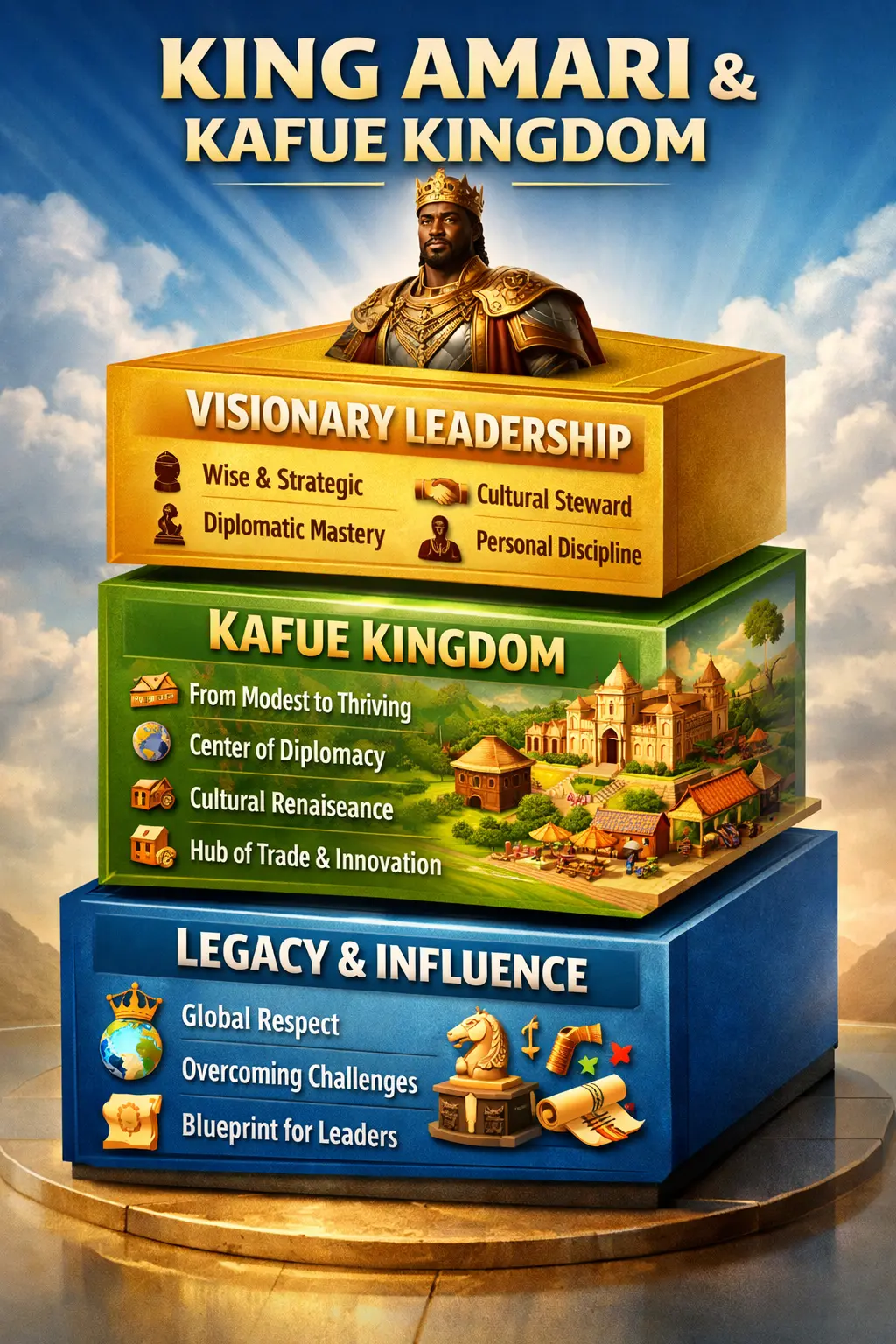
[Summary]
A Journey of Power, Wisdom, and Destiny
Kafue, once a quiet kingdom tucked away from the bustling affairs of the world, has transformed under the wise and visionary leadership of King Amari.
His rise from a prince with great potential to a globally respected monarch is not only a tale of destiny fulfilled but also a masterclass in strategic governance, personal growth, and diplomatic brilliance.
This narrative traces the evolution of both Kafue and King Amari, highlighting key stages that shaped their identities and influence.
The Early Foundations: A Kingdom Awaiting a Leader
Before King Amari ascended the throne, Kafue was a modest kingdom, rich in culture but relatively unknown beyond its borders. Its people were hardworking and resilient, yet the kingdom lacked the global attention and strategic alliances that neighboring lands enjoyed.
The seeds of Kafue’s transformation were sown when Amari, a young prince with sharp intellect and charisma, began preparing for his future role as king.
Even in his youth, Amari displayed an exceptional understanding of leadership. Unlike rulers who rely solely on inheritance, he studied governance, diplomacy, and the intricacies of international relations.
His early interactions with neighboring princes, scholars, and visiting dignitaries helped him gain a nuanced perspective on leadership. The kingdom, sensing his potential, began to rally quietly behind him.
Ascension and the First Stage of Leadership: Consolidation
King Amari’s formal rise to the throne marked the beginning of a new era. In the first stage of his rule, the focus was on consolidating power and establishing legitimacy.
Despite the admiration of his people, he faced the delicate task of uniting Kafue’s factions, nobles, and distant provinces under a cohesive vision.
Amari approached this challenge with both diplomacy and strategic foresight. He respected traditional customs while also implementing reforms to modernize governance.
By valuing counsel from both elders and younger visionaries, he created a balanced leadership style that combined wisdom with innovation.
During this stage, Kafue’s internal stability became the foundation for future growth. Amari’s rule was characterized by fairness, decisiveness, and careful attention to the needs of his people.
The kingdom’s population began to see him not only as a ruler but as a symbol of hope and progress.
The Stage of Global Recognition: Diplomacy and Alliances
With Kafue internally stable, Amari entered the second stage of his reign: external recognition and diplomacy. Unlike other monarchs who pursue expansion through war, Amari chose influence and alliance-building as his tools of power.
Kings, princes, and dignitaries from distant lands began visiting Kafue—not as invaders, but as guests seeking guidance, trade partnerships, and diplomatic ties. The kingdom transformed into a hub of international attention, with Kafue’s culture, economy, and governance becoming models for others.
King Amari’s diplomatic brilliance was evident in his ability to forge alliances without compromising sovereignty. He hosted cultural exchanges, facilitated international trade agreements, and promoted Kafue’s image as a peaceful yet formidable kingdom.
Tourists and scholars alike were drawn to the kingdom, fascinated by its growing influence and the king’s charisma.
Cultural Renaissance: Kafue as a Kingdom of Emulation
Amari’s reign ushered in a period of cultural renaissance. Kafue became a kingdom that others sought to emulate, celebrated for its arts, architecture, governance, and innovative policies. King Amari understood that true influence extends beyond politics; it thrives in culture, education, and societal values.
During this stage, the kingdom saw investments in education, arts, and social infrastructure. Festivals, scholarly gatherings, and public projects flourished, reflecting a society that valued both tradition and modernity. The king’s personal involvement in these initiatives highlighted his belief in leading by example.
Importantly, Kafue’s moral and cultural identity remained intact, despite rapid modernization. This careful balance between progress and heritage became a defining feature of Amari’s leadership and a lesson for future rulers.
The Personal Journey of King Amari: Solitude and Vision
One of the most intriguing aspects of King Amari’s story is his personal journey. For five years, he ruled Kafue without a wife—not from choice, but out of deliberate focus on his responsibilities. This period of solitude allowed him to reflect deeply, plan strategically, and understand the pulse of his kingdom.
Amari’s personal discipline and vision set him apart from ordinary rulers. He demonstrated that leadership is as much about self-mastery as it is about governance. The king’s careful navigation of both personal and public spheres cemented his reputation as a wise and respected monarch, both within and beyond Kafue.
Challenges and Triumphs: Navigating the World’s Attention
No kingdom rises without scrutiny. As Kafue gained international fame, envy and intrigue followed. King Amari faced subtle challenges from neighboring powers and distant rulers, testing his diplomacy, wisdom, and patience.
Yet, his strategic mindset and adherence to principles allowed him to overcome threats without resorting to conflict. Amari’s victories were often silent but impactful—strengthening Kafue’s alliances, enhancing its reputation, and proving that true power lies in influence, not intimidation.
This stage highlighted the resilience and foresight of both the king and his kingdom. Kafue became a beacon of stability and prosperity, admired not only for its wealth or power but for its ethical and visionary leadership.
Legacy in Progress: A Kingdom and King Defined by Excellence
King Amari’s journey illustrates that the rise of a kingdom and the growth of its ruler are intertwined. From humble beginnings to international recognition, Kafue’s evolution reflects a combination of visionary leadership, strategic diplomacy, cultural investment, and personal discipline.
Today, Kafue is no longer a hidden gem but a model kingdom, drawing admiration from far and wide. Its king, Amari, stands as a testament to the power of foresight, integrity, and careful planning. His reign proves that true leadership is about creating a lasting impact, cultivating respect, and empowering both the people and the land.
For readers, scholars, and aspiring leaders, the story of Kafue and King Amari offers invaluable lessons: leadership is multi-dimensional, success is deliberate, and influence is best achieved through wisdom, culture, and ethics rather than force alone.
Conclusion
The narrative of Kafue and King Amari is more than a tale of royalty; it is a study in the stages of growth, resilience, and global recognition. From consolidation to cultural renaissance, personal discipline to diplomatic triumphs, every phase of their journey showcases the intricate balance between vision and action.
Kafue now shines as a kingdom of emulation, and King Amari as a monarch of foresight, discipline, and global respect. Their story is a blueprint for leadership that transcends borders, inspires admiration, and leaves an indelible mark on history.