Category Archives: Epic Fantasy Serial Fiction – Kingdoms, Magic & Adventure | ScoFiction

Follow serialized epic fantasy stories across magical lands and kingdoms. Heroic adventures, suspense, and strategy await in these captivating fantasy tales.

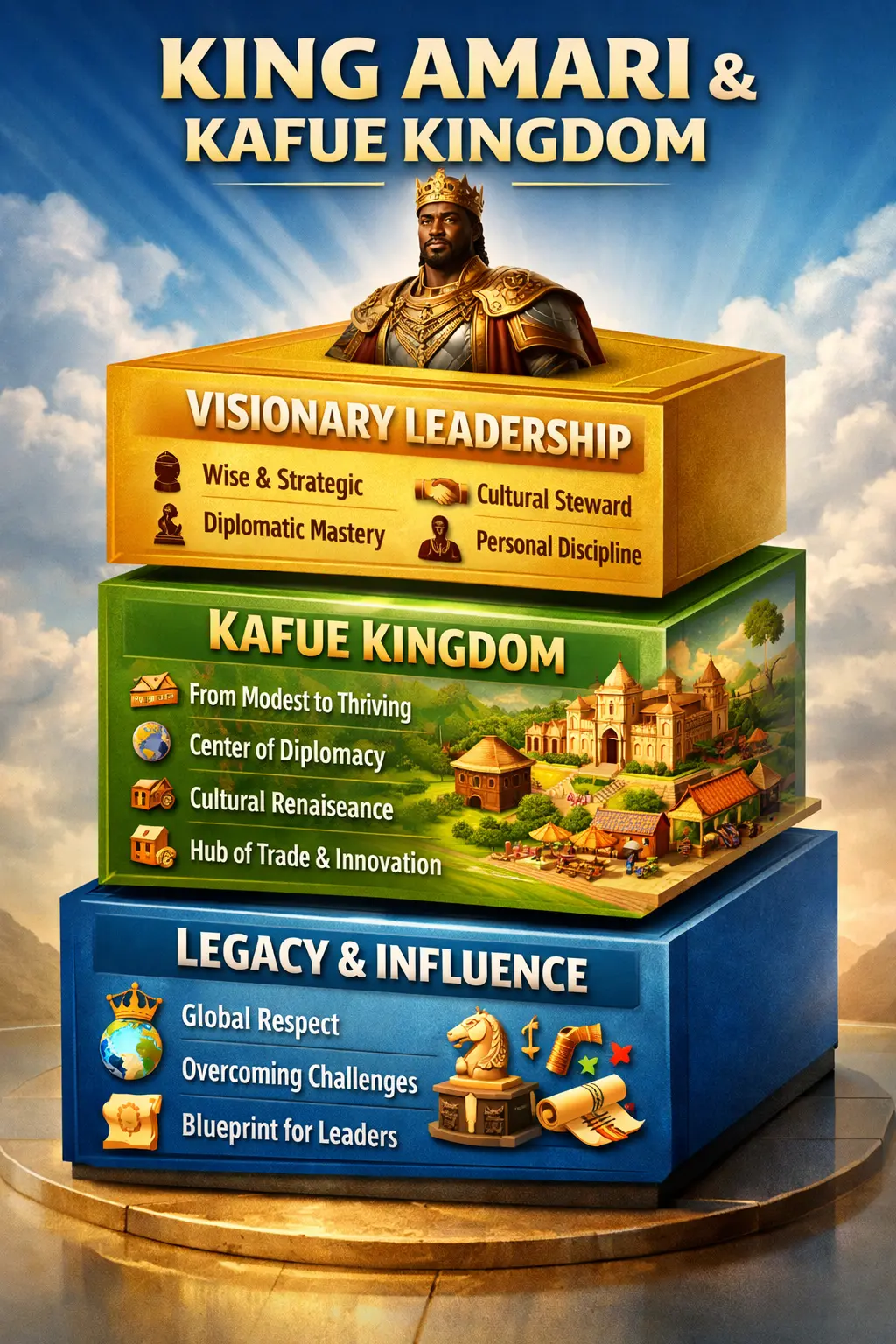
King Amari & Kafue Kingdom

[Summary]

A Journey of Power, Wisdom, and Destiny

Kafue, once a quiet kingdom tucked away from the bustling affairs of the world, has transformed under the wise and visionary leadership of King Amari.

His rise from a prince with great potential to a globally respected monarch is not only a tale of destiny fulfilled but also a masterclass in strategic governance, personal growth, and diplomatic brilliance.

This narrative traces the evolution of both Kafue and King Amari, highlighting key stages that shaped their identities and influence.

The Early Foundations: A Kingdom Awaiting a Leader

Before King Amari ascended the throne, Kafue was a modest kingdom, rich in culture but relatively unknown beyond its borders. Its people were hardworking and resilient, yet the kingdom lacked the global attention and strategic alliances that neighboring lands enjoyed.

The seeds of Kafue’s transformation were sown when Amari, a young prince with sharp intellect and charisma, began preparing for his future role as king.

Even in his youth, Amari displayed an exceptional understanding of leadership. Unlike rulers who rely solely on inheritance, he studied governance, diplomacy, and the intricacies of international relations.

His early interactions with neighboring princes, scholars, and visiting dignitaries helped him gain a nuanced perspective on leadership. The kingdom, sensing his potential, began to rally quietly behind him.


Ascension and the First Stage of Leadership: Consolidation

King Amari’s formal rise to the throne marked the beginning of a new era. In the first stage of his rule, the focus was on consolidating power and establishing legitimacy.

Despite the admiration of his people, he faced the delicate task of uniting Kafue’s factions, nobles, and distant provinces under a cohesive vision.

Amari approached this challenge with both diplomacy and strategic foresight. He respected traditional customs while also implementing reforms to modernize governance.

By valuing counsel from both elders and younger visionaries, he created a balanced leadership style that combined wisdom with innovation.

During this stage, Kafue’s internal stability became the foundation for future growth. Amari’s rule was characterized by fairness, decisiveness, and careful attention to the needs of his people.

The kingdom’s population began to see him not only as a ruler but as a symbol of hope and progress.


The Stage of Global Recognition: Diplomacy and Alliances

With Kafue internally stable, Amari entered the second stage of his reign: external recognition and diplomacy. Unlike other monarchs who pursue expansion through war, Amari chose influence and alliance-building as his tools of power.

Kings, princes, and dignitaries from distant lands began visiting Kafue—not as invaders, but as guests seeking guidance, trade partnerships, and diplomatic ties. The kingdom transformed into a hub of international attention, with Kafue’s culture, economy, and governance becoming models for others.

King Amari’s diplomatic brilliance was evident in his ability to forge alliances without compromising sovereignty. He hosted cultural exchanges, facilitated international trade agreements, and promoted Kafue’s image as a peaceful yet formidable kingdom.

Tourists and scholars alike were drawn to the kingdom, fascinated by its growing influence and the king’s charisma.


Cultural Renaissance: Kafue as a Kingdom of Emulation

Amari’s reign ushered in a period of cultural renaissance. Kafue became a kingdom that others sought to emulate, celebrated for its arts, architecture, governance, and innovative policies. King Amari understood that true influence extends beyond politics; it thrives in culture, education, and societal values.

During this stage, the kingdom saw investments in education, arts, and social infrastructure. Festivals, scholarly gatherings, and public projects flourished, reflecting a society that valued both tradition and modernity. The king’s personal involvement in these initiatives highlighted his belief in leading by example.

Importantly, Kafue’s moral and cultural identity remained intact, despite rapid modernization. This careful balance between progress and heritage became a defining feature of Amari’s leadership and a lesson for future rulers.


The Personal Journey of King Amari: Solitude and Vision

One of the most intriguing aspects of King Amari’s story is his personal journey. For five years, he ruled Kafue without a wife—not from choice, but out of deliberate focus on his responsibilities. This period of solitude allowed him to reflect deeply, plan strategically, and understand the pulse of his kingdom.

Amari’s personal discipline and vision set him apart from ordinary rulers. He demonstrated that leadership is as much about self-mastery as it is about governance. The king’s careful navigation of both personal and public spheres cemented his reputation as a wise and respected monarch, both within and beyond Kafue.


Challenges and Triumphs: Navigating the World’s Attention

No kingdom rises without scrutiny. As Kafue gained international fame, envy and intrigue followed. King Amari faced subtle challenges from neighboring powers and distant rulers, testing his diplomacy, wisdom, and patience.

Yet, his strategic mindset and adherence to principles allowed him to overcome threats without resorting to conflict. Amari’s victories were often silent but impactful—strengthening Kafue’s alliances, enhancing its reputation, and proving that true power lies in influence, not intimidation.

This stage highlighted the resilience and foresight of both the king and his kingdom. Kafue became a beacon of stability and prosperity, admired not only for its wealth or power but for its ethical and visionary leadership.


Legacy in Progress: A Kingdom and King Defined by Excellence

King Amari’s journey illustrates that the rise of a kingdom and the growth of its ruler are intertwined. From humble beginnings to international recognition, Kafue’s evolution reflects a combination of visionary leadership, strategic diplomacy, cultural investment, and personal discipline.

Today, Kafue is no longer a hidden gem but a model kingdom, drawing admiration from far and wide. Its king, Amari, stands as a testament to the power of foresight, integrity, and careful planning. His reign proves that true leadership is about creating a lasting impact, cultivating respect, and empowering both the people and the land.

For readers, scholars, and aspiring leaders, the story of Kafue and King Amari offers invaluable lessons: leadership is multi-dimensional, success is deliberate, and influence is best achieved through wisdom, culture, and ethics rather than force alone.


Conclusion

The narrative of Kafue and King Amari is more than a tale of royalty; it is a study in the stages of growth, resilience, and global recognition. From consolidation to cultural renaissance, personal discipline to diplomatic triumphs, every phase of their journey showcases the intricate balance between vision and action.

Kafue now shines as a kingdom of emulation, and King Amari as a monarch of foresight, discipline, and global respect. Their story is a blueprint for leadership that transcends borders, inspires admiration, and leaves an indelible mark on history.
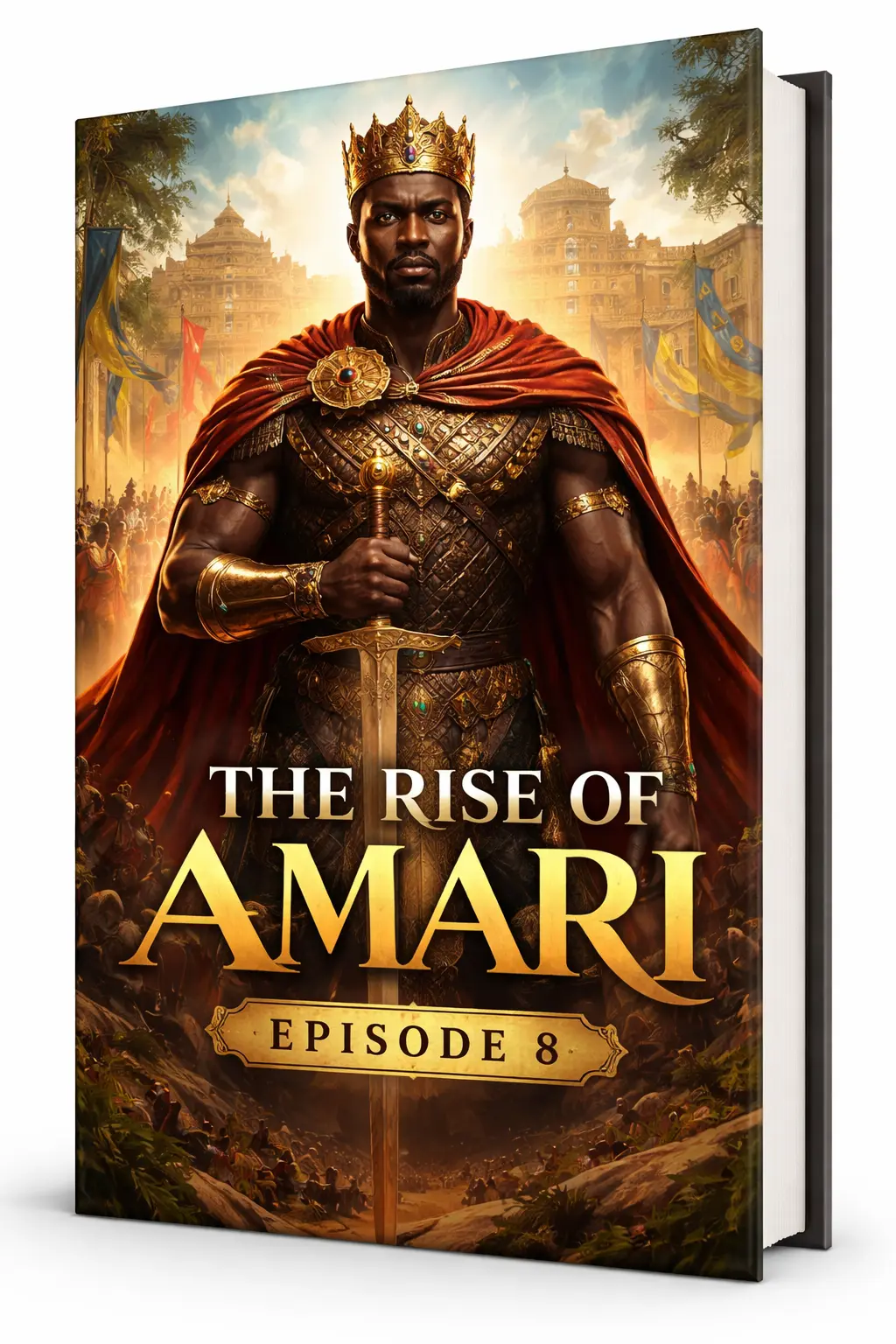
The Rise of Amari – Episode 8

When the World Watches the King

A Legendary Chronicle of Power, Prophecy, Love, and Envy

Before reading this episode, you may want to revisit Episode 7, where the foundations of this moment were laid:
👉 Read Episode 7 here:
the-rise-of-amari-episode-7-the-gathering-storm/


Chapter One: Roads That Led to One Kingdom

The roads leading to Kafue had never carried such meaning.

From distant deserts and fertile valleys, from island realms and mountain thrones, kings, queens, princes, and emissaries journeyed toward one land. They did not come with armies. No banners of war were raised. Their weapons remained sheathed.

They came in honor.

Caravans rolled in with gold-embroidered flags. Horses bore riders clothed in royal silks. Even common travelers followed, eager to see with their own eyes the kingdom whose name now echoed across the world.

Kafue was no longer just a kingdom.
It had become an idea.

Tourists arrived first, drawn by stories of justice and peace. Scholars followed, studying its governance. Merchants came next, sensing opportunity. And finally, rulers arrived—seeking understanding, alliance, and inspiration.

Kafue had become a kingdom others sought to emulate.

Yet among the elders, a quiet warning passed from mouth to ear:

When the world watches one king too closely, admiration often gives birth to envy.


Chapter Two: Fame Beyond the Prophecy

King Amari never ruled for recognition.

From the day he ascended the throne, his loyalty was not to praise, but to prophecy. The ancient scrolls had spoken of his rise, but they never promised comfort or celebration. They demanded obedience, discipline, and sacrifice.

And Amari obeyed.

His name traveled faster than any messenger. Kingdoms he had never seen spoke of him with wonder. Stories painted him as a ruler who listened before commanding, who fought only when peace failed, and who placed truth above bloodline.

The elders reminded the people of an ancient truth:

Prophecy is not fulfilled by chance.
It moves by rules, order, and instruction.

Amari followed every instruction.

And because he did, destiny followed him.


Chapter Three: A Throne Without a Queen

For five years, King Amari ruled Kafue without a wife.

Many questioned this choice. Some whispered doubt. Others mocked him quietly beyond Kafue’s borders, claiming no king could rule fully without a queen beside him.

But Amari understood something few men did.

A wise man knows his mission and protects it from distraction.

Kafue had needed battles—not with swords, but with corruption, fear, division, and outdated traditions. These were wars that demanded total focus. Love, though powerful, required attention he could not yet spare.

Now, five years later, Kafue stood strong.

Peace reigned. Prosperity flourished. The kingdom no longer trembled.

And Amari knew the time had come.


Chapter Four: The Banquet That Changed Everything

The announcement spread like wildfire.

A royal banquet would be held—unlike any before it. Maidens and women from across Kafue and beyond were invited to participate in a grand dancing competition. It was not merely entertainment; it was a celebration of culture, unity, and destiny.

Foreign royalty gathered in splendor. Lanterns lit the palace grounds. Drums echoed into the night as dancers moved with grace and strength.

Amari watched in silence.

He was not searching for beauty alone. His eyes sought character, humility, resilience, and truth.

Then he saw her.


Chapter Five: The Woman the King Remembered

She danced differently.

Her movements carried a quiet depth—pain endured, strength reclaimed, and hope reborn. Her beauty was undeniable, but it was her eyes that held Amari’s attention.

Memory returned like thunder.

Years earlier, Barika had used her in a cruel trap meant to compromise the king. Amari had seen through the scheme then, but he had never forgotten her face.

Now she stood before him again.

Not as a pawn.
Not as bait.
But as a woman reclaiming her place.

Amari remembered the truth others ignored:

She had acted under duress.
Fear had guided her steps—not betrayal.

The experienced king did not rush his judgment.

But his heart was already decided.


Chapter Six: The Queen Chosen by Redemption

Silence fell as the king rose.

When Amari announced his choice, gasps rippled through the crowd. Some rejoiced openly. Others whispered in disbelief. Foreign nobles watched their political hopes dissolve.

But Amari stood firm.

He did not choose for alliance.
He did not choose for appearance alone.
He chose redemption.

With that choice, he declared a message stronger than any law:

In Kafue, a past mistake does not cancel a future destiny.


Chapter Seven: The Blood of Kings

Before marriage, tradition demanded a sacred rite.

Amari was brought before the priests and elders. The ritual of bleeding bound him once more to the land and the ancestors. His blood touched the earth as prayers rose into the heavens.

The elders called for courage beyond fear.
Strength beyond flesh.
Wisdom beyond years.

When Amari rose, something had changed.

From that day forward, he was known as the bravest and strongest king of his time—not because he feared nothing, but because nothing ruled him.


Chapter Eight: Forty-Nine Years of Rule

Amari ruled Kafue for forty-nine years.

Long after his rivals had faded into memory, the laws he forged continued to guide the kingdom, and his life became a standard by which future generations were measured.

Kings continued to visit—not as rivals, but as students. Justice became predictable. Peace became tradition.

Though envy never vanished, it never conquered.

Amari had built something envy could not destroy.


Chapter Nine: When a Legend Joins the Ancestors

When King Amari finally joined his ancestors, Kafue did not fall into chaos.

The kingdom mourned—but it stood firm.

That was his final victory.

Elders told his story to children who had never seen his face, and still they listened with wonder. His name became more than history.

It became legend.


Closing Line

Some kings rule with power. Others rule with fear. But the rarest of all rule with destiny—and when they depart, the world never forgets.

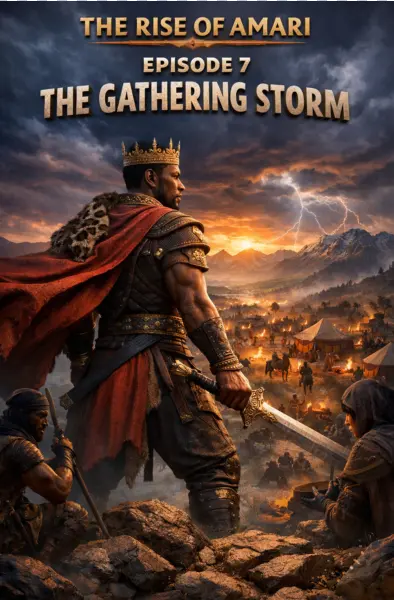
THE RISE OF AMARI: EPISODE 7

THE GATHERING STORM

To fully understand the events leading to this episode—Amari’s last battles, shifting alliances, and the foundation of his growing empire—👉 Read Episode 6 The Rise Of Amari: Episode 6.

The dust of war had barely settled over Kafue

When silence arrived—heavy, unnatural, and deceptive. Watchtowers remained guarded, though their fires burned low. Warriors rested, yet their minds stayed alert. Spears were cleaned, shields repaired, and scouts watched the horizon without blinking.

Victory had been achieved.
Peace had not.

King Amari understood what others ignored: when enemies fall silent, they are often preparing to rise again. Beyond the distant hills where the sun disappeared each evening, hostile forces reorganized. Betrayed allies whispered to new enemies. And unseen powers stirred in the spiritual realm

Amari’s rise had drawn attention.
Attention always invites resistance.


The Burden of Leadership

At dawn, Amari stood alone on the highest ridge overlooking Kafue. The wind pulled gently at his cloak, carrying the scent of earth and iron. Below him lay a kingdom strengthened by his leadership—yet surrounded by envy and ambition.

He was no longer the boy chased into exile.
No longer the youth shaped by hunger and survival

He was king.

Yet kingship carried a heavier burden than battle. Leadership demanded wisdom. Power demanded restraint. Destiny demanded sacrifice.

Amari knew that true greatness is never crowned without challenge.


A Strategy Beyond Ordinary War

When intelligence confirmed that enemy forces were regrouping beyond the eastern

valleys, Amari acted without delay. His response was calm, deliberate, and calculated.

What followed was not ordinary warfare.

Amari divided his elite warriors into three strategic sections, each personally trained by him and his most trusted commanders—men who had stood with him since exile.

These warriors were chosen for loyalty, discipline, and endurance.

Amari tolerated no mistakes—not from cruelty, but from understanding that mistakes in war cost lives

Every movement was planned.
Every decision measured.

Yet even as he prepared his forces, Amari sensed something deeper awakening.

This was destiny being tested.


The Test Before Greatness

Among elders and spiritual watchers, an ancient truth resurfaced:

“Before destiny is confirmed, both spirits and men will rise against it.”

This was the moment all great rulers faced—

One of the Investors—once trusted—had escaped.

He fled into enemy territory, carrying knowledge of Kafue’s defenses and strategies. His aim was clear: to unite with Amari’s enemies and bring him down.

Rumors of war spread rapidly. Markets buzzed. Drums echoed warnings across villages. Mercenaries prepared for bloodshed.

Yet Amari’s courage steadied the people.

His confidence inspired warriors.
His calm silenced fear.

One of the Investors—once trusted—had escaped.

He fled into enemy territory, carrying knowledge of Kafue’s defenses and strategies. His aim was clear: to unite with Amari’s enemies and bring him down.

Rumors of war spread rapidly. Markets buzzed. Drums echoed warnings across villages. Mercenaries prepared for bloodshed.

Yet Amari’s courage steadied the people.

His confidence inspired warriors.
His calm silenced fear.

One of the Investors—once trusted—had escaped.

He fled into enemy territory, carrying knowledge of Kafue’s defenses and strategies. His aim was clear: to unite with Amari’s enemies and bring him down.

Rumors of war spread rapidly. Markets buzzed. Drums echoed warnings across villages. Mercenaries prepared for bloodshed.

Yet Amari’s courage steadied the people.

His confidence inspired warriors.
His calm silenced fear.

Amari spoke a familiar truth to his council:

“Victory before war.”

Victory begins long before swords are drawn.


The Power of Intelligence

Amari’s strongest weapon was not the blade.

It was intelligence.

Long before his enemies realized it, Amari had planted spies across regions—men trained to

observe quietly and blend perfectly.

An intelligence unit moved into a neighboring village plotting against Kafue

Disguised as harmless travelers, the group entered without suspicion.
Gifts helped open doors, while local clothing and fluent speech allowed them to blend in.
Their presence raised no alarm.

Through festival dances and shared labor, confidence grew between them and the community.

Over time, vigilance faded and defenses quietly fell.


When the Fall Is Near

There is an old saying:

“When your fall is near, you will surrender your weapons to your destroyer.”

That truth unfolded naturally.

Enemy plans were discussed openly. Guard routes revealed. Weapon stores pointed out casually. Weapons were even handed over without suspicion

The spies listened carefully.

They counted soldiers.
Mapped strongholds.
Memorized everything.

By the time doubt returned, it was too late.


The Collapse of the Enemy

With intelligence flowing from every direction, Amari struck.

Enemy war points fell one after another. Supply lines collapsed. Commanders were captured. Strongholds abandoned

Village after village surrendered.

Seventeen additional villages came under Amari’s rule.

Seventeen.

The escaped traitor was captured.

Amari quietly sealed his fate, convinced that true power required no spectacle.


A King the World Could Not Ignore

News of Amari’s victories spread far beyond Kafue

First across rivers.
Then across deserts.
Finally across kingdoms.

This, in turn, led to his reputation as the strongest king in Africa—valued as much for wisdom and discipline as for strength.

Yet Amari never allowed praise to rule him.

He honored the fallen.
Celebrated victory with humility.
Strengthened laws and unity.

tatues were built not for ego, but to teach future generations what greatness demands..

Destiny Still Moves Forward

That night, Amari stood once more on the ridge.

The land rested peacefully beneath him.

He knelt—not as a conqueror, but as a servant of destiny.

“If this path ends in glory,” he whispered,
“let it be for my people.”

“And if it ends in death,
let my name stand for courage.”

The wind answered.

And beyond the horizon, the world prepared to arrive

Coming Next – Episode 8

Kings and people from distant lands journey toward Kafue—not for war, but homage.
Tourists arrive. Alliances form.

Kafue becomes a kingdom of emulation.

But when the world watches one king,
new dangers always follow.

The Rise of Amari continues

The Rise of Amari — Complete Summary (Episodes 1–6)


An African epic fantasy of exile, destiny, leadership, wisdom, and the cost of power. Sco Fiction


Introduction to the Series

The Rise of Amari is a serialized epic fantasy set in the vast Kafue Plains, a land of rivers, mountains, and ancient traditions. This story explores how fear, prophecy, wisdom, and leadership shape the destiny of one young man and the empire he helps forge.

The narrative blends African mythological elements with human struggles, creating a world where spiritual insight and practical wisdom determine whether empires rise or fall.

Reading Order (Episodes available so far):

  1. Episode 1: The Silence That Changed Everything
  2. Episode 2: The Path of Fire and Gold
  3. Episode 3: The Weight of a Name
  4. Episode 4: The Crown of Destiny
  5. Episode 5: The Empire Awakens
  6. Episode 6: Shadows Over Kafue

MAIN CHARACTERS & THEIR ROLES

Here are the central figures whose journeys drive the narrative:

Amari

  • Protagonist — born in Kafue Village, exiled as a youth, transformed into a disciplined warrior and eventual king.
  • His arc moves from innocence → exile → wisdom → leadership → empire building. His growth represents how awareness and courage transcend fear and tradition.

Barika

  • A once-influential elder whose fear of prophecy and envy of Amari sets the early conflict in motion.
  • His transformation from powerful elder to a fearful figure symbolizes the downfall of outdated authority.

Elders of Kafue

  • Representatives of tradition bound by fear, suspicion, and resistance to destiny.
  • They embody how rigid systems resist change even when truth becomes undeniable.

Warriors and Allies

  • Those who train with Amari during exile or join him later represent discipline, loyalty, and unity in the face of danger.

The People of Kafue and Surrounding Regions

  • Their arc from fear → doubt → belief illustrates how societies evolve when led by just and bold leadership.

EPISODE 1 — The Silence That Changed Everything

➡️ Read Episode 1: https://scofiction.com/the-rise-of-amari/

Summary

Episode 1 opens in Kafue Village, where tradition holds sway and elders guard ancient practices. The story begins with an unexplained silence — the village drums that once beat ceremonially fall quiet. This moment signals that something profound has shifted. Amid this spiritual unease, Amari’s father dies, leaving the young Amari burdened with responsibility and loss.

Though kind, brave, and honorable, Amari becomes the subject of growing suspicion from Barika, a respected elder whose envy and fear of prophecy lead him to manipulate old traditions to justify Amari’s exile. This turning point marks the beginning of Amari’s journey.

Scene Meaning

  • Drums falling silent: Symbolizes a break in harmony, signaling that traditional understanding cannot contain what is coming.
  • Father’s death: Acts as a rite of passage, thrusting Amari into a world of uncertainty.
  • Exile: Represents both rejection and the first step toward real identity formation.

Themes & Lessons

  • Fear limits insight — suspicion based on tradition can condemn truth.
  • Loss can catalyze growth — the painful departure from home becomes a foundation for strength.
  • Identity is forged, not given.

EPISODE 2 — The Path of Fire and Gold

➡️ Read Episode 2: https://scofiction.com/the-rise-of-amari-2/

Summary

After his exile, Amari enters an unfamiliar world beyond Kafue. This episode — subtitled The Path of Fire and Gold — follows his transformation. Alone and tested by harsh terrain, he learns survival skills, discipline, and the diversity of cultures that inhabit the plains. During this time, he becomes a warrior shaped by hardship, not vengeance.

Scene Meaning

  • Exile journeys: Show that wisdom and resilience are earned through challenge, not handed down.
  • Encounters with others: Expand Amari’s worldview, teaching him empathy, negotiation, and observation.

Themes & Lessons

  • Leadership grows from discipline.
  • Hardship refines purpose.
  • Exile opens eyes to wider realities.

EPISODE 3 — The Weight of a Name

➡️ Read Episode 3: https://scofiction.com/the-rise-of-amari-episode-3-the-weight-of-a-name/

Summary

Amari climbs the Mountain of Vision, an ancient peak feared and revered for spiritual clarity. At the summit, he confronts the burden and meaning of his name — once whispered in shame, now a name tied to destiny and prophecy.

A cry from below interrupts his reflection: a group of armed warriors is advancing toward Kafue Village. Amari descends to defend his people — not for vengeance, but to preserve justice. Using wisdom and strategy taught during his exile, he orchestrates a defense that forces the invaders to flee.

Scene Meaning

  • The Mountain of Vision: Represents self-reflection and clarity — seeing beyond fear and reputation.
  • Return to Kafue: Illustrates that maturity includes protecting others even if they once rejected you.

Themes & Lessons

  • Wisdom surpasses force.
  • Names carry meaning shaped by actions.
  • Protection born of insight creates peace, not dominance.

EPISODE 4 — The Crown of Destiny

➡️ Read Episode 4: https://scofiction.com/the-rise-of-amari-episode-4/

Summary

After saving Kafue from invasion, Amari disappears once more. Rumors of his deeds turn into legend, and the villagers are torn between authority and reverence.

Amari, guided by a divine vision of an empire, contemplates leadership beyond war. Meanwhile, in Kafue, spiritual leaders follow prophetic instructions to summon him back. When they find Amari, the divine plan unfolds: he is crowned King of Kafue. During his coronation, the disappearance of Barika and hostile elders — a divine sign — marks a shift toward unity and destiny.

Scene Meaning

  • Amari’s vision: Shows that leadership involves far more than martial skill — it requires long-term wisdom.
  • Coronation: Marks the transformation from warrior to sovereign who leads through justice, not fear.

Themes & Lessons

  • True leadership inspires inclusion.
  • Destiny is realized when people voluntarily follow, not when commanded.
  • Justice must be balanced with wisdom.

EPISODE 5 — The Empire Awakens

➡️ Read Episode 5: https://scofiction.com/the-rise-of-amari-3/

Summary

Years later, Amari’s dream of unity becomes a thriving empire of cities, markets, trade routes, and culture. Under his rule:

  • The weak are protected.
  • The skilled are honored.
  • The corrupt are removed.

However, this prosperity attracts both human and unseen interests. Diplomatic visitors, scholars, traders, and spirits from ancient memory appear. Even foreign investors arrive not with threat, but with promises — infrastructure, education, trade — offering growth but with hidden chains.

Disturbingly, the sacred Kafue Stream runs red with blood, signaling that threats have crossed boundaries in violent ritual. Instead of delegating, Amari walks into danger himself, showing leadership through empathy and direct involvement.

Scene Meaning

  • Empire growth: Represents the challenge of maintaining moral integrity while embracing progress.
  • Blood in the stream: Symbolizes the intrusion of hidden dangers that prosperity can bring.

Themes & Lessons

  • Prosperity tests character — success attracts both allies and threats.
  • Leaders walk with their people, not above them.
  • Wisdom and preparedness protect beyond weapons.

EPISODE 6 — Shadows Over Kafue

➡️ Read Episode 6: https://scofiction.com/the-rise-of-amari-episode-6/ Nairaland

Summary

As Episode 6 unfolds, power is no longer just a prize — it becomes a trial itself. With Amari’s empire strong, new challenges emerge: internal secrets, betrayals, and choices that test unity and commitment. Not everyone who stands beside the king wants him to win.

The story aims to deepen tension between external threats and internal discord, reminding readers that the greatest dangers often arise when unity seems strongest. Nairaland

Scene Meaning

  • Internal strife: Shows that power can fracture unity if leaders and followers forget core values.
  • Unseen challenges: Symbolize forces that test moral strength more than battlefield victories.

Themes & Lessons

  • Internal conflict can be more dangerous than invasion.
  • Leadership requires constant vigilance and moral clarity.
  • Unity must be preserved through shared purpose, not force.

OVERARCHING THEMES & LESSONS

1. Exile leads to inner strength.
Exile frees Amari from fear and narrows his focus on purpose.

2. True leadership balances power with justice.
Amari grows not by dominating, but by protecting and guiding.

3. Prosperity tests integrity.
Growth brings both opportunity and hidden dangers.

4. Wisdom outlasts force.
The story rewards strategic thinking over simple aggression.

5. Unity is sustained through shared values, not fear.
Amari’s empire progresses because people choose him, not because they are commanded.

Episode 7 — Coming Soon 🌟

As Amari’s empire stands strong, destiny sharpens its blade. Ancient powers stir, unseen alliances coalesce, and internal shadows challenge unity. Will wisdom guide the next chapter of the empire — or will unseen enemies topple its foundations?

🎯 Stay tuned — Episode 7 is coming soon.
The rise is only beginning.

Please drop your comments bellow. Also, in one sentence, state what you’ve learned so far. Lets role together.

THE RISE OF AMARI Episode 6

Shadows Over Kafue

Previously on Episode 5 – The Empire Awakens Click here


Synopsis

As the rivers of Kafue run red, King Amari uncovers a devastating betrayal at the heart of his empire. Trusted foreign investors are exposed as conspirators, allied with rival empires and corrupted villages to exploit Kafue’s gold and weaken it from within.

Acting with calculated resolve, Amari seals the borders, dismantles their schemes through intelligence and midnight warfare, and transforms slaughtered villages into deadly traps. Yet beyond human treachery, ancient powers begin to stir, awakened by blood and unrest.

As Kafue becomes a fortress of strategy and foresight, Amari prepares for a far greater war looming beyond the horizon.

The Revelation of Betrayal

Nyah, the ever-watchful scout, had been following the movements of the foreign investors for weeks. Her eyes—sharp as a hawk’s—missed nothing. From bustling markets to quiet border villages, she traced their footsteps with patience and precision until a terrifying truth emerged.

The investors, outwardly allies of trade and prosperity, were conspirators.

They had secretly aligned with rival empires and complicit villages, working to weaken Kafue from within. Their ambitions were as dangerous as they were calculated: seize the empire’s mineral wealth, fertile lands, and gold reserves, then use that wealth to fund armies capable of overthrowing kings.

Amari’s heart tightened at the revelation. The men he had welcomed with honor and trust into his court were serpents within his garden.

Without hesitation, he summoned them before the royal council.


Judgment Before the Royal Council

The investors arrived with practiced confidence—men accustomed to influence and power. Their faces were calm, their words measured. Yet beneath King Amari’s piercing gaze, their composure began to fracture.

“Kafue thrives on honor and loyalty,” Amari declared, his voice echoing through the council chamber.
“You have brought deception, blood, and foreign ambition into my lands. Speak now—what is your true purpose?”

Uneasy glances passed between them.

Slowly, fragments of the conspiracy spilled forth.

They had coordinated with border villages to destabilize Kafue through sabotage.
They had sent agents to slaughter villages under cover of night, letting rivers and streams run crimson as warnings and instruments of terror.

A direct invasion, they admitted, would fail. Instead, they relied on deceit, bribery, and alliances with distant empires—weakening the kingdom from within and preparing the ground for a greater takeover.

Amari listened in silence. He was a king who had weathered storms and survived betrayal before. Each confession sharpened his resolve.

The blood in the streams and the cries of the fallen demanded not only justice—but strategy.


Sealing the Borders and Strategic Planning

Amari did not act rashly.

Brute force alone would not defeat enemies who thrived in secrecy and darkness. He ordered the immediate sealing of Kafue’s borders. Guards and scouts were deployed to every crossing, checkpoint, and known route used by the conspirators. Every stranger, trader, and messenger was scrutinized.

Kwanza, chief strategist of Kafue, poured over maps of the empire and surrounding territories. He marked corrupted villages, enemy routes, and regions rich in resources coveted by invaders.

Strategic intelligence became the empire’s foremost weapon.

Amari understood that victory would not depend on the size of his armies, but on precision—anticipating enemy movements and striking where they least expected.

To preserve unity, he also addressed the people. Scouts carried messages of reassurance across the land, reinforcing trust in the crown and affirming that every village, every citizen, remained under the king’s protection.


The Midnight Operation

When the new moon rose and darkness claimed the land, Amari assembled his elite strike force.

Zuberi, captain of the Midnight Warriors.
Nyah, whose footsteps vanished in silence.
Handpicked warriors from every corner of Kafue.

This was not merely defense—it was calculated retaliation.

Every village touched by bloodshed became a trap. Hidden pits lined with sharpened stakes lay beneath forest floors. Nets were strung across expected horse paths. Silent signals were devised for retreat, reinforcement, and synchronized strikes.

Amari considered every scenario, every contingency, every possible movement of the conspirators.

As the warriors moved through the night, the air felt alive. The wind whispered through leaves and flowing water, as though the empire itself watched. The blood in the stream—once a symbol of horror—now fueled their resolve.


The Enemy’s Miscalculation

Confident in secrecy, the conspirators continued their operations, unaware that Kafue’s king had already anticipated their return.

When raiders crossed into border villages under cover of darkness, the traps closed.

Some were ensnared in camouflaged nets.
Others vanished into pits hidden beneath foliage.

Confusion spread. Fear followed.

They were surrounded—not by overwhelming numbers, but by foresight and strategy. By a king who understood their minds better than they understood his land.

Amari confronted the captured conspirators himself.

“You believed Kafue could be stolen with whispers and deceit,” he said calmly.
“You were wrong. Empires are not built by outsiders. They are defended by the blood, courage, and intelligence of their people.”

Through interrogation, more secrets surfaced—mineral veins, strategic locations, foreign allies. Amari documented everything, transforming betrayal into advantage and greed into a weapon against itself.


The Stirring of Ancient Powers

Yet human treachery was not the only danger.

Something older stirred beneath the rivers and forests of Kafue. The blood spilled into the streams resonated with dormant energies. The ancient Empire of Aksum—silent for centuries—seemed to awaken.

Legends spoke of forces older than memory, capable of either salvation or destruction.

Sensing this shift, Amari strengthened not only physical defenses but spiritual ones. Rituals were restored in border villages. Sacred symbols were carved and painted. Wards were placed at river crossings.

Priests and elders invoked blessings, steadying the hearts of the people as unseen powers moved beyond mortal comprehension.


Building an Empire of Intelligence

Amari’s vision extended beyond revenge.

To endure, an empire must anticipate threats—not merely respond to them.

He restructured Kafue’s forces into three interwoven layers:

The Vanguard – Guardians of villages and borders, visible and unwavering.
The Midnight Warriors – Elite operatives striking with silence and precision.
The Intelligence Network – Scouts, spies, and strategists like Nyah and Kwanza, ensuring no conspiracy grew unnoticed.

Kafue became more than a kingdom of walls and warriors.

It became a fortress of knowledge, foresight, and discipline.


Cliffhanger: The War Ahead

As dawn painted the empire in gold, Amari surveyed the land. The conspirators had fallen. The borders held firm. The first traps had succeeded.

Yet whispers on the wind spoke of greater forces gathering beyond the horizon.

Alliances remained unseen.
Ancient powers watched and waited.

Amari clenched his fist, determination blazing.

“Kafue will not fall. Not today. Not ever. But the war has only begun.”

The empire stood tall.
The king stood ready.
And destiny sharpened its blade.


Closing Hook – Toward Episode 7

Enemies had fallen.
Borders held firm.

But beyond the horizon, forces still gathered.
And ancient powers had not yet revealed their will.

The Rise of Amari continues…
Because empires do not fall in a day.

🔗 Next: Episode 7 – The Gathering Storm (Coming Soon)


THE RISE OF AMARI: Episode 5

The Empire Awakens

A continuation from Episode 4 on scofiction.com

The gods had revealed the cost of power in Episode 4. Now, Amari would learn the price of ruling.

After vanishing from Kafue and allowing rumors to shape his legend, Amari did not return as an exile or a savior—but as a ruler forged by vision, sacrifice, and restraint. What began as prophecy had become an empire, and what followed would test whether destiny itself could be controlled.

Read Episode 4: The Crown of Destiny


By the end of Episode 4, Yet after Amari’s crowing, He vanished once more—his victory over the invading warriors unseen, his name whispered like a forbidden prayer across Kafue.

The elders debated his return. Fear wrestled with prophecy. Barika’s silenced by death had become a prison of guilt, and rumors had taken root like fire in dry grass.

But beyond Kafue, beyond the reach of frightened elders and broken traditions, Amari did not disappear into weakness.
His thrown was untouched

He was rising.

Not as a fugitive.
Not as an exile.
But as a force reshaping the world.

Episode 5 opens years later—when the echoes of Amari’s hidden deeds had grown into thunder.


The Dawn of a Great Empire

Amari had become stronger—not merely in body, but in spirit, wisdom, and command.

What began as a gathering of displaced warriors, rejected clans, and forgotten peoples had transformed into a great empire, forged not by cruelty but by justice. His banner was not fear; it was order born from fairness, and strength guided by restraint.

Cities rose where ruins once slept.
Roads cut through wilderness.
Trade routes awakened ancient paths long buried beneath dust and blood.

Under Amari’s rule:

  • The weak were protected
  • The skilled were honored
  • The corrupt were removed without mercy

His empire waxed strong, not because of conquest alone, but because people believed in him.

They called him:

  • The Justice of Peace
  • The King Who Walked Among His People
  • The One Who Listens to the Gods

Yet power, like fire, attracts both warmth and destruction.


When Fame Attracts the Unseen

As Amari’s name spread beyond valleys and plains, it crossed borders of flesh and spirit.

Humans came first—merchants, scholars, exiles, diplomats.

Then came others.

Spirits that had slept since the age of ancestors began to stir. Destiny killers—those who thrived on the fall of great men—took notice. Envy moved quietly, wearing the faces of admiration.

Even the unseen world leaned closer.

And then came the white investors.

They arrived not with swords, but with agreements.
Not with threats, but with promises.

They spoke of:

  • Infrastructure
  • Rehabilitation
  • Education
  • Trade expansion
  • Global recognition

Roads were built faster.
Granaries expanded.
Hospitals rose.
Work flourished.

To the people, it looked like blessing.

To Amari, it looked like a test.

For he understood something many rulers never learn:

Not every gift comes without a chain.

Still, he allowed progress—but under watchful eyes. He refused blind dependency. Every agreement was weighed against the voice of the gods and the welfare of his people.

And yet… even as the empire thrived, darkness was moving beneath the surface.


The Stream That Spoke in Blood

It began on an ordinary morning.

The maidens of Kafue—now part of Amari’s greater realm—went to fetch water from the stream as they always had. The stream of Kafue was ancient, sacred, and feared. It marked the boundary between Kafue lands and the forgotten reach of the ancient Empire of Aksum.

The water had always run clear.

But that morning, it did not.

As the maidens approached, they froze.

The surface of the stream shimmered—not with sunlight, but with red.

Blood.

Not one drop.
Not a stain.

The water was spilled with it.

Tangled near the banks were torn garments. Broken tools. Human remains—slaughtered without mercy, their blood feeding the stream like an offering to something hungry.

The maidens screamed.

Buckets fell.
Feet ran.
Fear flew faster than breath.

Within moments, the village square roared with panic.

Messengers were sent—not to generals, not to scouts—but directly to King Amari.


The King Who Walked to Danger

When Amari received the message, he did not sit upon his throne.

He did not summon councils.
He did not hide behind command.

He rose.

“I will go myself,” he said.

Those around him protested. Kings do not walk into unknown slaughter. But Amari had never ruled like other kings.

He took only a few trusted guides—men trained not just in battle, but in silence and observation.

As they approached the stream, the air grew heavy. The birds had vanished. Even insects dared not sing.

Then Amari saw it.

Bodies.

Men and women.
Young and old.

Their deaths were not random.

They were ritualistic.

The stream—once a boundary—had become a message.

One guide pulled Amari aside, pointing toward the edge of the water.

“What you see here,” the guide whispered, “is not a raid. It is a declaration.”


A King Without Rest

That night, Amari could not sleep.

The faces of the dead followed him.
The silence of the stream haunted him.
The gods did not speak immediately—and that troubled him most.

He ordered a search.
He reinforced the borders.
He planted unseen protections across the land.

But strength alone would not save the empire now.

Amari understood:

This was no ordinary enemy.

This was a war of:

  • Intelligence
  • Diplomacy
  • Divine insight
  • Patience

And wisdom.

In his private consultations, signs aligned.

The enemies had encroached.
They were testing his reach.
They were measuring his response.

They wanted his kingdom to fall—not through open war, but through slow destabilization.

Yet fear did not move Amari.

Preparation did.


When the King Stands Alone

As he always did in moments of great uncertainty, Amari withdrew from human voices.

He entered solitude.

High above the empire, in a place untouched by roads or walls, he fasted. He listened. He waited.

There, the gods spoke—not in thunder, but in understanding.

They revealed a truth:

The empire had awakened. And so had its enemies.

To protect what he had built, Amari would need more than warriors.

He would need:

  • Strategists
  • Seers
  • Diplomats
  • Guardians trained for both flesh and spirit

He returned transformed—not louder, but clearer.


The Preparation Before the Storm

Amari ordered the training of more warriors—not reckless fighters, but disciplined defenders.

Weapons were forged.
Armor blessed.
Signals established.

Every move was calculated.

For Amari knew:

The enemy would strike when the empire believed itself safest.

And when that day came, the world would learn that the rise of Amari was not finished.

It had only begun.


Closing Hook — Toward Episode 6

As the stream of Kafue slowly cleared, something unseen crossed its waters.

The ancient Empire of Aksum was no longer silent.
The investors were no longer merely partners.
And the blood in the stream had awakened something older than memory.

Far beyond the borders, forces gathered.

The empire stood tall.
The king stood ready.

But destiny was sharpening its blade.

Watch Out for the Next Episode

The Rise of Amari continues…

Because empires do not fall in a day—
they fall when their enemies stop hiding.

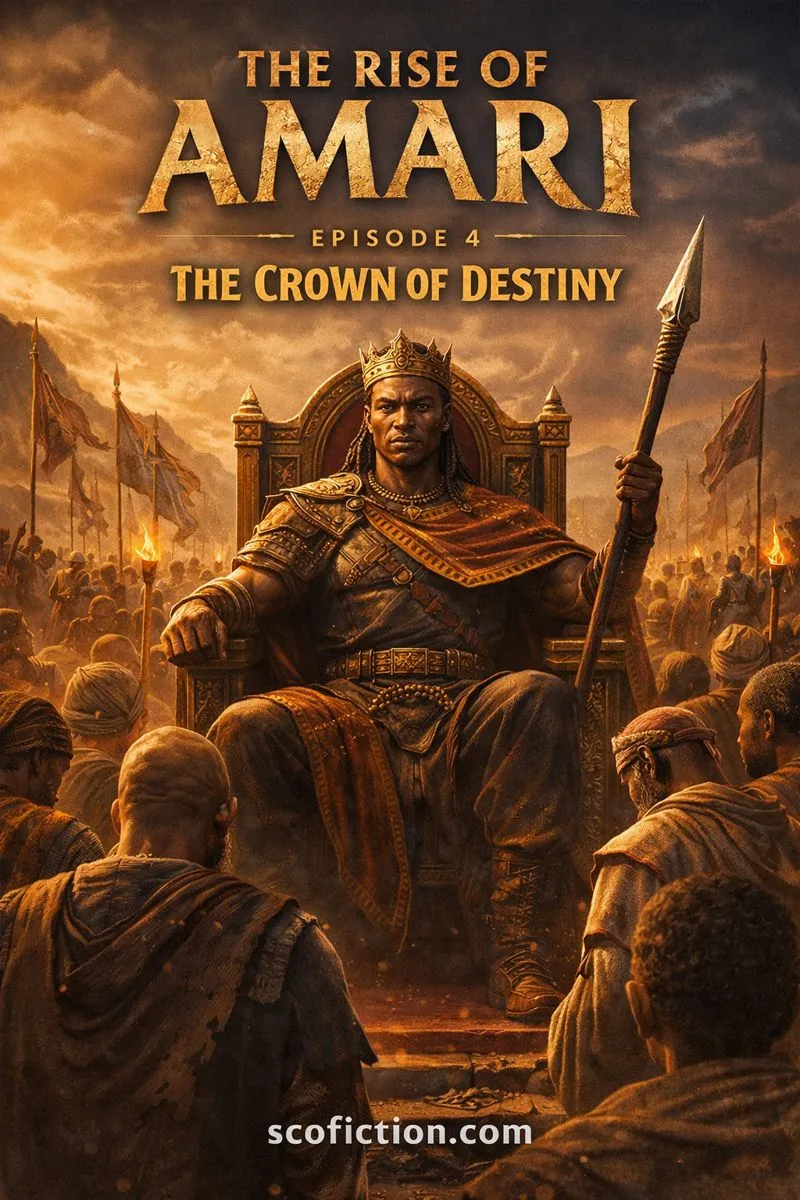
THE RISE OF AMARI – Episode 4

The Crown of Destiny

This episode continues directly from
👉 The Rise of Amari – Episode 3: The Weight of a Name


The Vanishing Warrior

Amari had disappeared as swiftly as the morning mist. Only his closest warriors knew his path. The plains were empty of his presence, yet every step he took seemed to echo across Kafue Village. The people were convinced—though they had never witnessed it—that he had saved them. Their hearts still carried the memory of the mysterious victory that no one could explain.

But not everyone shared that awe. A faction of elders, loyal to Barika, refused to let the legend of Amari overshadow their authority. They whispered doubts in shadowed corners, questioning whether this exile-turned-warrior could truly embody leadership. Their bias clung like stubborn weeds, despite the gods themselves having demonstrated Amari’s unmatched bravery, wisdom, and divine guidance.

Amari did not concern himself with their murmurs. He had been given a higher purpose. Every footprint he left, every camp he made, every moment of silence he kept, was ordered by the gods. With each step, he gained more insight, more clarity, and more wisdom. He was a man no longer bound by fear or vengeance, but a vessel of divine understanding.


The Dream of an Empire

One night, as Amari rested alone in the dense forests beyond Kafue, he was visited by a vision unlike any he had known. In his dream, he stood on a great golden dais. Below him, people from Kafue and countless villages bowed in respect, reverence glowing in their eyes.

He saw himself not as a solitary warrior, but as a ruler uniting these diverse lands. Tribes that had once been rivals held banners side by side. Markets, temples, and schools rose across the plains, all under his guidance. It was a vast empire—a kingdom he had never imagined. The dream whispered a name: Amari’s Empire.

When he awoke, the vision lingered like a flame in his mind. He could not shake it. The scale of such an empire was unimaginable. Could he truly become more than a warrior? Could he unite villages bound by tradition, rivalry, and fear?

Amari did not rush to decide. Instead, as always, he sought wisdom directly from the gods. Alone atop the Mountain of Vision, he meditated, asking the divine for guidance. Here, the immortal answered him, revealing the path he must follow, teaching him lessons of leadership, patience, and divine justice. Every answer he sought, every revelation he needed, came directly from the gods, reinforcing his unique role among mortals.


The Council of Kafue

Meanwhile, back in Kafue Village, the elders gathered urgently. The recent events had left no room for doubt—Amari’s power, courage, and wisdom were undeniable. The people demanded action. After long deliberation, they assembled the villagers in the central square, announcing a decision none could contest: Amari must be crowned King.

Yet the question remained: where could they find him? He had vanished without a trace. Still, even in absence, his presence was felt. Villagers spoke of shadows that moved with a protective aura, of hearts lightened by the echo of his kindness. Amari’s goodness had left a mark, a spiritual footprint that no mortal could erase.

The elders realized that only by following divine instructions could they summon him home. Chief Priest Arimba, the spiritual leader of Kafue, called forth a group of brave youth to seek him. Each young warrior was instructed meticulously:

  • Do not approach him with force. Amari was not to be commanded, only invited.
  • Respect the sacred boundaries of his meditation and solitude.
  • Speak only the words given by the gods. The phrasing must be exact, or he would not return.
  • Honor the path of the gods. Any misstep, misinterpretation, or impure intention would prevent his acceptance.

“These instructions are not mere ritual,” Chief Priest Arimba warned. “They are the voice of the immortal. Fail in even the smallest detail, and Amari will vanish forever, leaving Kafue in uncertainty.”


The Quest Begins

The youth embarked on the journey, carrying only essentials and their courage. For weeks, they traversed rivers, forests, and hills, guided by intuition and prayer. Hunger, storms, and exhaustion tested them at every step. Yet, the instructions of the gods illuminated their path. Every obstacle became a lesson, every danger a confirmation of the divine presence guiding their mission.

As they drew near Amari’s hidden refuge, they felt the weight of the legend pressing upon them. Finally, after weeks of hardship and reflection, they found him seated beneath a colossal baobab tree, lost in meditation. His presence was serene yet commanding. The youth approached cautiously, reciting the sacred words exactly as the gods had instructed.

Amari opened his eyes, and for the first time in weeks, a smile broke across his face. His heart softened. These mortals had listened, understood, and acted with purity of intent. Without a word, he rose, gathering his warriors. Together, they began the journey back to Kafue, their hearts aligned with destiny and divine purpose.


The Return to Kafue

As they approached Kafue, an extraordinary phenomenon unfolded. The land itself seemed to acknowledge Amari’s return. Villagers who had scouted for him reported signs: footprints appearing where none had been, a gentle wind that carried his presence, and a lingering sense of peace in every corner of the village.

Yet the most astonishing discovery awaited them at the village gates. Barika and four other elders, known for their bias and loyalty to old rivalries, had vanished. The only traces left were faint drops of blood on the ground. It was clear: the gods themselves had intervened. Evil and obstruction had been removed without Amari lifting a hand. The purification was divine, and the people understood it immediately.


The Coronation

Three days of celebration followed. Kafue Village erupted with joy, feasting, dancing, and singing in honor of the warrior who had returned as savior. Amari was crowned King in a grand ceremony, the first of its kind in living memory. As the crown settled upon his head, the villagers knew he was not just a ruler—he was a living embodiment of justice, wisdom, and divine favor.

Other nearby villages, inspired by the tales of his courage and righteousness, sent envoys to submit to his leadership. The empire hinted at in his dream was beginning to take shape, slowly but inevitably. Amari’s Empire was no longer a vision; it was reality in motion.


Unity and Justice

Under Amari’s reign, Kafue transformed. Villages once divided by rivalry now cooperated in trade, governance, and defense. Markets and temples flourished. Laws were fair, rooted in both tradition and the guidance of the gods. He was not a tyrant; he was a guide, a protector, and a unifier.

The remaining elders who had feared or doubted him adapted or faded into the background. Power shifted naturally, with divine sanction. Amari’s presence ensured that the land remained harmonious, balanced, and protected.


Legacy of the Warrior-King

Amari’s return had been more than a rescue—it was a cleansing, a fulfillment of prophecy, and the birth of a new era. His footsteps, once a mark of exile, were now the foundation of unity and strength. Every village that submitted to him contributed to the growth of Amari’s Empire, a realm of justice, courage, and divine favor.

The people sang songs of his deeds, not only for his victories in battle but for his wisdom, fairness, and unwavering integrity. Amari, once an exiled child, had become a legend whose story would be told for generations.


🔮 Episode 5 Teaser

Episode 5: The Empire Awakens

As Amari consolidates his rule over Kafue and surrounding villages, rival powers stir in distant lands. Ancient enemies, secret alliances, and the lingering threat of prophecy challenge his empire.

The young king must now prove that bravery alone cannot sustain a kingdom—wisdom, diplomacy, and divine insight will determine whether Amari’s Empire survives or falls.

— Watch out for Episode 5: The Empire Awakens

The Rise of Amari [Recap 0f 1-3]

An Epic African Fantasy Series of Exile, Destiny, and Power

Welcome to The Rise of Amari, a serialized African epic fantasy that follows the journey of an exiled child who becomes a warrior shaped by prophecy, wisdom, and divine purpose.


📖 About the Series

The Rise of Amari is an original long-form fiction series set across the vast Kafue Plains, where ancient gods, fearful elders, and hidden bloodlines shape the fate of entire villages.

Banished from his birthplace as a child, Amari grows into a disciplined warrior guided not by vengeance, but by wisdom. As his name resurfaces, so do buried truths—challenging power, tradition, and destiny itself.

This series blends African mythological storytelling, epic fantasy, and human emotion, delivering a powerful narrative designed for readers who love depth, culture, and legendary heroes.


🧭 Series Reading Order

Follow the story in the correct order below:

🔹 Episode 1: The Child of Prophecy

A beginning shaped by fear, tradition, and exile.

👉 Read Episode 1 – The Child of Prophecy

Recap

Episode 1 introduces the mythic foundation of The Rise of Amari, revealing that Amari’s life is not guided by chance but by destiny. Long before his trials begin, a prophecy emerges—one that speaks of a child whose existence will reshape kingdoms and disturb the balance of power. This prophecy is surrounded by mystery, fear, and expectation, setting a tone of inevitability from the very start.

Amari is presented not as a conqueror or warrior, but as an ordinary child born under extraordinary signs. While the world around him continues unaware, unseen forces—tradition, fate, and spiritual order—are already moving in alignment with his future. The episode emphasizes that greatness often begins quietly, hidden within simplicity, and misunderstood in its early form.

At the same time, the prophecy creates tension. Where destiny promises hope, it also provokes fear. Some view the child as a blessing meant to restore balance, while others see him as a threat to established order. This division plants the seeds of conflict that will follow Amari throughout his journey.

Rather than detailing action, the episode focuses on meaning: destiny over choice, silence over noise, and preparation before revelation. The Child of Prophecy frames Amari’s story as one shaped by purpose long before he understands it himself.


Character Meanings

The People – Reflect fear and hope when confronted with the unknown.

Amari – Symbolizes destiny, potential, and greatness hidden within humility.

The Prophecy – Represents fate, inevitability, and the weight of expectation.

The Elders/Seers – Embody tradition and the burden of guarding sacred knowledge.


🔹 Episode 2: The Path of Exile

Cast away from his homeland, Amari’s journey of survival and discipline begins.

👉 Read Episode 2 – The Path of Fire And Gold

Recap

Episode 2 deepens the meaning of destiny by showing that the journey toward greatness is neither straight nor gentle. The Path of Fire and Gold reinforces the idea that elevation comes through testing. Amari’s road forward is defined by endurance, discipline, and the willingness to walk through hardship without losing purpose.

This episode focuses on preparation rather than reward. The “fire” represents the trials that will shape Amari’s character—moments that challenge his patience, resolve, and identity. The “gold” symbolizes what awaits beyond survival: honor, leadership, and influence that must be handled with wisdom. Together, they form a balance—pain that refines and success that tests humility.

Rather than celebrating achievement, the episode emphasizes becoming. It suggests that destiny is not fulfilled by prophecy alone, but by the choices made when faced with difficulty. Amari’s path is portrayed as demanding but meaningful, where every struggle adds weight to his future authority.

Episode 2 serves as a reminder that true power is forged, not gifted. Before Amari can rise, he must be shaped—learning that endurance is as valuable as strength, and restraint as important as ambition.


Character Meanings

The Path – Signifies choice, discipline, and the cost of becoming more.

Amari – Embodies growth through adversity and leadership refined by hardship.

Fire – Symbol of trials, pain, and inner transformation.

Gold – Represents destiny, honor, and the responsibility of greatness.


🔹 Episode 3: The Weight of a Name

The exiled warrior returns in silence, and his name shakes the land he once lost.

👉 Read Episode 3 – The Weight of a Name

Recap

Episode 3 explores the unseen burden that comes with identity and reputation. The Weight of a Name shifts focus from physical trials to internal struggle, revealing that a name can inspire hope, provoke fear, and attract opposition all at once. As Amari’s presence grows, so does the meaning attached to who he is—and what others believe he represents.

This episode emphasizes that names are not just labels but legacies. Amari begins to understand that his actions no longer affect only himself; they shape how others perceive his purpose and future. Expectations begin to surround him, some born of admiration, others of suspicion. The weight of recognition becomes heavier than anonymity ever was.

Rather than detailing events, the episode highlights responsibility. Amari learns that carrying a respected name demands restraint, wisdom, and consistency. Every choice strengthens or weakens what the name stands for. The episode suggests that true leadership begins when one accepts accountability for the influence their identity holds.

The Weight of a Name marks a moment of inner awakening, where destiny is no longer distant or symbolic—it becomes personal. Amari’s journey is no longer about survival alone, but about protecting the meaning attached to who he is becoming.


Character Meanings

The Journey – Signifies growth from self-preservation to purposeful leadership.

Amari – Represents identity shaped by responsibility and leadership defined by reputation.

The Name – Symbolizes legacy, expectation, and the power of perception.

The People – Reflect how society elevates, questions, or burdens rising figures.


🔮 Episode 4: The Crown Of Destiny (Coming Soon)

Power awakens, secrets rise, and destiny demands its price.


🌍 World of The Rise of Amari

📍 Kafue Plains

A vast land of rivers, villages, and sacred ground—both nurturing and unforgiving.

📍 Kafue Village

Amari’s birthplace, ruled by tradition, fear of prophecy, and hidden guilt.

📍 The Mountain of Vision

A nameless peak believed to be older than memory, where truth reveals itself to those burdened by destiny.


🧠 Core Themes

  • Exile and identity
  • Destiny versus free will
  • Power, prophecy, and tradition
  • Justice, wisdom, and leadership
  • Fear of truth and the rise of legends

🗡️ Main Characters

🔸 Amari

An exiled child turned disciplined warrior, guided by visions and divine wisdom.

🔸 Barika

An elder of Kafue Village whose past decisions haunt the present.

🔸 The Elders of Kafue

Guardians of tradition, bound by fear of prophecy and loss of power.


🔗 Why Read The Rise of Amari?

  • Original African epic fantasy series
  • Serialized storytelling with deep continuity
  • Mythology-inspired but human-centered
  • Clean, immersive, and long-form fiction
  • Optimized for readers who love legends and lore

🔔 Stay Updated

New episodes are released regularly. Bookmark this page to follow Amari’s journey as his destiny unfolds.


The legend is rising. The truth cannot stay buried forever.

THE RISE OF AMARI – Episode 3

The Weight of a Name

This episode continues directly from
👉 The Rise of Amari – Episode 2: The Path of Exile


The Mountain of Vision

The mountain had no name, yet every hunter across the Kafue Plains respected it.

It rose like a broken tooth from the ancient earth, its peak often hidden behind drifting clouds and restless wind.

Elders spoke of it in hushed tones. They said it was older than memory itself—a silent witness to vows made long before humanity learned how easily truth could be bent.

Climbing it was not forbidden.
But it was never encouraged.

Only those burdened by questions heavier than their bodies dared attempt the ascent.

Amari stood at its summit as dawn slowly peeled away the darkness.

The wind tugged at his cloak, brushing against scars hidden beneath the fabric—marks earned not only through hardship, but through years of exile, wandering, and discipline.

From that height, the Kafue Plains stretched endlessly below him. Rivers curved through the land like silver veins, feeding villages that appeared no larger than scattered seeds awaiting rain.

This climb was his first strategic move.

Not toward conquest.
Not toward revenge.
But toward understanding.

From the mountaintop, the world felt smaller—yet the weight in his chest grew heavier.

Somewhere beyond the thinning mist lay Kafue Village.

His birthplace.

The name alone carried a burden heavier than any weapon ever could. Kafue—the land that sent him away, the land that turned his name into a warning whispered to children and a secret guarded by elders.

He had never spoken of it.

Not to the men he trained.
Not to the travelers who shared his fire.
Not even to those who trusted him.

A man may choose his path, Amari believed.
But he cannot choose the blood that flows within him.

He closed his eyes and drew in a steady breath.

Patience had become his greatest strength.


The Cry from Below

Then came a shout.

It cut through the stillness, echoing along the mountain’s spine.

Amari’s eyes opened instantly. His body responded with calm readiness, turning toward the narrow descent path.

More voices followed. Urgent. Frightened.

Something was wrong.

Amari descended swiftly, careful and controlled. Near the lower slopes, he saw villagers gathered near the tree line.

Fear clung to them like smoke.

A young maiden stepped forward, her braided hair trembling with movement, her eyes filled with both alarm and relief.

“You,” she called. “Are you one of them?”

“One of who?” Amari asked calmly.

“The armed group,” she replied. “They passed through at dawn. Many of them. We thought they were coming for us.”

Amari’s gaze followed hers toward the plains.

“What happened?”

“There was panic,” she said. “But one of them spoke. He said they were on a mission—to Kafue Village.”

The air seemed to grow thinner.

Kafue.

He did not flinch. But something shifted inside him.

“You know that village,” she whispered.

“Yes,” he answered quietly. “I do.”


The Truth of His Exile

The villagers gathered closer.

Amari spoke—not as a fighter, but as a man facing his past.

“I was born in Kafue Village,” he said. “Before my exile. Before the long wandering. Before my name became something others feared.”

He spoke of childhood beneath open skies.
Of laughter that once echoed freely.
Of tradition that overshadowed justice.

He described the night he was sent away—alone and unarmed, stripped not only of home, but of identity.

“They said my blood carried danger,” Amari said softly. “That my destiny would divide the village.”

“And now?” the maiden asked.

“Now,” he replied, steady and composed, “a force moves toward Kafue.”


The Decision to Protect

The villagers murmured. Some urged caution.

“Do not go,” an elder pleaded. “They are many.”

Amari stepped forward.

“I will protect my people,” he said calmly. “Not with hatred. Not with vengeance. But with wisdom.”

They reminded him of exile. Of rejection. Of wounds still unhealed.

But his resolve did not shift.

A few men he had trained—disciplined and steady—stood beside him.

“We walk with you,” they said.


Victory Through Wisdom

The journey across the plains was quiet.

Amari studied the land carefully—the tall grasses, the narrow river crossing, the natural curves of stone shaped by time.

“This land listens,” he told his companions. “Let it guide us.”

When the advancing group approached, their formation was confident and direct.

Amari did not rush.

He adjusted the terrain to his advantage, using hidden pathways and natural barriers. Wind and dust blurred visibility. Confusion spread among the advancing force.

At the right moment, his strategy unfolded.

Paths gave way. Movement slowed. Formation broke.

Amari and his companions moved with discipline, redirecting and disarming rather than destroying.

The leader of the advancing group confronted him.

Their exchange was brief.

With calm precision, Amari removed the man’s advantage and stepped forward with authority.

“Return,” Amari said. “Tell those who sent you that Kafue stands protected.”

Moments later, the group retreated—leaving behind scattered tools and shaken certainty.


Rumors and the Vanishing Legend

Unseen by the villagers, Amari had shielded them.

In Kafue Village, confusion replaced fear. The group had intended to seize authority and claim sacred land.

But they withdrew instead.

Only Barika noticed.

From a distance, he had seen a figure move with impossible composure.

He recognized the posture.

The discipline.

Amari.

Fear stirred within him—not fear of revenge, but fear of truth.

Rumors spread quickly:

“Amari has returned.”
“The exile walks with power.”
“The bloodline was never cursed.”

The elders struggled to silence the whispers.

Influence began to shift.
Old secrets resurfaced.

Some called for Amari to be brought back—not as an outcast, but as a leader.

But Amari had already vanished.

Only the wind marked his passing.

Only destiny knew where he would appear next.

And Kafue Village stood at the edge of a future it could no longer control.


🔮 Teaser – Episode 4

Amari vanished after the confrontation—but his name did not.

As rumors rise among the elders of Kafue, long-hidden family truths begin to surface. The village debates whether to restore the exile they once rejected.

Meanwhile, Amari walks a new path—guided by insight, purpose, and the growing weight of leadership.

The throne has awakened.

And destiny is calling.

Continue with Episode 4

THE RISE OF AMARI: Episode 2

Paths of Fire and Gold

(A Continuation of “Never To Say Goodbye”)
Read: The Rise of Amari – Episode 1

Series: Never To Say Goodbye


Prologue: When Exile Becomes a Doorway

Exile is meant to break a man.

It is designed to strip him of identity, weaken his spirit, and leave him forgotten by those who once praised him. For many, exile becomes a slow fading. For others, it becomes a doorway—one that opens only to those strong enough to walk through it without bitterness.

As Amari stepped deeper into the vast Kafue Plains, he did not yet know which man he would become.

He only knew that the boy he once was had already been left behind.


The First Night Beyond Home

The night after leaving Kafue Village was colder than Amari expected. The wind moved freely across the plains, whispering stories of travelers whose journeys changed unexpectedly.

Amari lit a small fire and sat beside it, the gifts from his people packed carefully beside him. He counted none of them. Wealth meant little when the heart was heavy.

For the first time since his father’s burial, tears came freely.

Not tears of weakness—but of release.

He mourned his father, his village, and the deep injustice that generations of tradition had accepted as truth—an anguish that would shape his journey across the Kafue Plains and ignite his pursuit of purpose.

Yet when the fire died down, something else remained.

Resolve.

Amari slept that night with his back straight and his eyes open to the stars, unaware that fate was already rearranging his steps.


The Traders of Mambasa Road

At dawn, Amari encountered a caravan moving slowly across the plains. Camels groaned under heavy loads, and men with weathered faces watched him cautiously.

Their leader, an elderly trader named Sengo, studied Amari closely.

“You walk like a man who has lost something,” Sengo said, “but your eyes still look forward.”

Amari explained little. He spoke only of separation and destination unknown.

Sengo smiled.

“Then walk with us. Roads teach faster than villages.”

For weeks, Amari traveled the Mambasa Road, learning the language of trade—how value is hidden, how trust is earned, and how influence moves quietly between hands. He learned how gold was weighed, how deception was disguised as opportunity, and how knowledge could protect better than conflict.

For the first time, Amari understood something his father had once said:

“Strength feeds the body. Wisdom feeds generations.”


Fire in the Night

One night, trouble approached the caravan.

Confusion rose. Tension spread. The camp was thrown into chaos.

Amari did not run.

He acted.

Using strategy rather than confrontation, he guided the traders through a narrow pass, using the glow of the campfire to create distraction and buy time. His calm thinking under pressure protected both lives and valuable goods.

By morning, Sengo knelt before him.

“You are not ordinary,” the trader said. “Stay with us. Learn more. Become more.”

Amari agreed.


Gold That Changes Men

Months passed. Amari’s knowledge grew. His wealth multiplied—not through greed, but through wisdom. He learned where gold truly came from, how land held secrets beneath its soil, and how influence followed those who understood both people and nature.

One night, while examining a trade map, Amari noticed a familiar marking.

The symbol used for hidden gold reserves.

It was marked near Kafue Plains.

His heart tightened.

The truth struck him with sudden clarity.

Barika had known.


The Truth Beneath the Soil

Everything became clear.

The jealousy.
The rumors.
The false accusation.
The urgency to send Amari away.

Gold had been discovered beneath land tied to Amari’s family lineage. His removal had not been about tradition—it had been about opportunity.

Amari did not rage.

He smiled.

Because now, he understood the game.


The Man Who Returned Different

Years later, whispers began to spread.

A young man of wisdom and wealth was rising beyond the plains. A man who spoke softly but commanded respect. A man whose name carried influence in markets and councils.

That man was Amari.

But he did not return to Kafue Village yet.

Not as a victim.

Not as a boy.

He would return prepared, composed, and fully aware.


Tempered by Gold

As Amari stood on a hill overlooking the plains, the sun setting behind him, he remembered the day he bowed before uncertain elders.

He would bow no more.

Separation had strengthened his character.
Gold had refined his vision.
Betrayal had sharpened his understanding.

The rise had begun.

And Kafue Village would soon witness a transformation.


Bonus Preview

Just a bonus for you — check out: THE SLAVE GIRL

RESERVED — COMING SOON

THE RISE OF AMARI

Episode 3: The Weight of a Name

🔒 Reserved for Release on scofiction.com

What to Expect in Episode 3:

  • Amari’s first strategic move toward Kafue Village
  • Barika’s confidence begins to fade
  • The elders confront growing rumors of Amari’s return
  • Influence shifts—and long-hidden family truths surface

📌 This episode is currently reserved and will be released next.